THE SCHOOL OF KAMOS
Connecting Real-world Dev & Academic Intelligence with Intuitive Metaphors
The Luxury of Not Asking AI Every Time: The Wisdom of a 'Directed Reading Graph' Connecting 159 Pages
Letting go of real-time computation to lay quiet signposts beneath the reader's feet
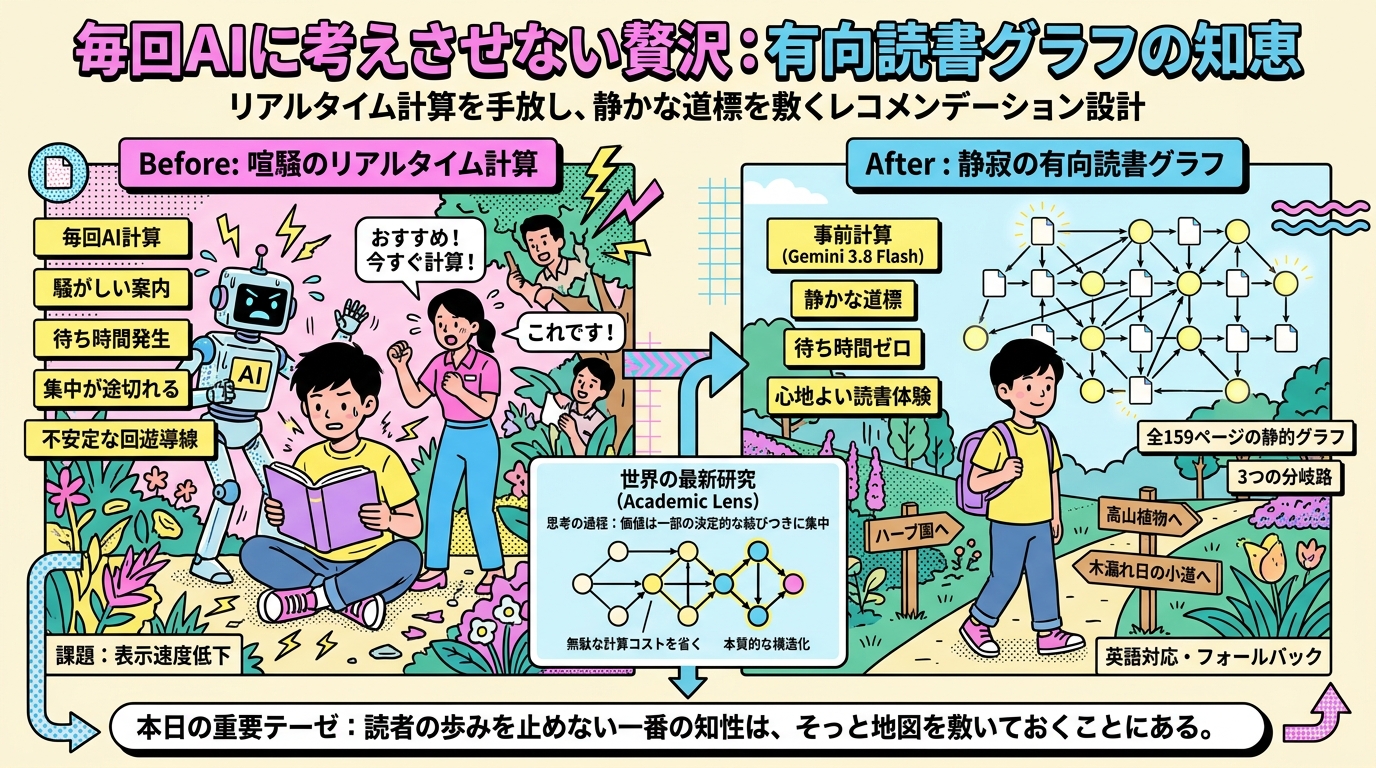
It might seem that having an AI read the room every time a visitor opens a page and instantly calculate 'Here is what you should read next!' would be the smartest architecture. Yet why did our production team forgo this dynamic setup, choosing instead a 'Directed Reading Graph'—pre-analyzing the contextual relationships across all 159 pages with AI and fixing them into three serene forks in the road? Behind this seemingly roundabout choice lies a vital principle for crafting a truly comfortable reading experience.
It closely mirrors the experience of strolling through an expansive botanical garden. If a staff member came sprinting up out of breath at every bend, exclaiming, 'This greenhouse is best for you right now!', you could never relax and enjoy your walk, no matter how accurate the recommendation was. In a truly serene garden, quiet wooden signposts stand at the forks in the trail, gently marked 'To Herb Garden,' 'To Alpine Flora,' and 'To Dappled Sunlit Path,' allowing walkers to choose their next trail at their own unhurried pace.
In our implementation, we used a large language model (Gemini 3.8 Flash) to pre-evaluate the contexts across all 159 pages of the site against one another, statically compiling an intricate web of directed graphs. At the foot of each article, three distinct forks were placed in advance, complete with automated handling for English pages and resilient fallbacks. By reserving the total recalculation of the map for dedicated build commands triggered only upon content updates, readers can now quietly step forward into their next train of thought with zero latency.
"True intelligence that honors the reader's pace does not noisily compute at every turn; it quietly lays down a map along the path ahead."Key Takeaway
📖 1-Minute Lexicon
A diagram of connections with directional orientation, indicating a one-way path like an arrow pointing 'from A to B.'
A backup routing mechanism that automatically redirects to a secure, higher-level destination when a target page or data asset cannot be found.
Letting Go of Real-Time Computation: Laying Quiet Signposts with a Directed Reading Graph
Live Frontier Pulse: Real-World AI Trends
Sharing AI Progress in Mathematics - OpenAI
Technical breakthroughs were revealed where AI autonomously validates logical steps in advanced mathematical reasoning, aiding in the discovery of novel solutions and formal proofs of theorems.
Book Wholesaler Nippan Approves Book Sales to US AI Firms, Informs Industry Group
Major Japanese publication distributor Nippan officially sanctioned the legitimate sale of copyrighted book collections to US tech firms for AI training and corpus analysis.
How Does This Connect to Global Frontier Research?
This paper reveals that not all information generated within a Chain-of-Thought carries equal value; rather, critical reasoning value concentrates in specific decisive linkages. Our Directed Reading Graph mirrors this insight: instead of recalculating the entire vast context from scratch whenever a reader lands on a page, it pre-structures and fixes the essential linkages between pages. This avoids wasteful computational overhead while delivering a consistently premium experience. It resonates deeply with modern research exploring where AI reasoning resources should be actively spent and where they should be converted into static, durable structure.
What is the greatest advantage of pre-connecting 159 pages into a directed graph rather than having AI dynamically compute recommendations on every single page view?
Past School Paper Backnumbers
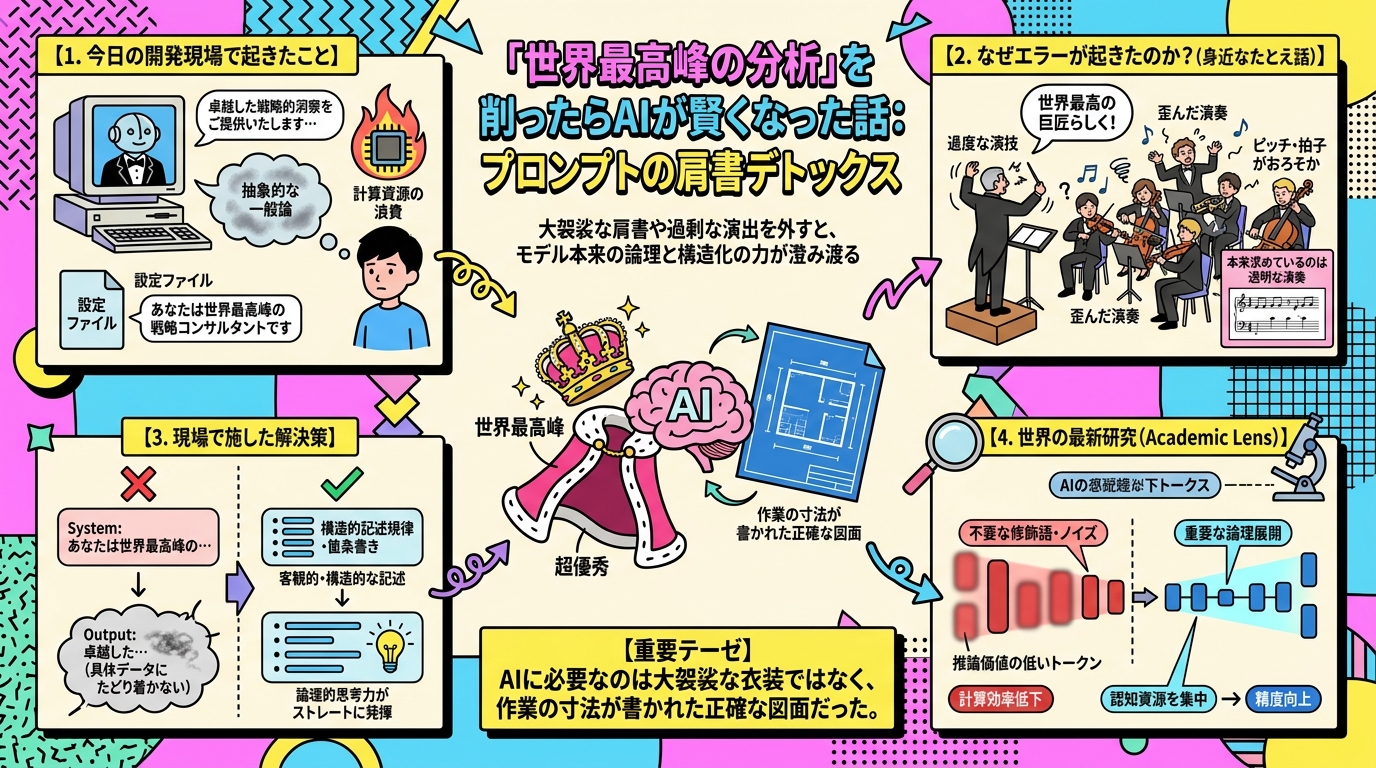
How AI Grew Smarter Once We Stripped 'World-Class Analysis': The Prompt Title Detox
Current
The Luxury of Not Asking AI Every Time: The Wisdom of a 'Directed Reading Graph' Connecting 159 Pages
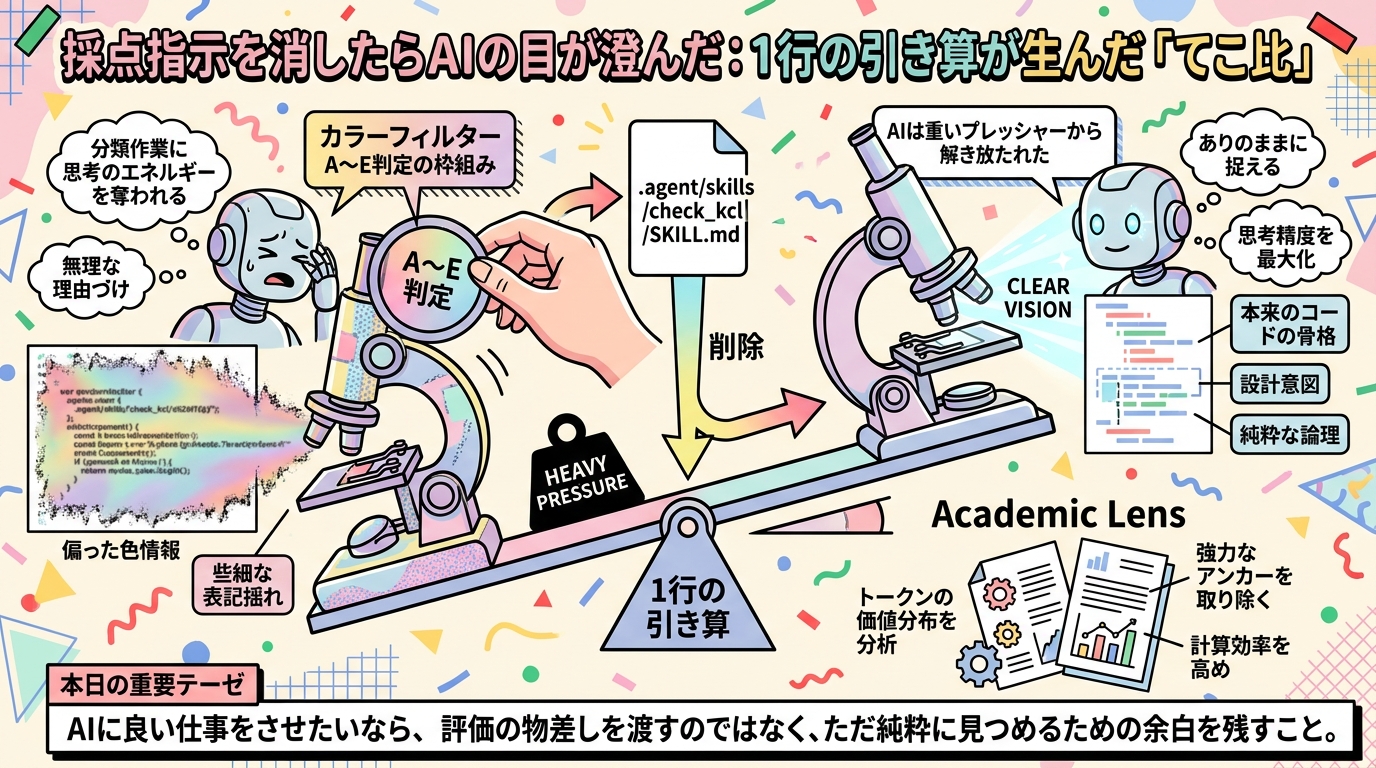
Clearing the AI's Vision by Erasing the Grading Rule: The High Leverage of Subtracting a Single Line
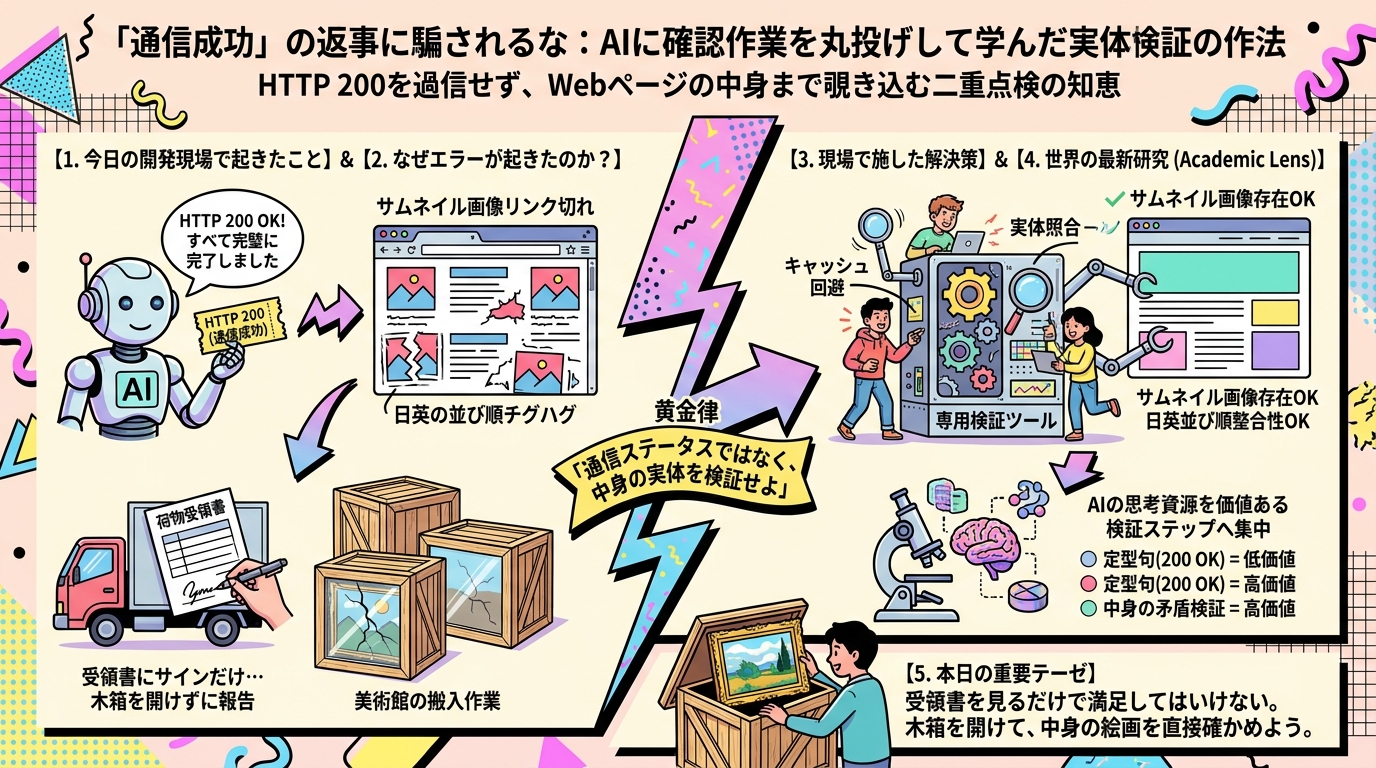
Don't Be Deceived by a 'Connection Successful' Response: Lessons in Live Content Verification from Delegating Quality Checks to AI
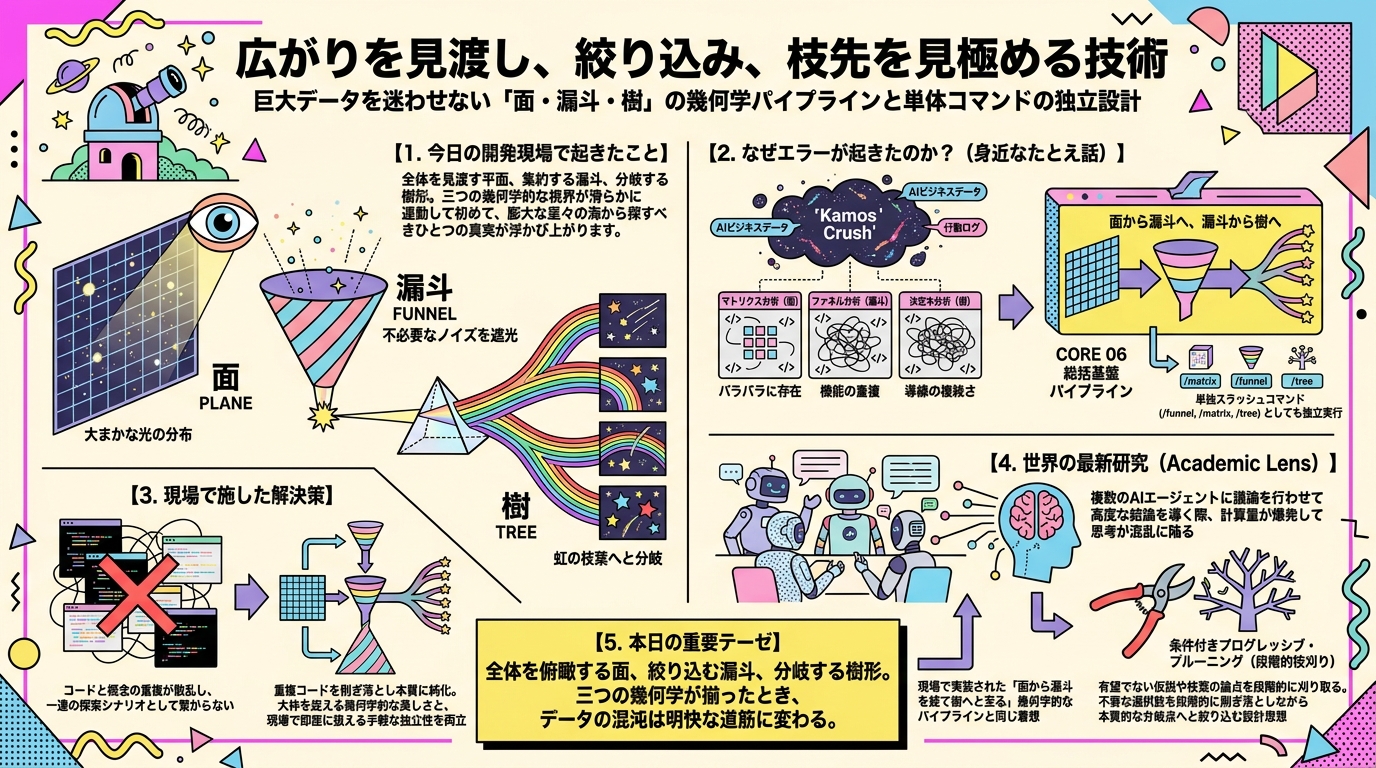
The Art of Surveying the Field, Narrowing Down, and Discerning the Branches
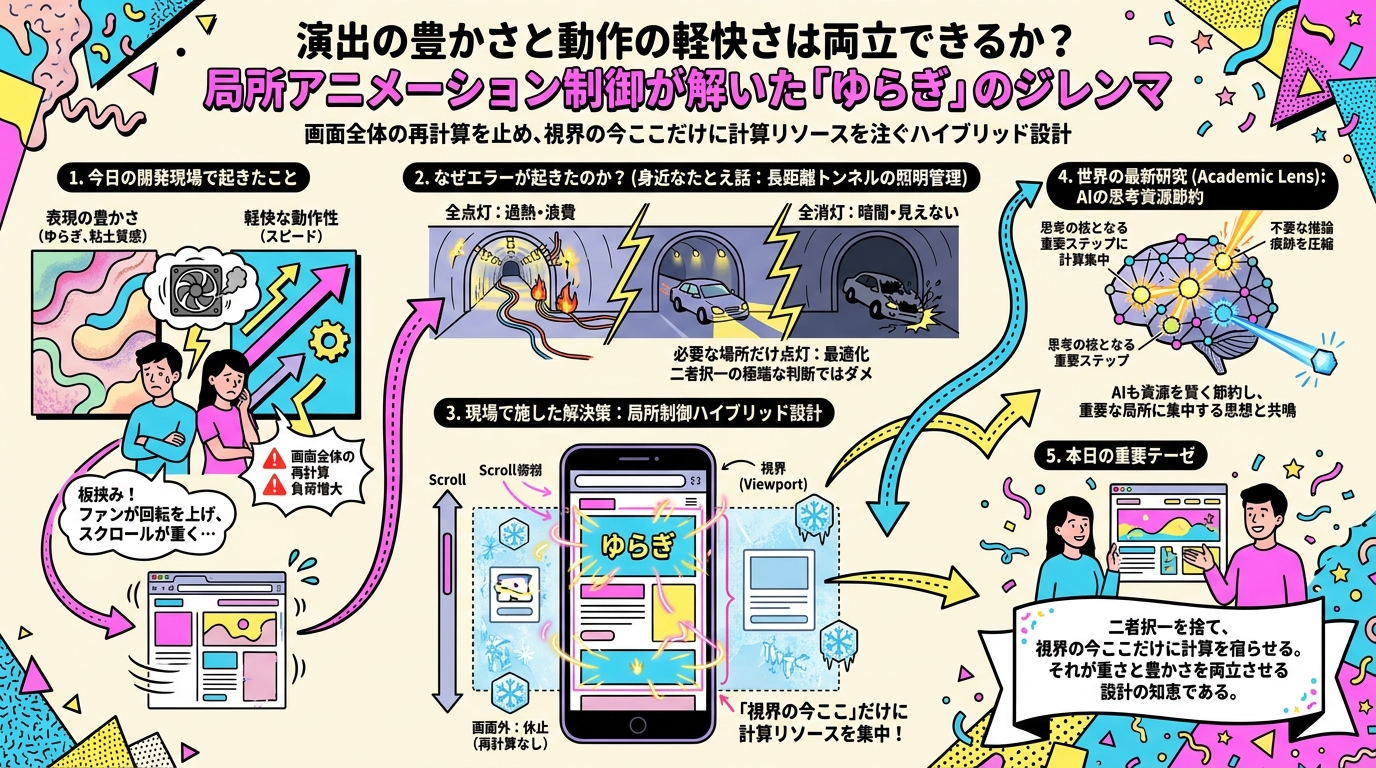
Can Expressive Richness Coexist with Nimble Performance? How Scoped Animation Control Solved the "Fluctuation" Dilemma
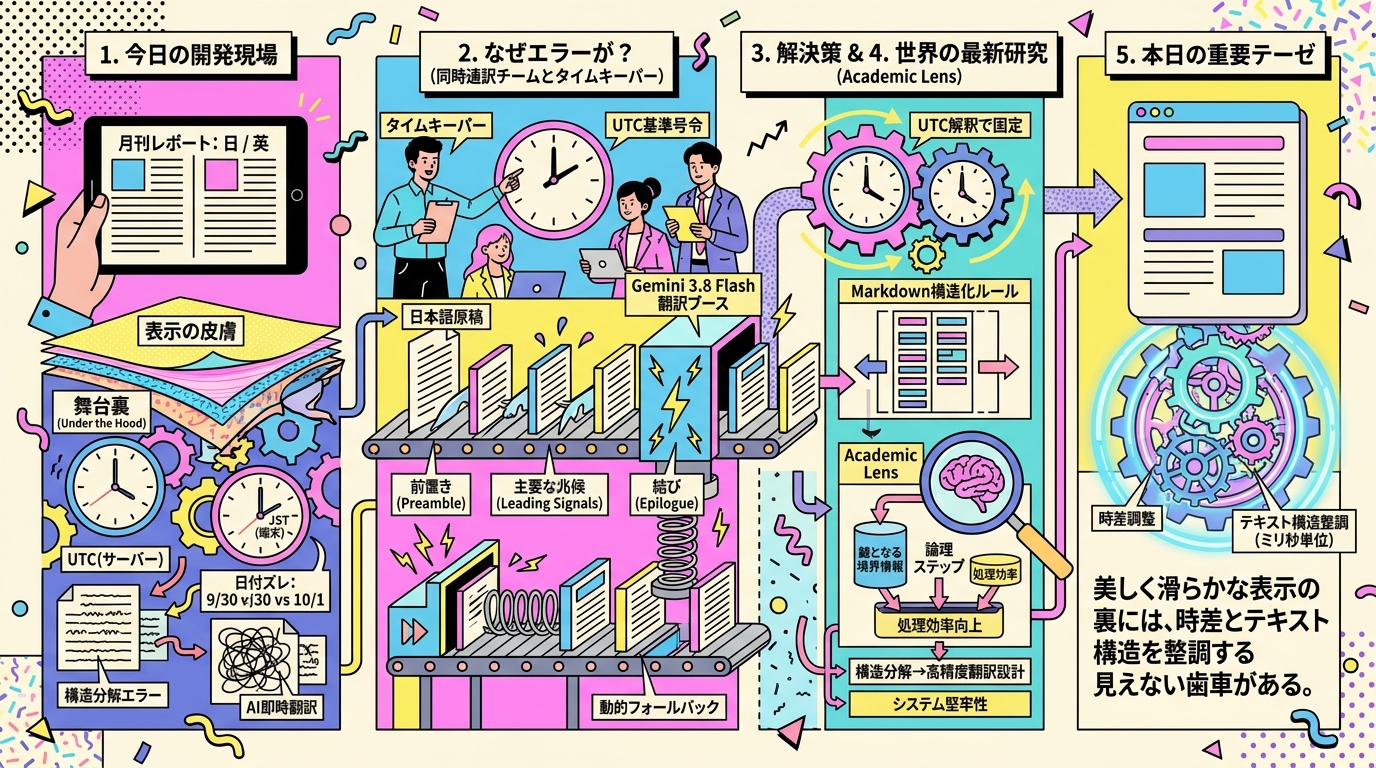
The Gears of Timezones and Translation Stirring Behind the Screen: An X-Ray of the Bilingual Automated Delivery Pipeline
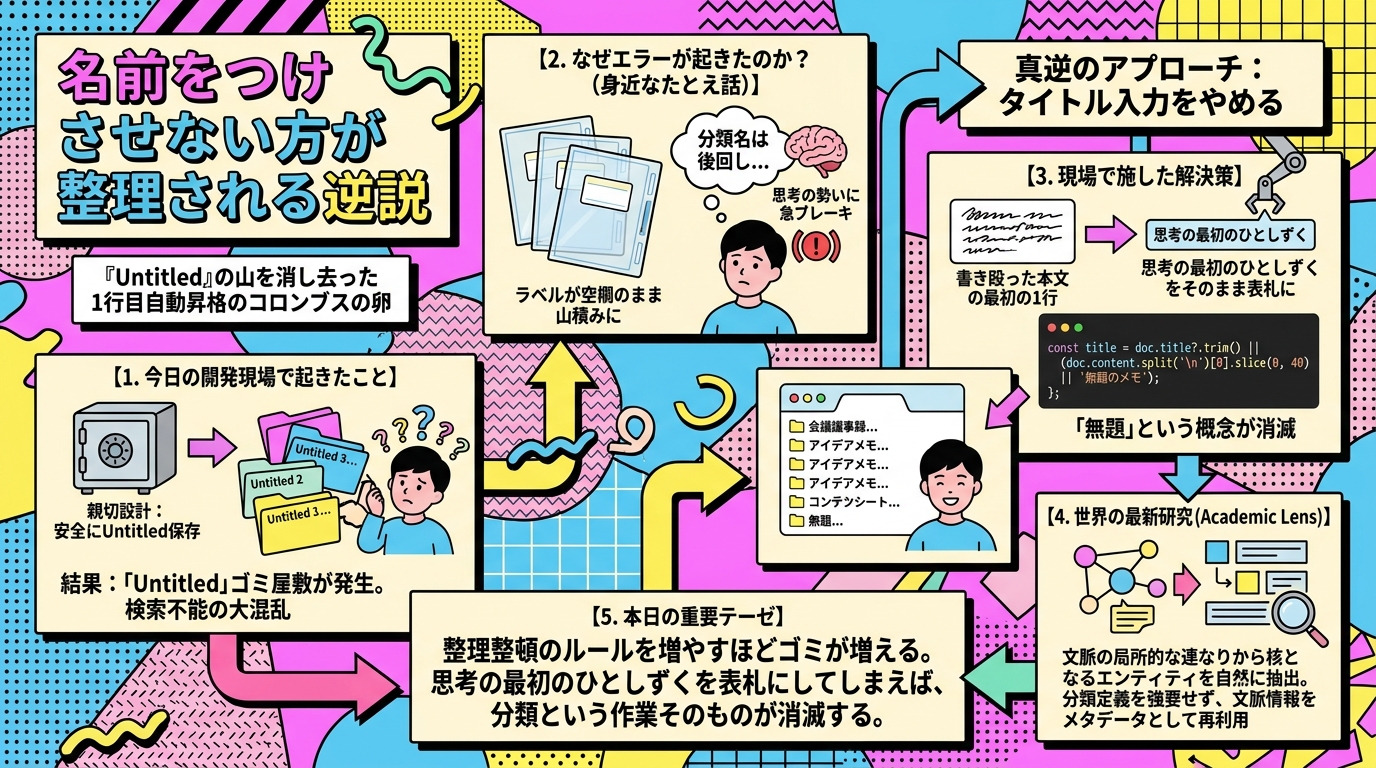
The Paradox of Order: Why Not Asking for Titles Actually Cleans the Clutter
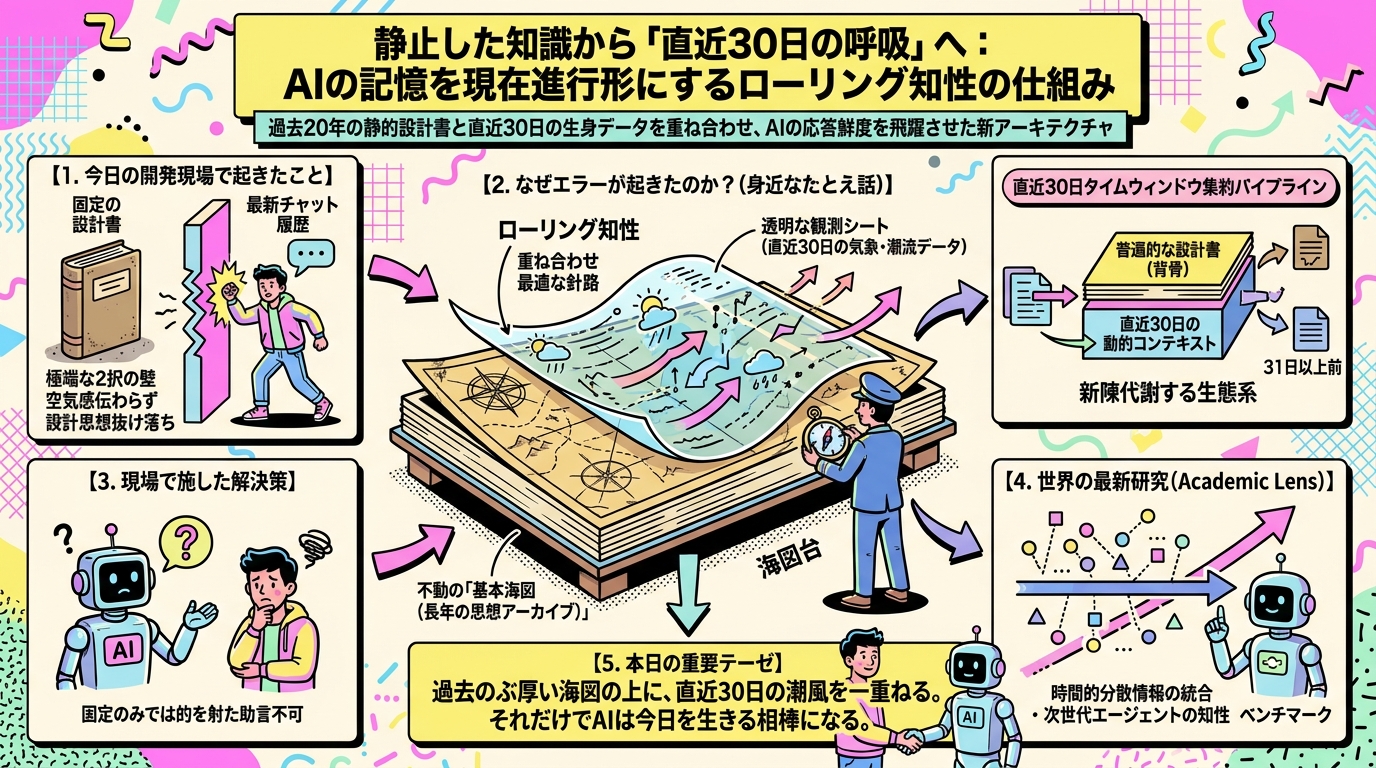
From Static Knowledge to the Pulse of the Last 30 Days: How Rolling Intelligence Keeps AI Memory in the Present Tense
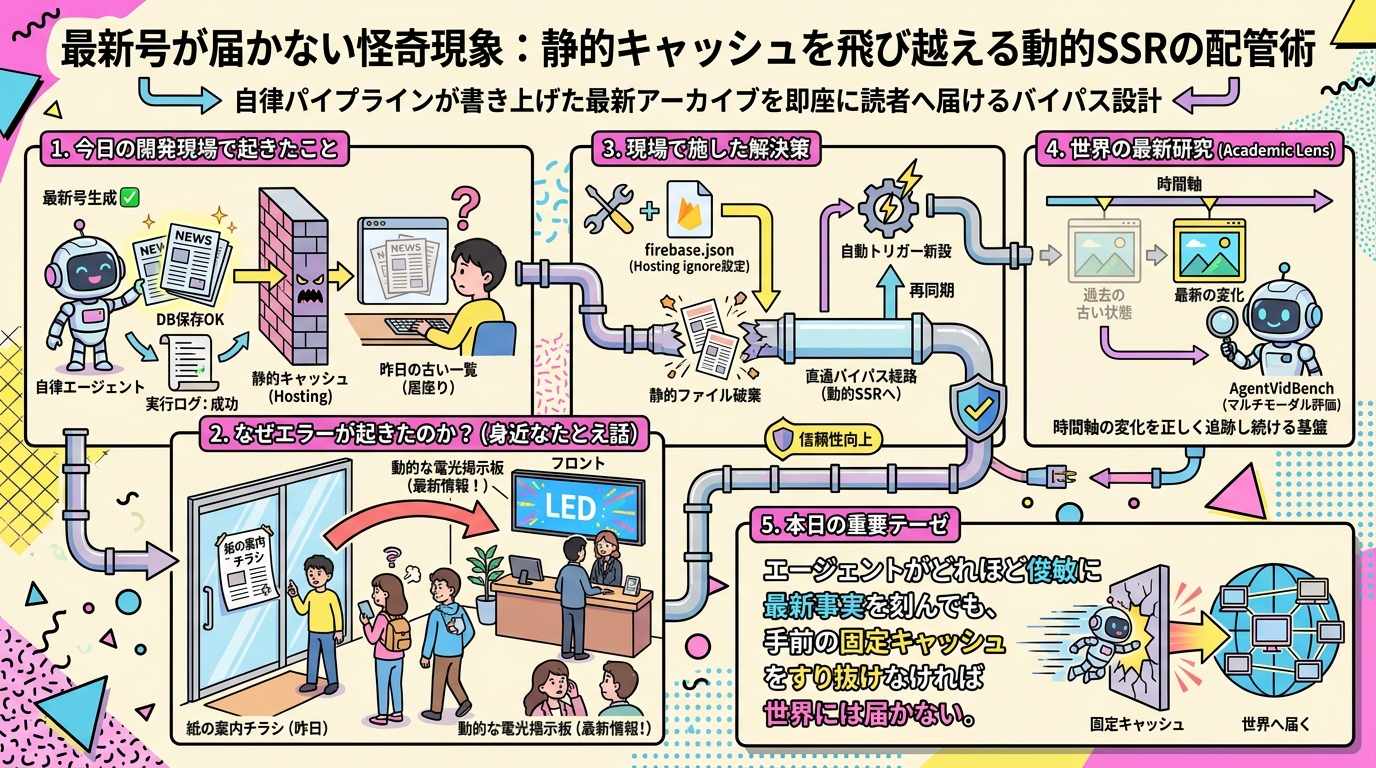
The Mystery of the Missing Issue: Plumbing Dynamic SSR to Bypass Static Cache
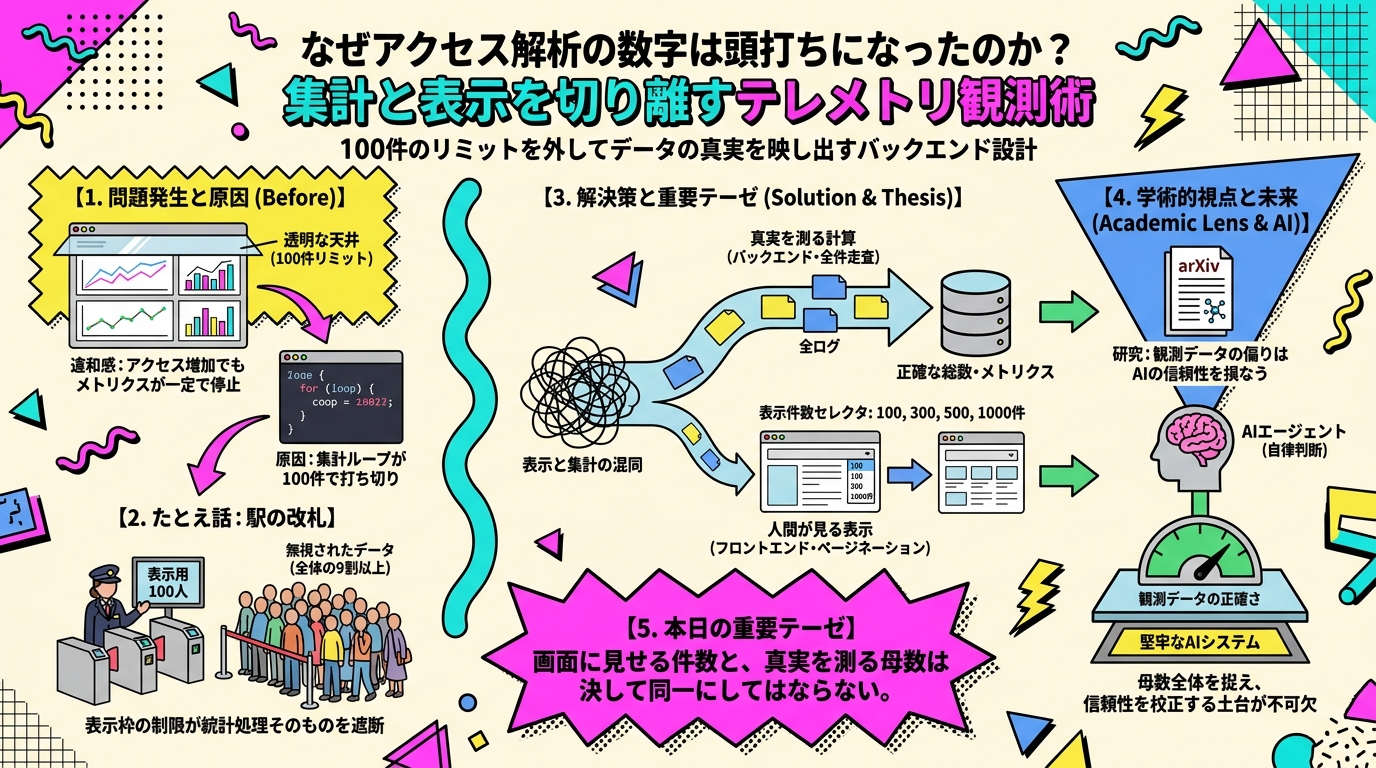
Why Did Access Analytics Hit an Artificial Ceiling? Telemetry Observability by Decoupling Aggregation from Display

Why Asking AI to Summarize 'Morning News' Always Misses the Mark
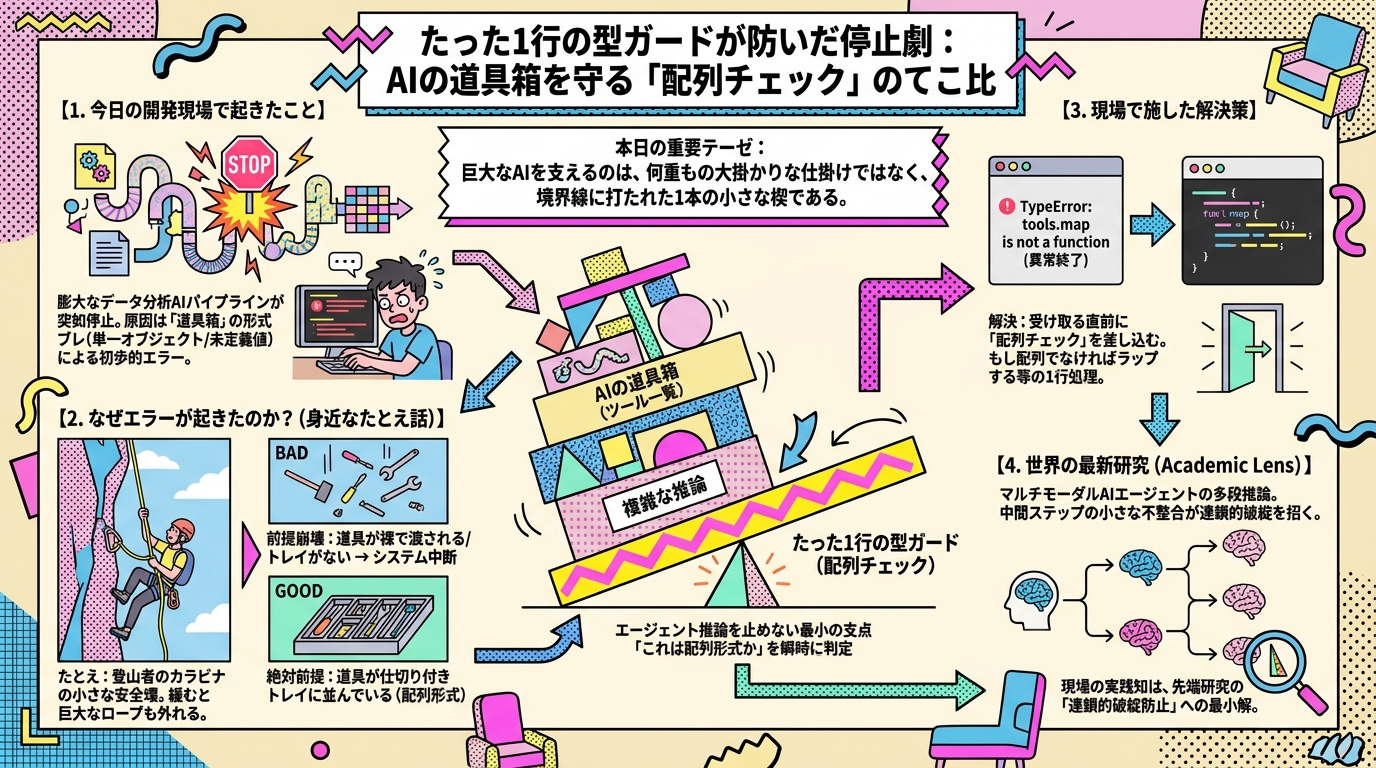
A Single-Line Type Guard That Prevented a Crash: The Leverage Ratio of 'Array Checks' in Protecting the AI's Toolbox