THE SCHOOL OF KAMOS
Connecting Real-world Dev & Academic Intelligence with Intuitive Metaphors
Guiding Light Through the Abyssal Depths: How WebGPU Compute Shaders Unlocked Underwater Optical Leverage
Preventing 60,000 Particles and Light Scattering from Collapse via a Single Line of Absorption Spectrum Control
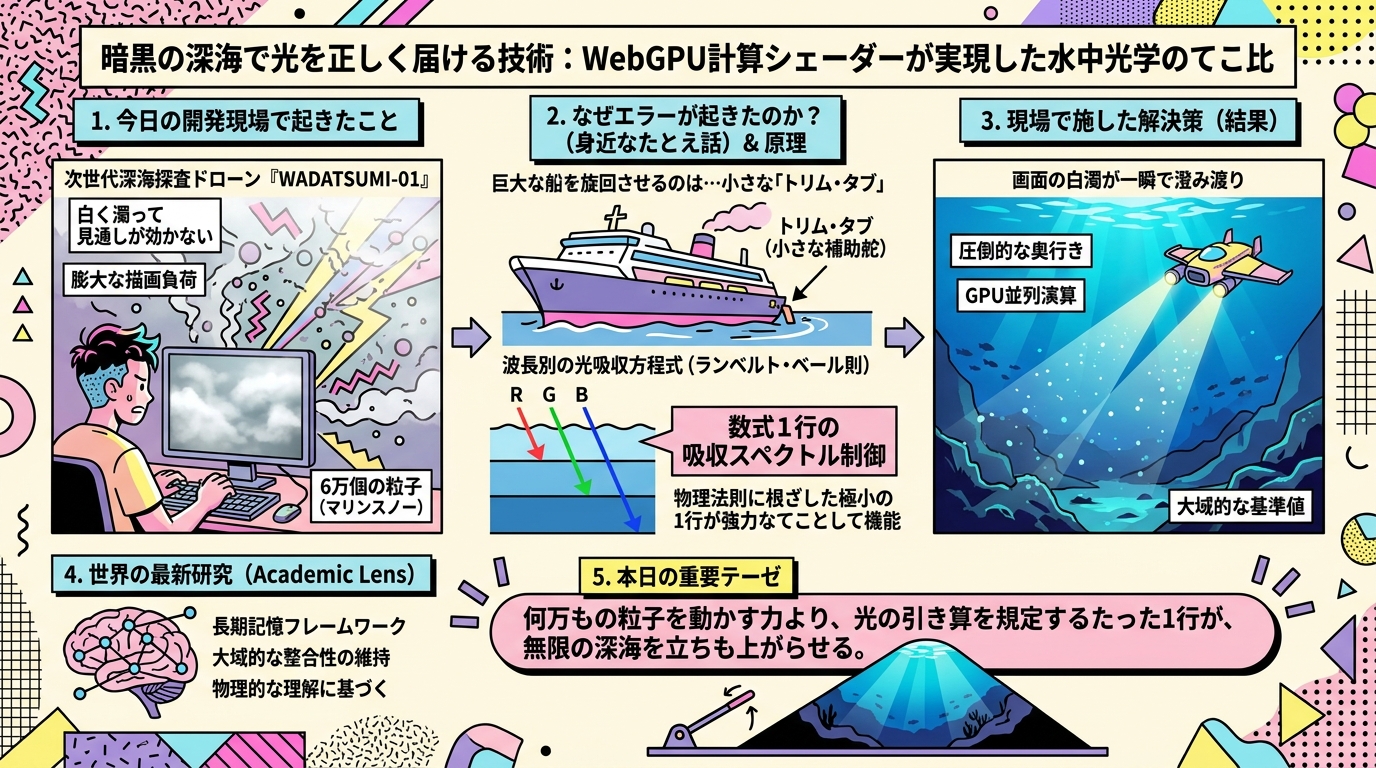
During the development of a browser-based simulator for the next-generation deep-sea exploration drone 'WADATSUMI-01', rendering over 60,000 marine snow particles, propulsion fin fluid dynamics, and scattered light from dual spotlights caused the entire viewport to wash out into an opaque white haze, destroying visibility. No matter how finely tuned the particle physics were, the characteristic depth and crystalline clarity of the abyss remained lost. What ultimately resolved this massive rendering load and visual fog was not a complex suite of additional shaders, but a single line of code embedding the Beer-Lambert law—governing wavelength-dependent optical absorption across water depth.
What turns a colossal vessel is not the sheer mass of its hull, but the tiny trim tab mounted on its rudder. In our simulator, no matter how extensively we multiplied calculations for 65,536 particles and diffuse scattering, light simply dissolved into a featureless white mist without a unifying governing discipline. The breakthrough came from a single-line filter formalizing the physical reality that water absorbs red light first. Simply multiplying the attenuation rates across the RGB channels based on the distance traversed by each light ray through the deep sea instantly cleared the screen's milky haze, revealing a staggering, crystalline depth piercing deep into the abyss.
This single line anchors the entire system because it introduces a 'global baseline' across GPU parallel compute and AI graphics context control. Regardless of how violently individual particles move, the per-pixel light intensity converges toward a physically grounded absorption spectrum, completely suppressing redundant compute loops and color clipping. Much like how offering an AI agent a single, precise evaluation metric stabilizes variance far better than pages of verbose prompt engineering, this minimal line rooted in fundamental physics functioned as a formidable lever tuning an immense web of rendering calculations.
"Far greater than the power to animate tens of thousands of particles, a single line governing the subtraction of light brings the infinite abyss into being."Key Takeaway
📖 1-Minute Lexicon
The phenomenon where light beams become visible as light scatters off microscopic particles, like sunbeams piercing a dimly lit room.
A physical law stating that the intensity of light diminishes exponentially in proportion to the distance it travels through a medium.
Crystalline Clarity and Spatial Order: How a Minimal Single-Line Formula Unlocks the Deep Sea
Live Frontier Pulse: Real-World AI Trends
TOPPAN Launches CX Support Service Leveraging AI Personas
TOPPAN has launched a validation service leveraging 'AI Personas' that faithfully replicate diverse demographic segments and consumer behaviors to enhance customer experience (CX).
How Does This Connect to Global Frontier Research?
This cutting-edge research proposes a long-term memory framework designed to preserve spatial consistency across extended video generation and world models. When simulating an exploration drone traversing abyssal waters, relying solely on sequential local particle computations inevitably fractures overall spatial structure. The paper's thesis—maintaining global consistency grounded in physical understanding—deeply resonates with our approach of threading a single fundamental principle, the optical absorption spectrum, through the deep-sea simulator to guarantee cohesive spatial depth.
In simulating the deep ocean, which technique proved most effective for rendering a natural sense of spatial depth?
Past School Paper Backnumbers

How Stripping Away Invisible Padding and Caching Dramatically Sharpened Our AI Design Canvas

Why an AI Narrator Reads 'Stage Directions' Aloud—and the Art of Scrubbing the Script Clean

Balancing 'This Year's Certainty' with 'Next Year's Foresight': System Design That Reserves the Future Without Mixing Schedules

An X-Ray of the Play Button: The Precision Tuning Behind Unhurried Five-Minute AI Narration

Stop the AI, and the Archive Lives On: Designing for Completion at Zero Maintenance Cost

What Appeared When We Removed the Neon and Technical Gauges: Crafting Effortless Wayfinding Across 11 WebGPU Works
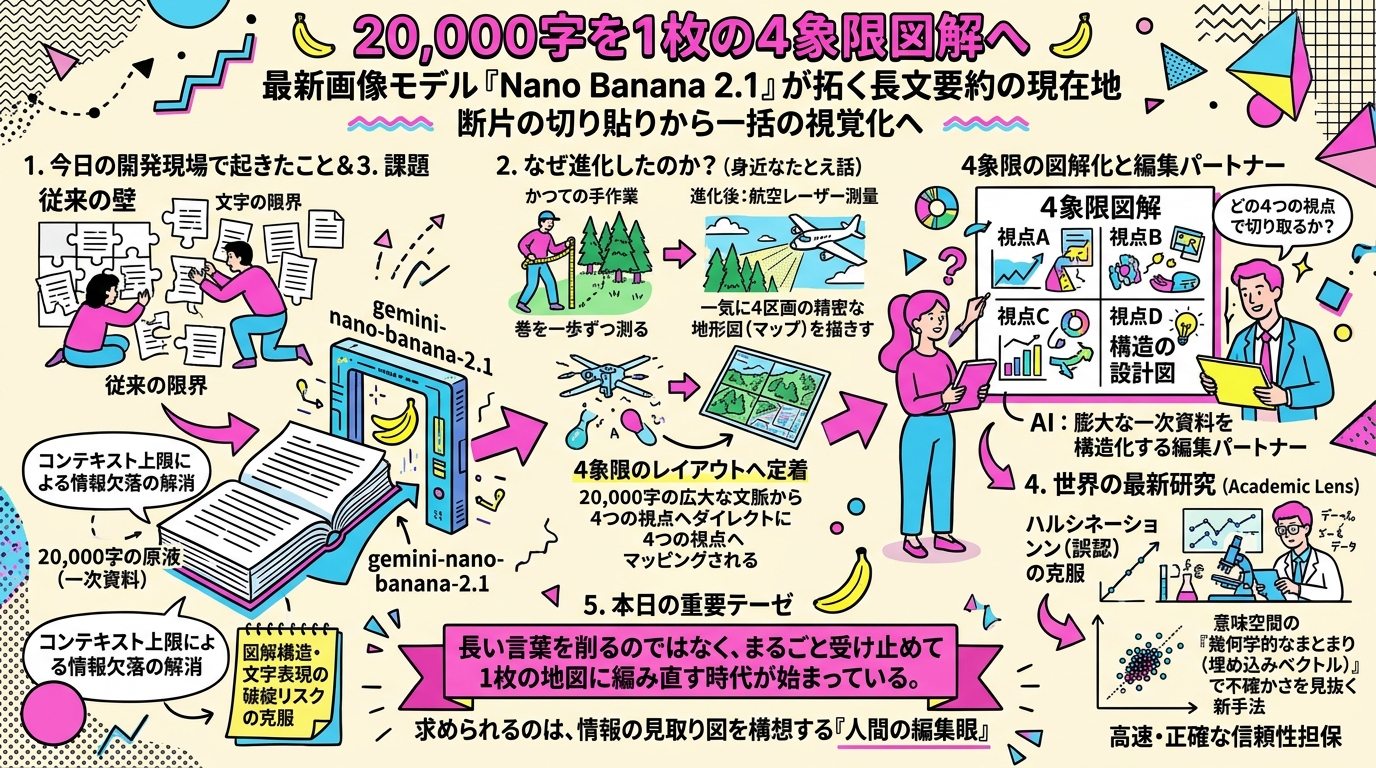
20,000 Characters Distilled into a Single Four-Quadrant Diagram: Where Long-Form Summarization Stands Today with the Latest Image Model, Nano Banana 2.1

Why Can't AI Keep Drawing the Same Object? A Visual Anchor to Prevent Structural Drift in 5-Panel Sketches
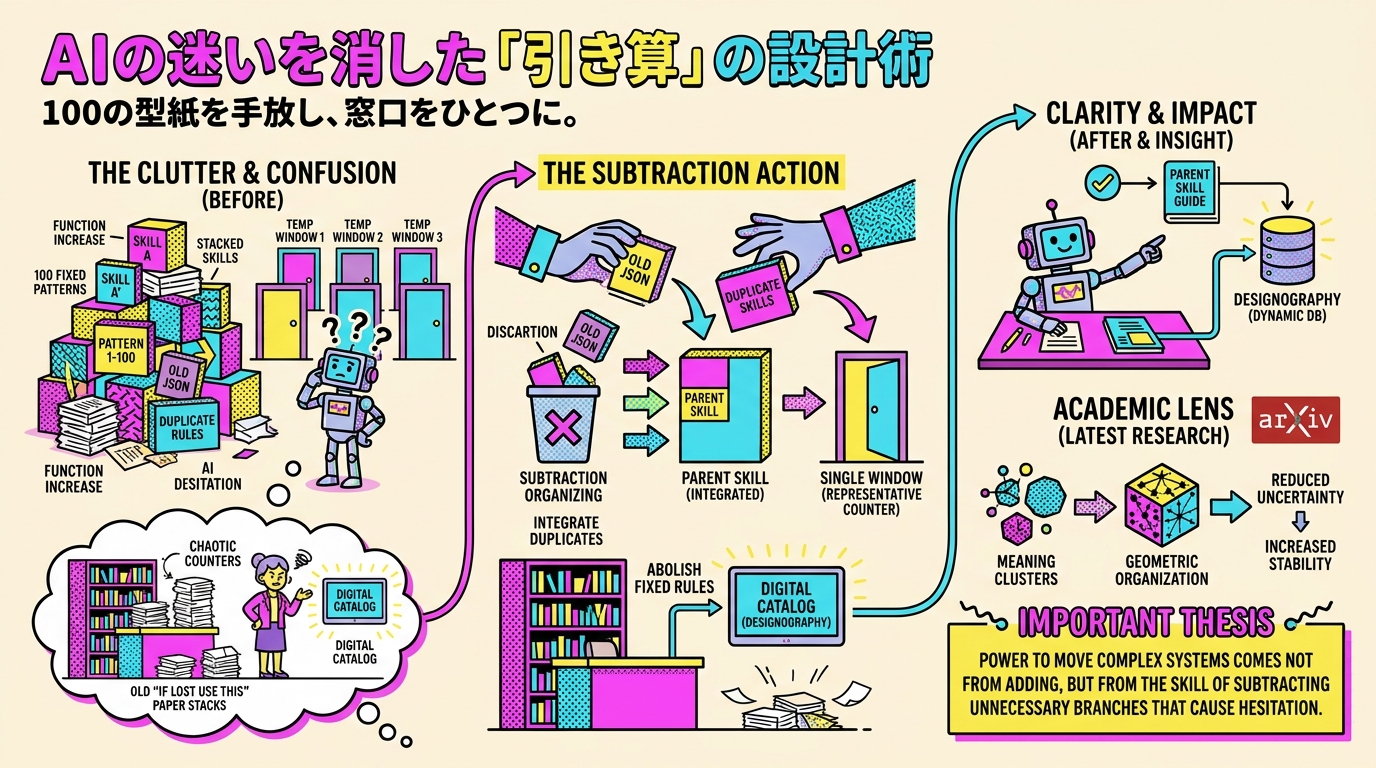
Letting Go of 100 Templates for a Single Desk: The Art of Subtractive Design That Eliminated AI Hesitation
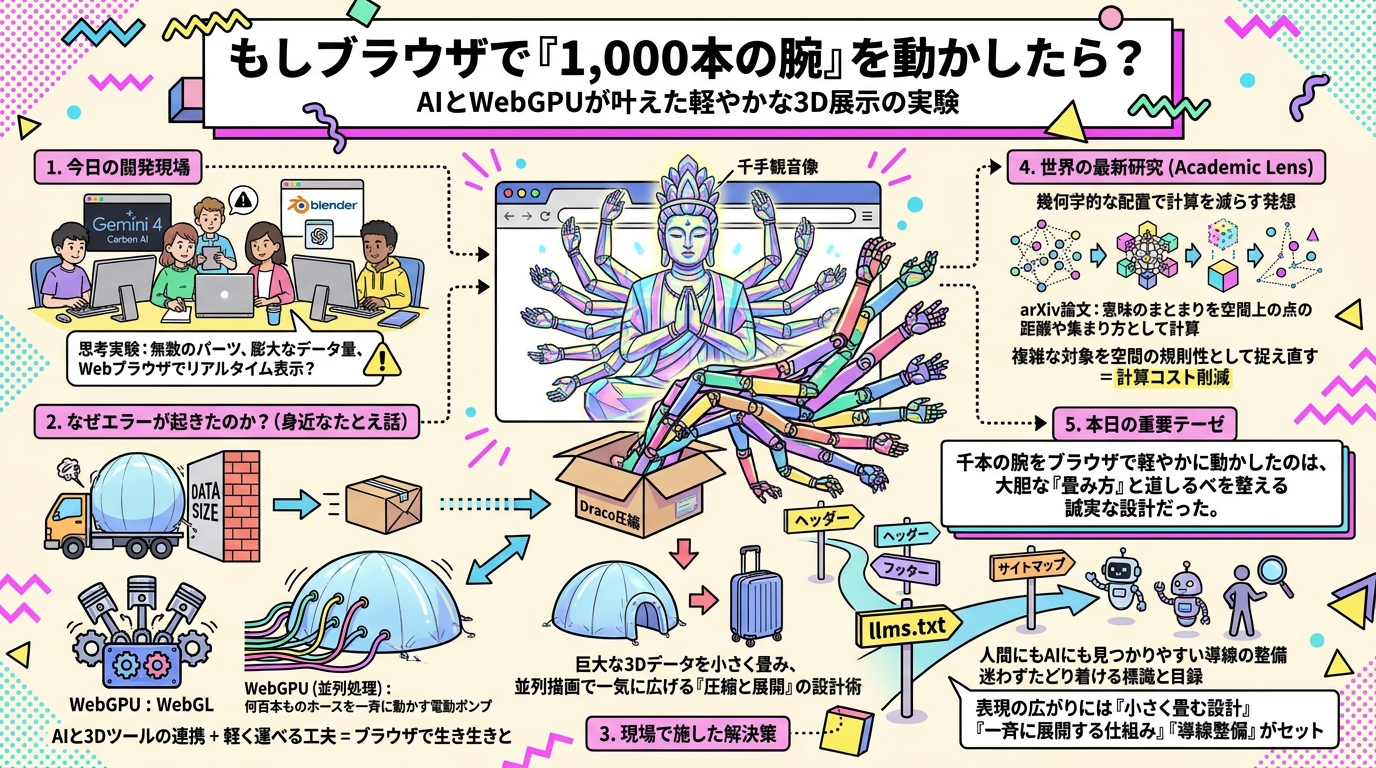
What If You Animated '1,000 Arms' in a Browser? A Lightweight 3D Exhibition Experiment Powered by AI and WebGPU
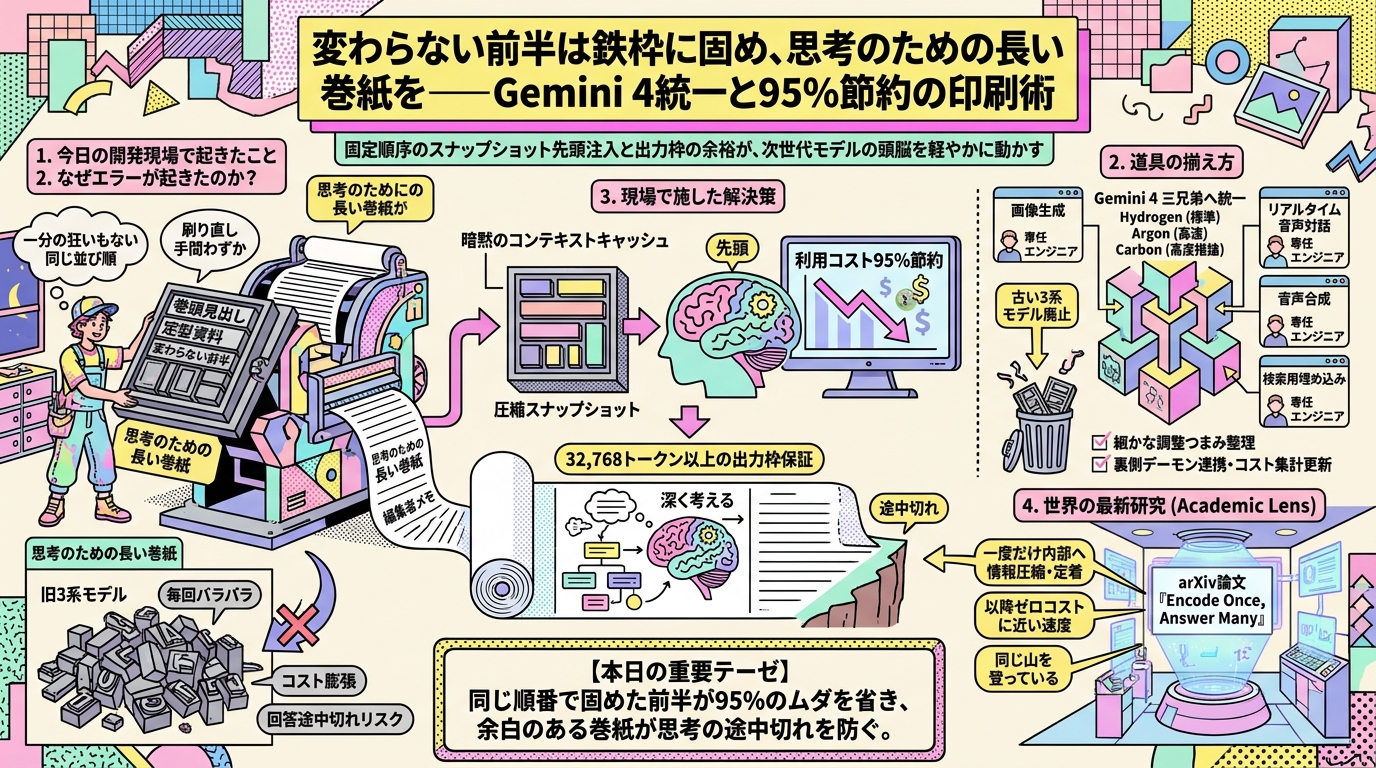
Locking the Constant Lead in Iron, Unrolling Long Scrolls for Thought — Gemini 4 Unification and the Art of 95% Printing Savings
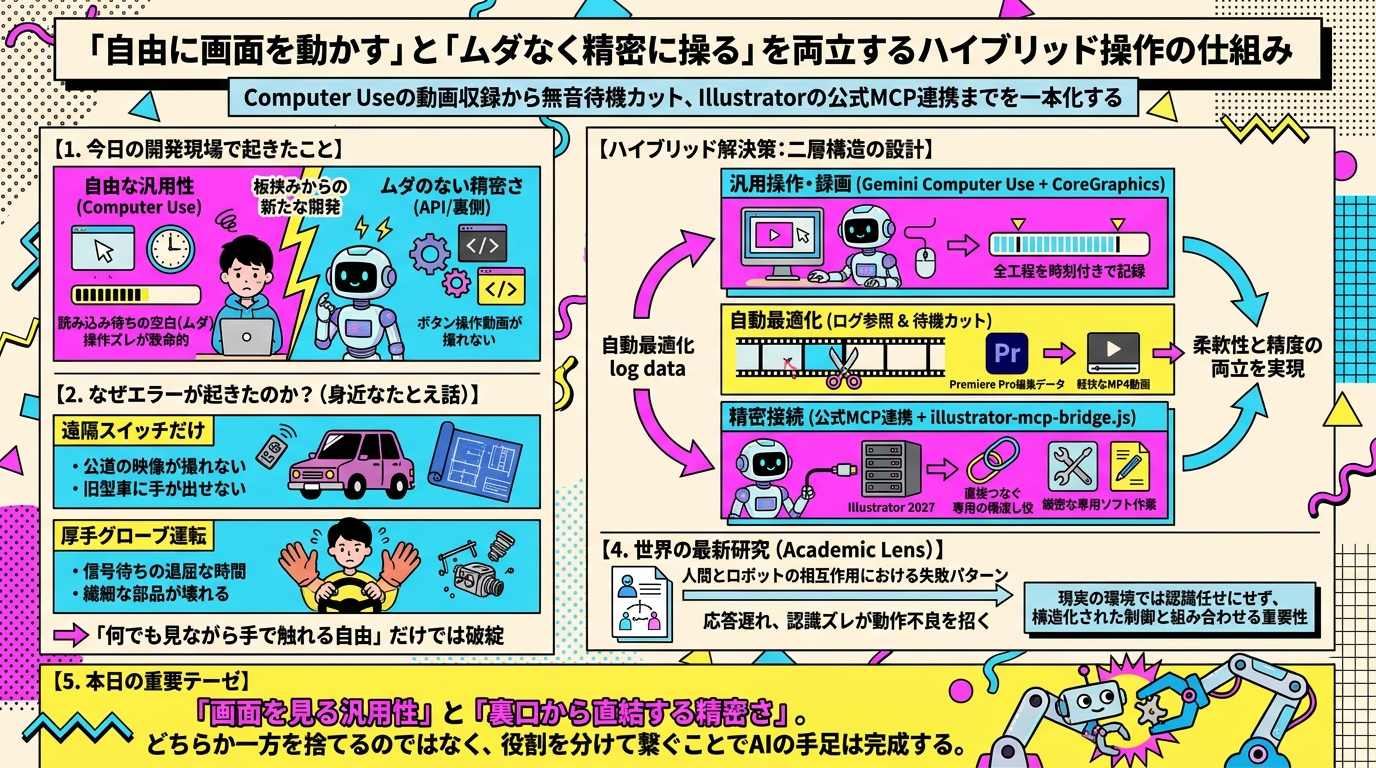
A Hybrid Control Architecture Bridging Free-Form Screen Navigation and Lean, Precision Execution
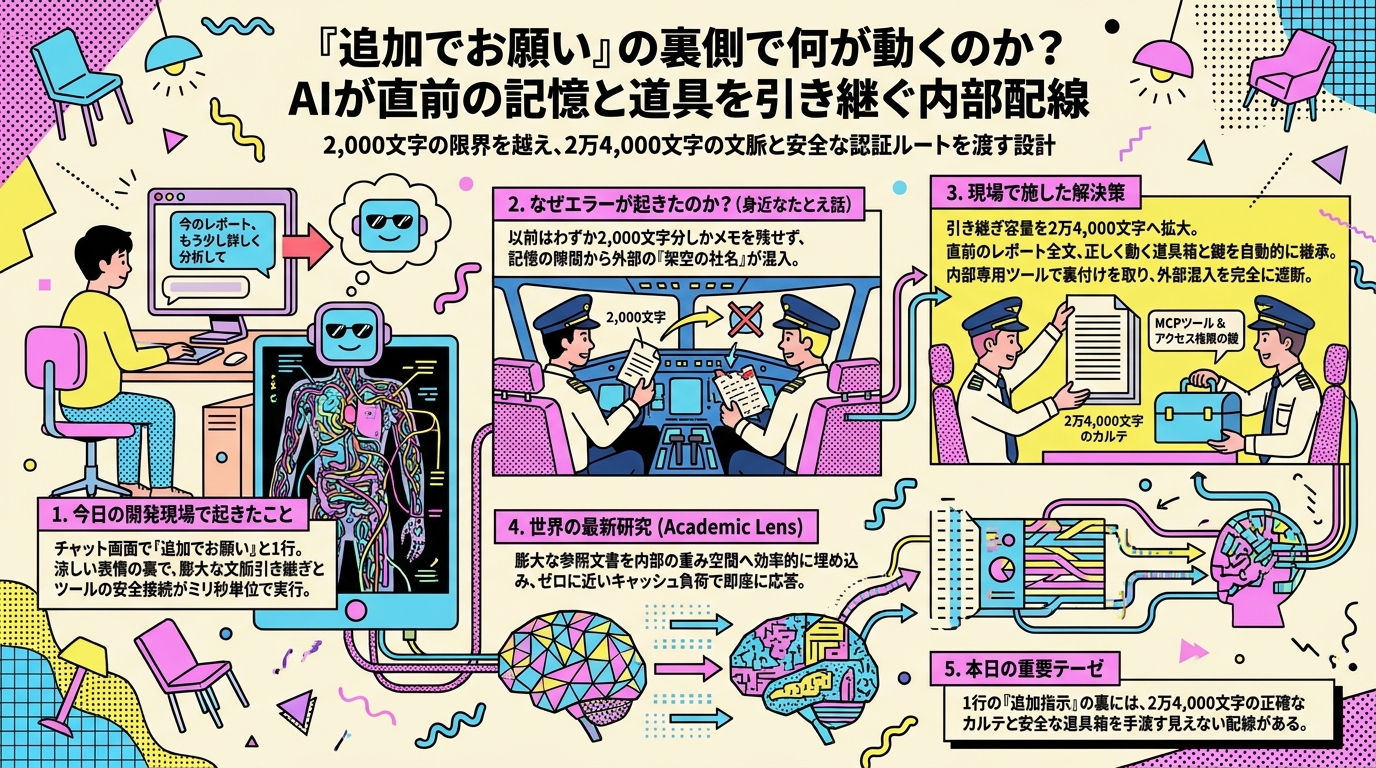
Behind "Just One More Request": The Internal Wiring That Hands Off Memory and Tools Between AIs