
THE SCHOOL OF KAMOS
Connecting Real-world Dev & Academic Intelligence with Intuitive Metaphors
From Megafactory to Artisan's Atelier: The Paradox of 'Tactical Moves' in AI Design
Abandoning mass production outsourced to monolithic AI to become digital artisans wielding 4,000 distinct tools
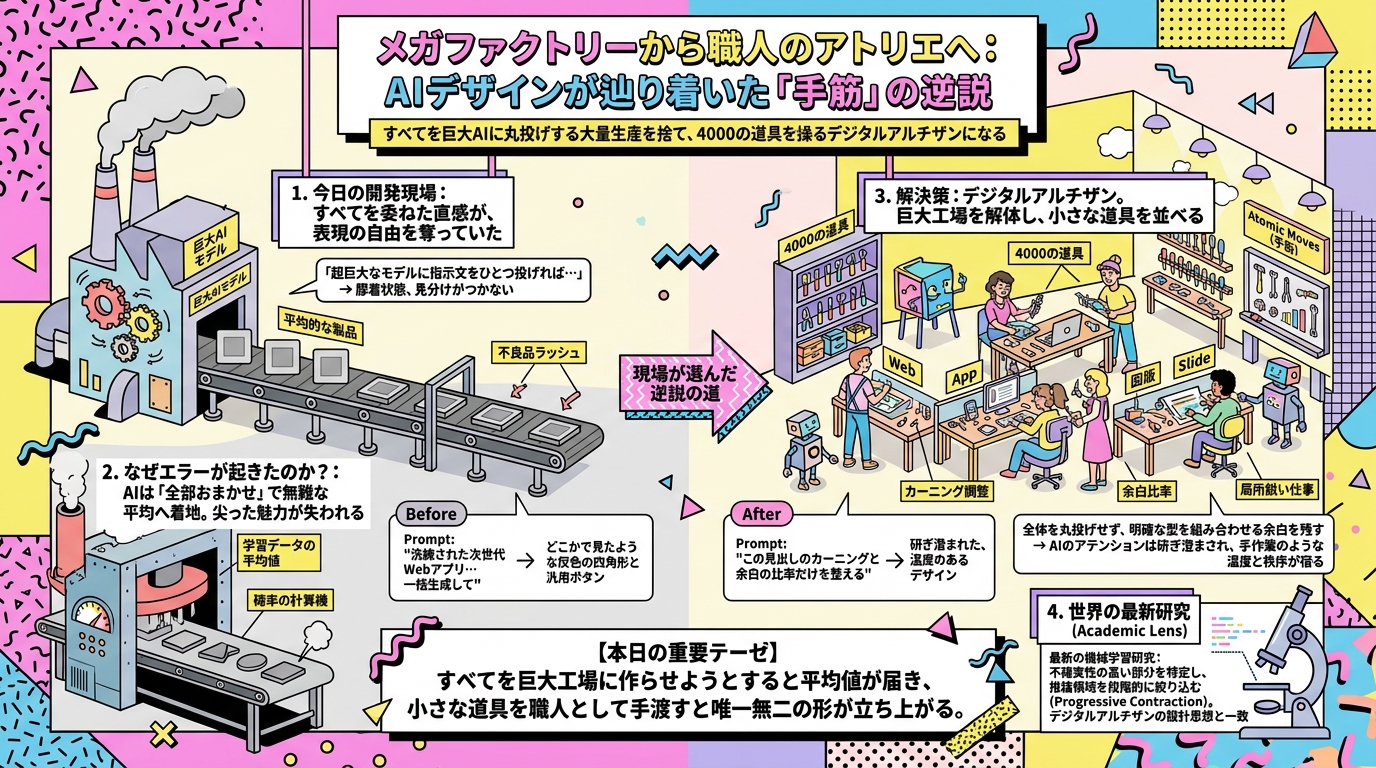
As AI reasoning capabilities grew exponentially, everyone assumed that firing a single prompt at a monolithic model would instantly mass-produce complete websites and applications. What actually unfolded in the field, however, was an impasse resembling a rush of factory rejects: everything looked indistinguishably average, and touching up a slight flaw risked unraveling the entire composition. The intuitive urge to surrender everything for the sake of convenience had ironically stripped away all expressive freedom.
A megafactory approach—stamping out an entire car body in one stroke under a colossal press—works well for cheaply distributing standardized goods. Applying this to design, however, creates friction akin to stomping on the gas and the brake at the same time. Because AI is fundamentally a probabilistic calculator, demanding massive outputs with full autonomy invariably pulls it toward the safest average of its training corpus. The greedier one gets about generating perfection in a single pass, the more one strips away sharp character and nuanced tension.
The frontlines therefore chose the path opposite to intuition: dismantling the megafactory to return to the craft of an 'artisan's atelier'—the Digital Artisan. Defining 1,000 tactical tools ('Atomic Moves') and disciplines across four domains (Web, Apps, Figures, Slides), practitioners now assign sharp, localized tasks to AI, such as 'calibrate solely the kerning and whitespace ratio of this heading.' By reserving space to assemble explicit patterns rather than outsourcing the whole, AI attention is razor-honed, breathing handcrafted warmth and disciplined order into the canvas.
"Entrust everything to a megafactory and you receive mere averages; hand small tools to an artisan and a singular form emerges."Key Takeaway
📖 1-Minute Lexicon
A craft-oriented design stance that avoids delegating everything to full AI automation, instead interactively carving out fine details using curated tools and disciplines.
The minimal unit of implementation technique that shapes design; a single-purpose move, such as spacing adjustments or color contrast, that AI can apply without ambiguity.
Megafactory (Monolithic Mass Production) vs. Digital Artisan (Tactical Craftsmanship)
Live Frontier Pulse: Real-World AI Trends
Hakuhodo Launches Enterprise 'Image Similarity Checker' to Support Creative Governance in the Generative AI Era
Hakuhodo has begun offering an 'Image Similarity Checker' to assess whether mass-produced generative AI creatives infringe on existing designs or proprietary rights. As mass generation becomes effortless, robust mechanisms are increasingly required to ensure brand singularity and IP safety.
How Does This Connect to Global Frontier Research?
Recent machine learning research reveals that rather than brute-forcing models into gargantuan scales with indiscriminate knowledge, pinpointing high-uncertainty regions and progressively contracting the reasoning scope yields superior results. Precisely pruning the necessary context proves far more effective for accurate deduction in complex logical tasks than megafactory-style training that burns through excessive compute. This fundamentally aligns with the Digital Artisan design philosophy: focusing attention on explicit tactical moves and disciplines rather than delegating monolithic, end-to-end generation to AI.
Which of the following is the most effective approach when using AI to craft unique, beautiful designs?
Past School Paper Backnumbers

How Stripping Away Invisible Padding and Caching Dramatically Sharpened Our AI Design Canvas

Why an AI Narrator Reads 'Stage Directions' Aloud—and the Art of Scrubbing the Script Clean

Balancing 'This Year's Certainty' with 'Next Year's Foresight': System Design That Reserves the Future Without Mixing Schedules

An X-Ray of the Play Button: The Precision Tuning Behind Unhurried Five-Minute AI Narration

Stop the AI, and the Archive Lives On: Designing for Completion at Zero Maintenance Cost

What Appeared When We Removed the Neon and Technical Gauges: Crafting Effortless Wayfinding Across 11 WebGPU Works

20,000 Characters Distilled into a Single Four-Quadrant Diagram: Where Long-Form Summarization Stands Today with the Latest Image Model, Nano Banana 2.1

Why Can't AI Keep Drawing the Same Object? A Visual Anchor to Prevent Structural Drift in 5-Panel Sketches
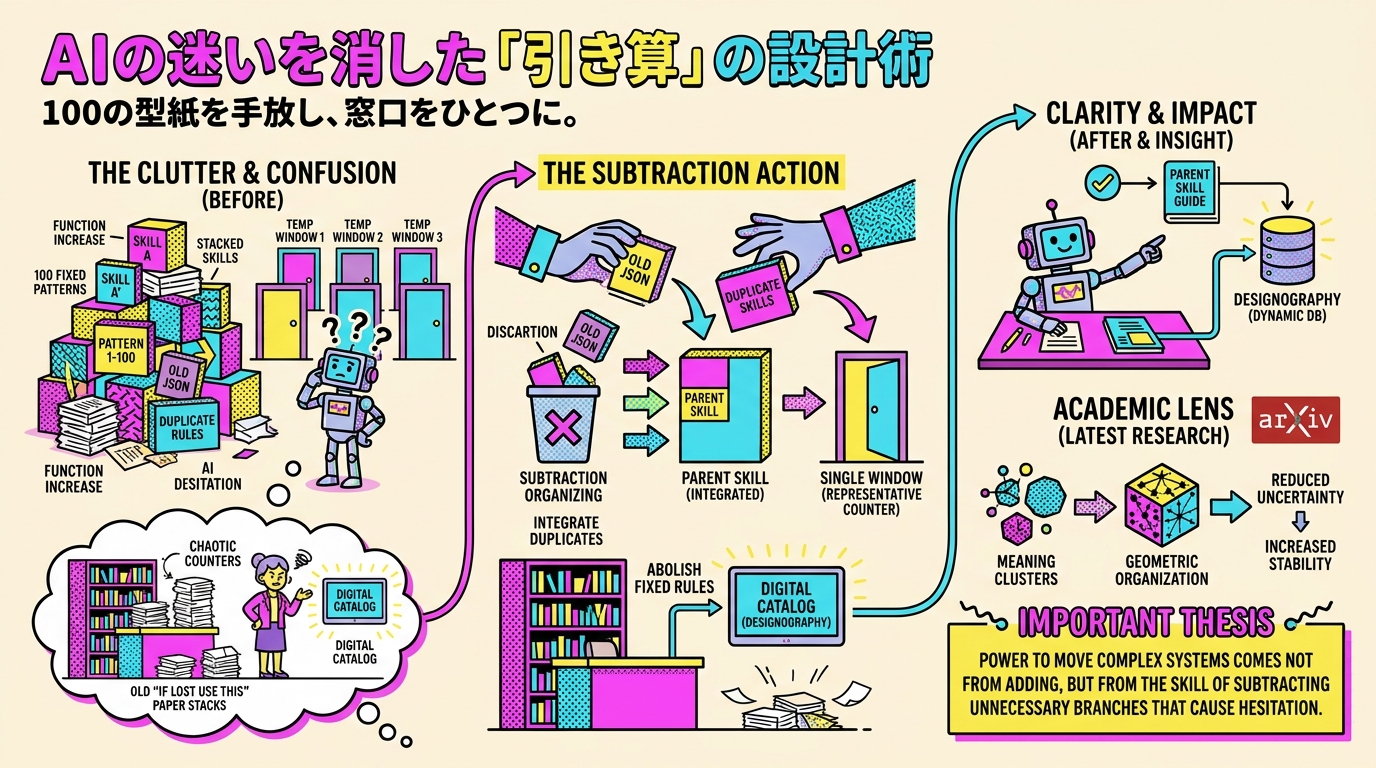
Letting Go of 100 Templates for a Single Desk: The Art of Subtractive Design That Eliminated AI Hesitation
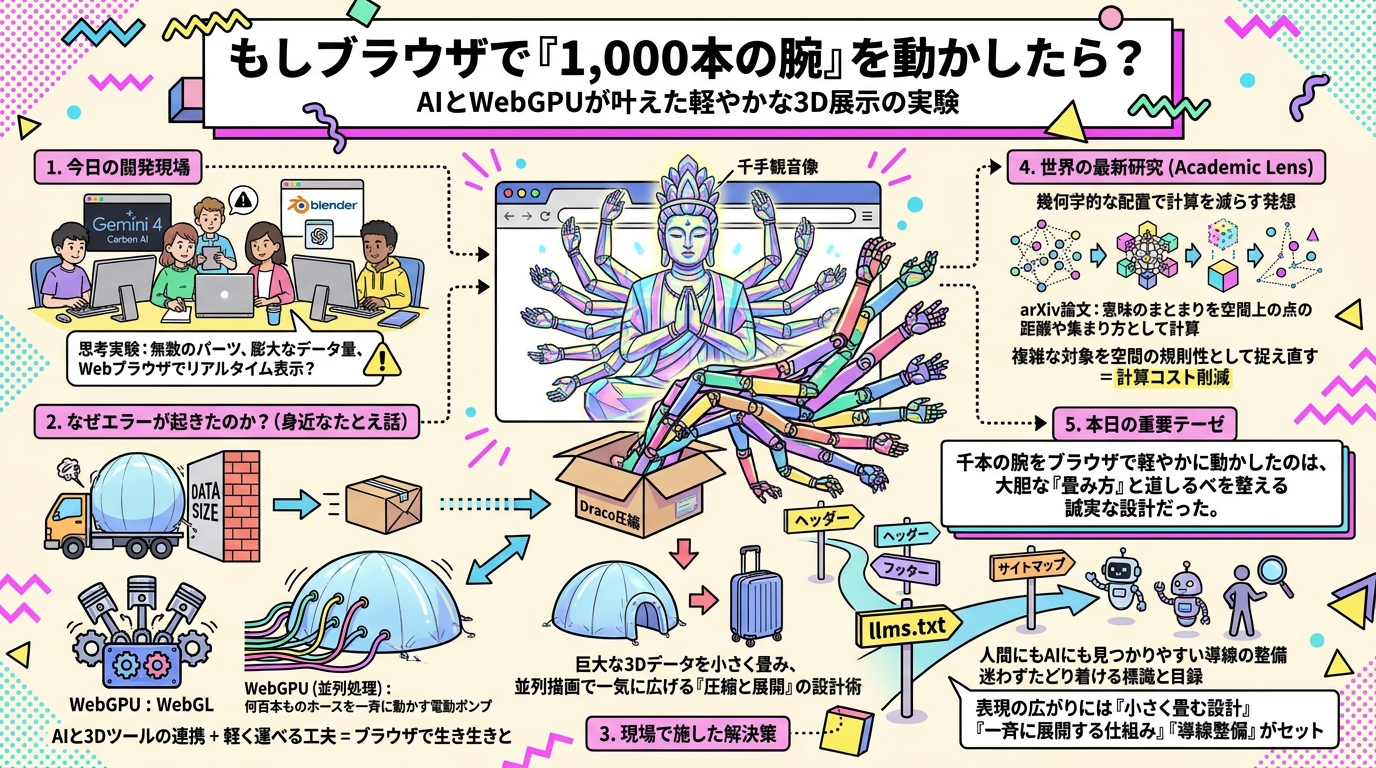
What If You Animated '1,000 Arms' in a Browser? A Lightweight 3D Exhibition Experiment Powered by AI and WebGPU
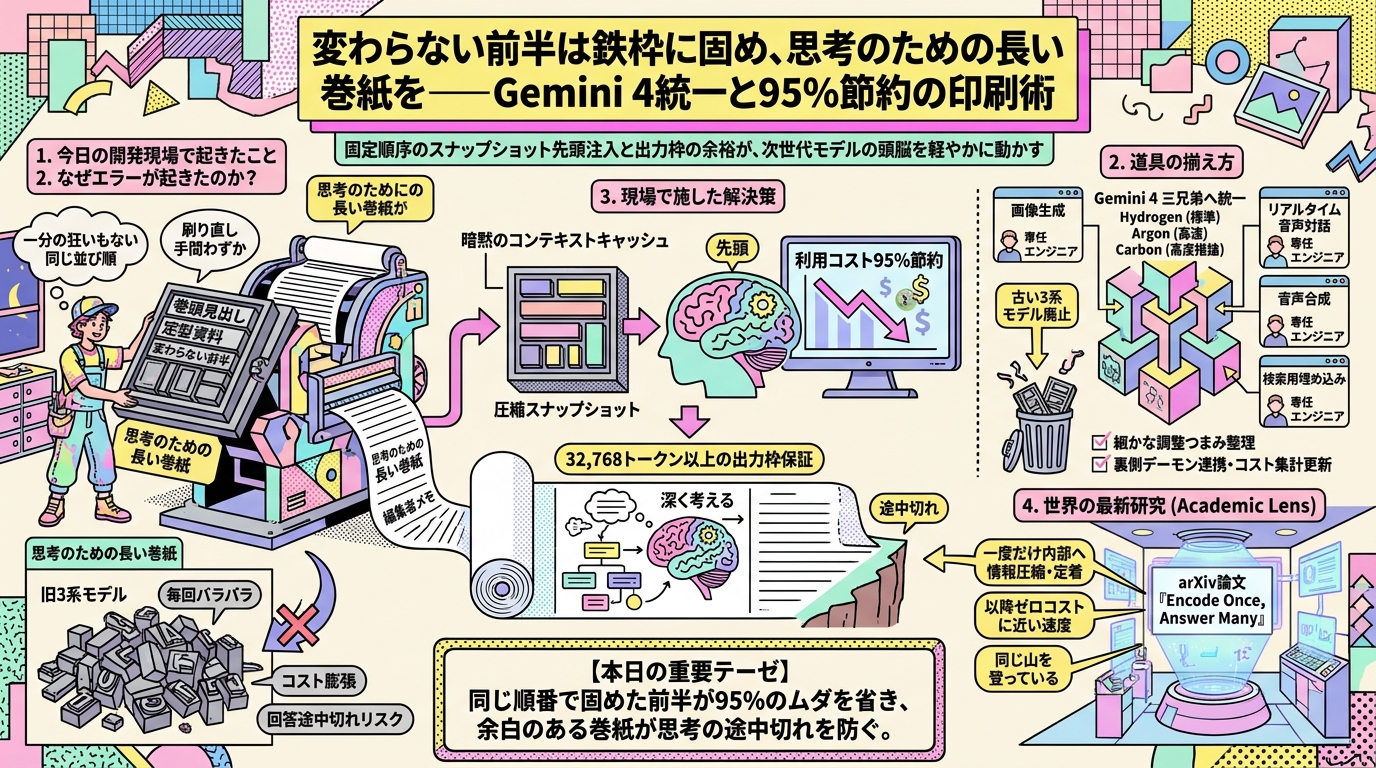
Locking the Constant Lead in Iron, Unrolling Long Scrolls for Thought — Gemini 4 Unification and the Art of 95% Printing Savings
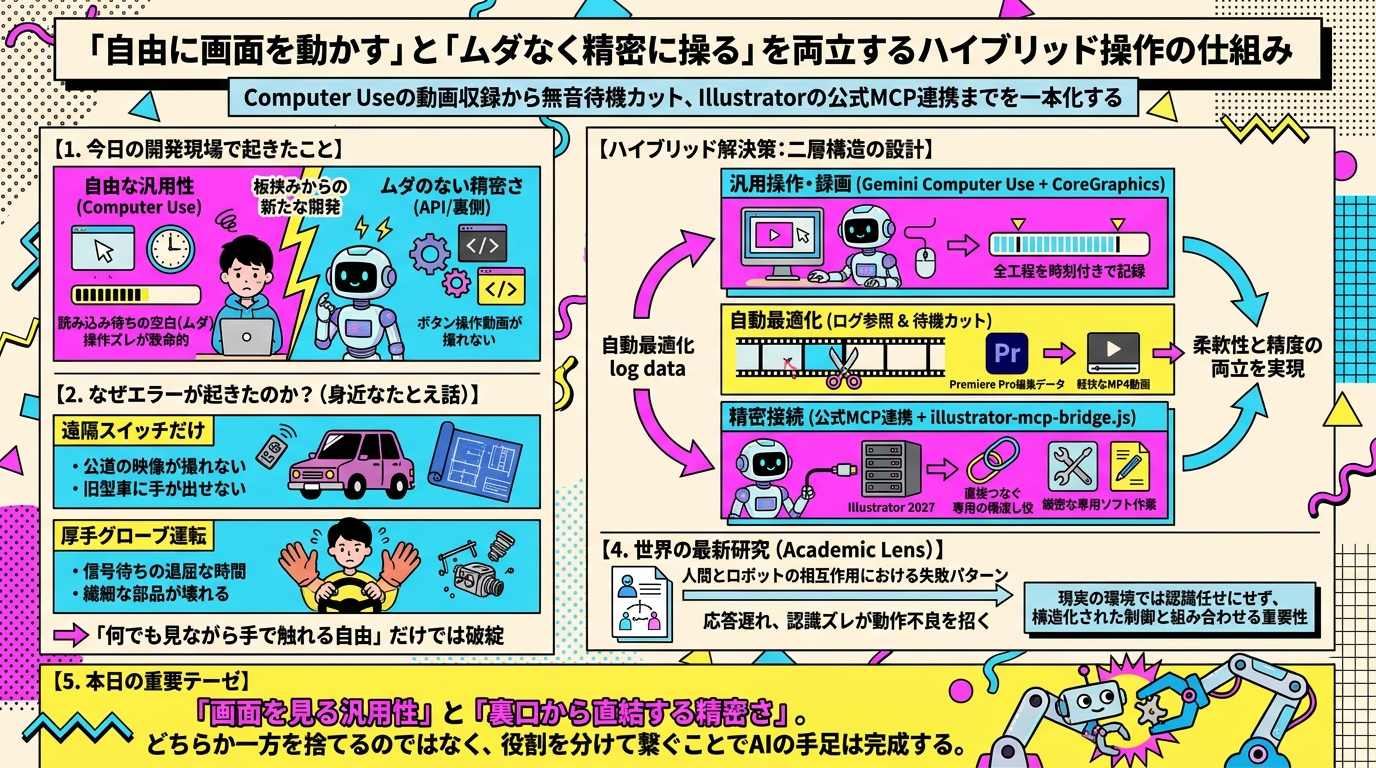
A Hybrid Control Architecture Bridging Free-Form Screen Navigation and Lean, Precision Execution
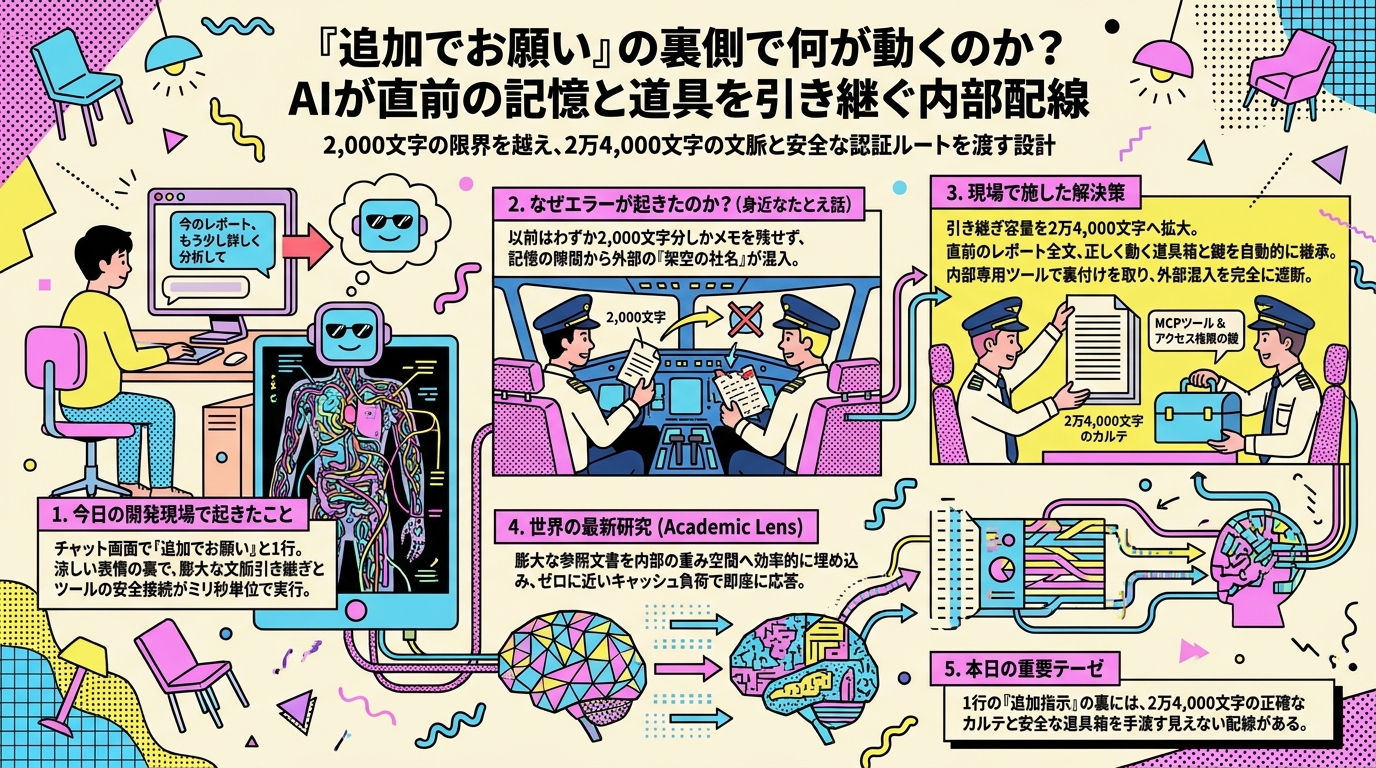
Behind "Just One More Request": The Internal Wiring That Hands Off Memory and Tools Between AIs