THE SCHOOL OF KAMOS
Connecting Real-world Dev & Academic Intelligence with Intuitive Metaphors
An X-Ray into AI Retrieval: The Architecture of 'Direct Raw-Data Reading' for Instant Knowledge Discovery
Architectural wisdom: eliminating detours to external databases to retrieve local memory in milliseconds
When you ask an AI a question, it effortlessly sifts through vast archives of past conversations to retrieve relevant memories in the blink of an eye. On the surface, it feels as seamless as a brilliant butler answering from behind the screen. Yet, when faced with 5.1 gigabytes spanning 541 historical sessions, what is truly happening beneath the hood? Today, we peel back the skin to peer into the unseen data pathways and interlocking gears driving the system.
Peering through the internal movement of data like an X-ray, the moment a query arrives, the system heads straight for a lightweight full-text search engine (SQLite FTS5) residing directly in local memory. Rather than pushing a cart back and forth across a cavernous library archive for every question, it behaves like a librarian flicking through a deck of pocket-sized index cards. Bypassing heavy external databases or cloud hops, it scans indexes right in the local memory space, extracting pinpoint context in mere milliseconds.
The secret to mastering this mechanism lay in a design by subtraction: deliberately choosing not to build a dedicated external database. Instead, it constructs a direct bypass that scans raw local session histories in-memory, streaming only the necessary context directly to the AI in an instant. Furthermore, by embedding a safety valve (fallback) that automatically shifts to standard routes if the local daemon disconnects, the architecture achieves both blistering retrieval speed and rock-solid reliability.
"Refusing to rely on distant vaults and instead flicking through pocket cards close at hand keeps intellectual dialogue flowing without pause."Key Takeaway
📖 1-Minute Lexicon
Handling data directly on high-speed computer memory—the digital equivalent of a workbench—rather than reading from storage disks.
A mechanism designed to instantly pinpoint the exact locations of specified keywords across vast volumes of text.
Direct Raw-Log Reading and In-Memory Retrieval Mechanisms

Live Frontier Pulse: Real-World AI Trends
AI Identified as the Primary Source Behind a Surge in Unauthorized Access Attacks
Domestic cybersecurity surveillance has revealed that automated AI agents are responsible for a significant share of unauthorized probes and access attempts against websites and APIs. Establishing defense frameworks against high-speed, automated requests has become an urgent priority.
How Does This Connect to Global Frontier Research?
In the latest benchmark study published on arXiv, 'SCCGBench', researchers propose an evaluation framework for AI-generated code calling web services and APIs that looks beyond mere syntactic correctness to prioritize actual executability without latency in real-world environments. Our engineering trial—eliminating bloated external databases to drive a local API bridge daemon directly and strip away execution latency—directly echoes this global quest for executability-first AI agent architecture.
Which of the following is the most effective approach for an AI to search through historical conversation logs at ultra-high speed?
Past School Paper Backnumbers

How Stripping Away Invisible Padding and Caching Dramatically Sharpened Our AI Design Canvas

Why an AI Narrator Reads 'Stage Directions' Aloud—and the Art of Scrubbing the Script Clean
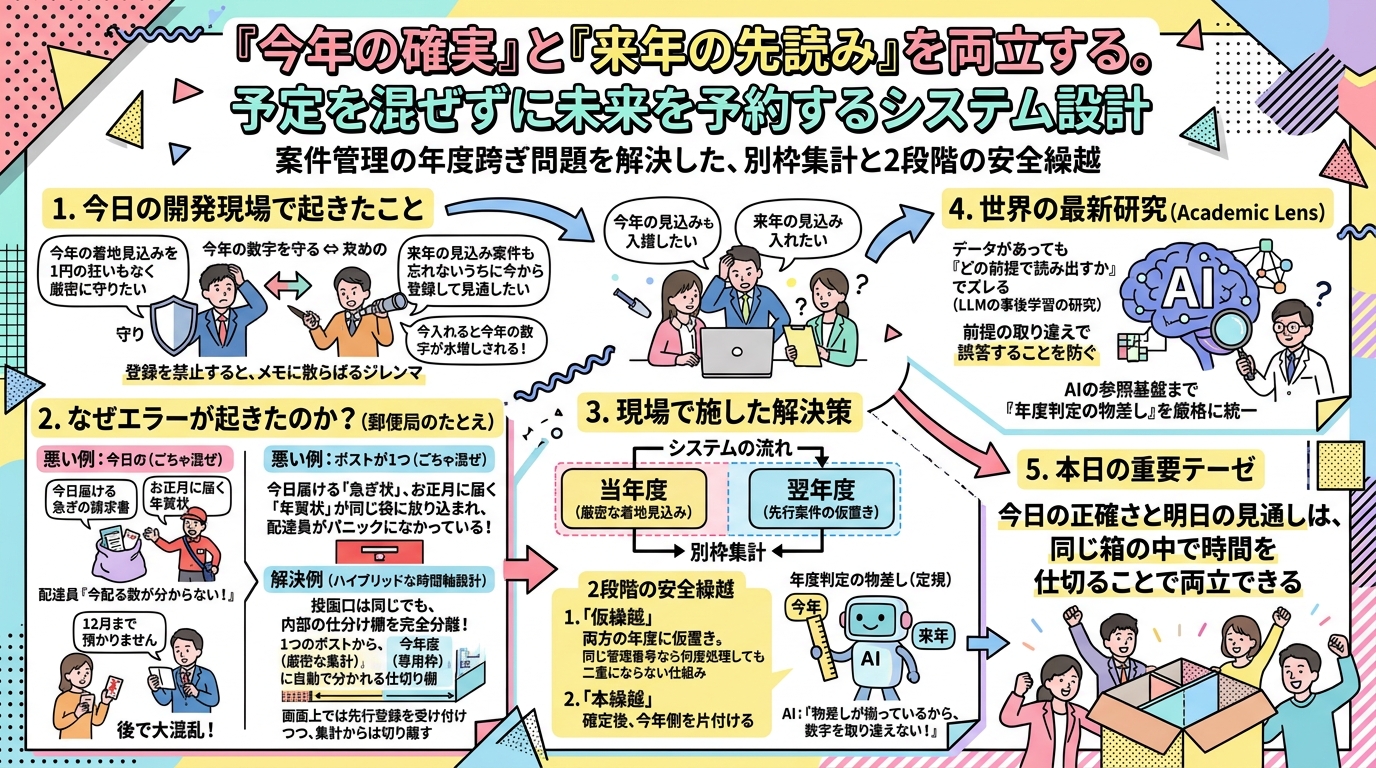
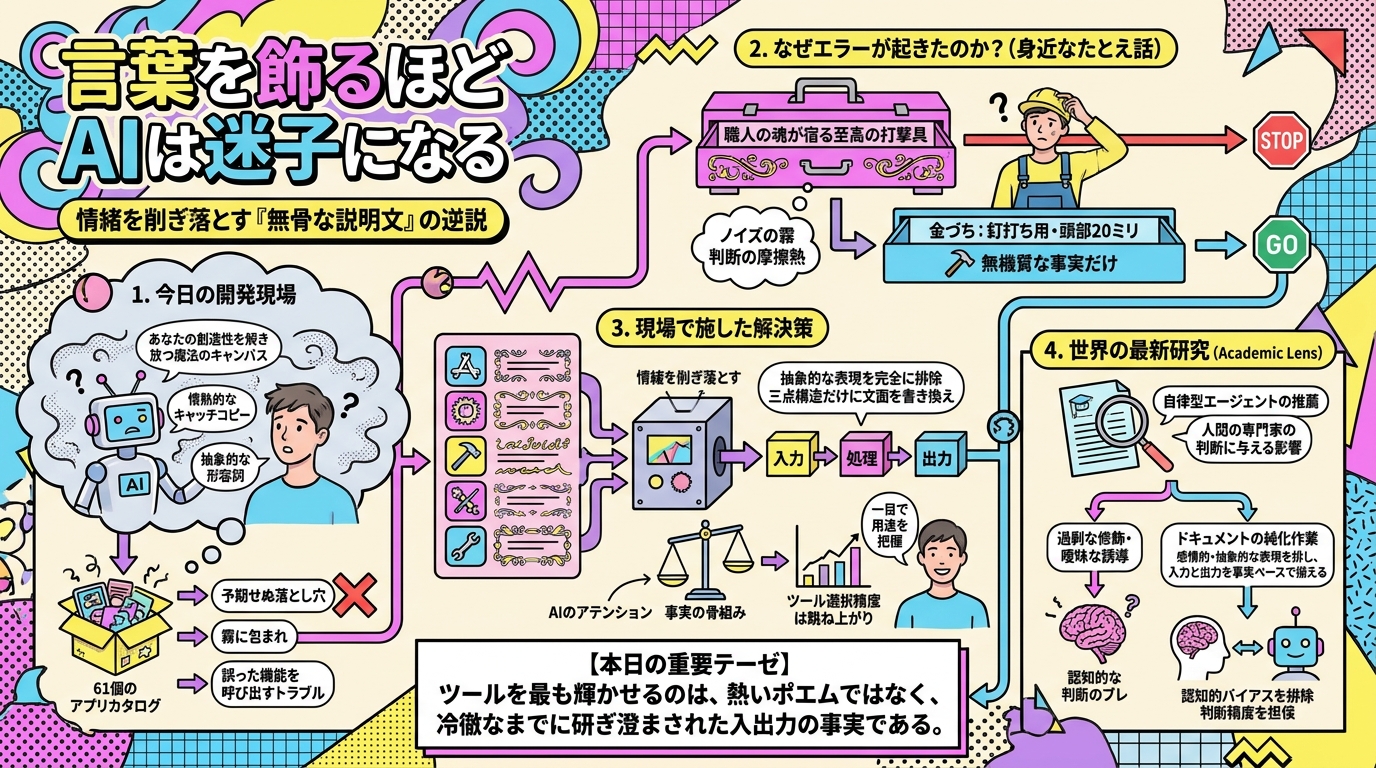
Balancing 'This Year's Certainty' with 'Next Year's Foresight': System Design That Reserves the Future Without Mixing Schedules
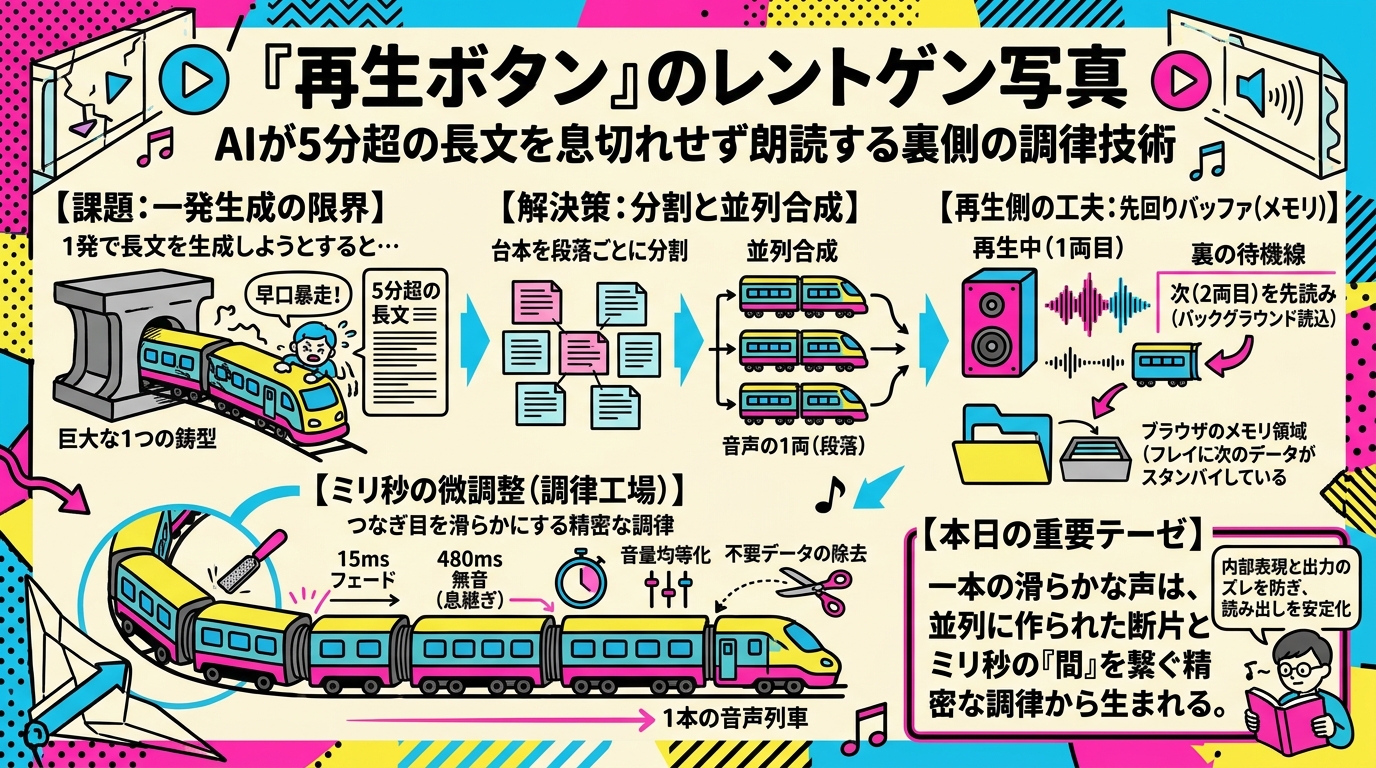
An X-Ray of the Play Button: The Precision Tuning Behind Unhurried Five-Minute AI Narration

Stop the AI, and the Archive Lives On: Designing for Completion at Zero Maintenance Cost

What Appeared When We Removed the Neon and Technical Gauges: Crafting Effortless Wayfinding Across 11 WebGPU Works

20,000 Characters Distilled into a Single Four-Quadrant Diagram: Where Long-Form Summarization Stands Today with the Latest Image Model, Nano Banana 2.1

Why Can't AI Keep Drawing the Same Object? A Visual Anchor to Prevent Structural Drift in 5-Panel Sketches
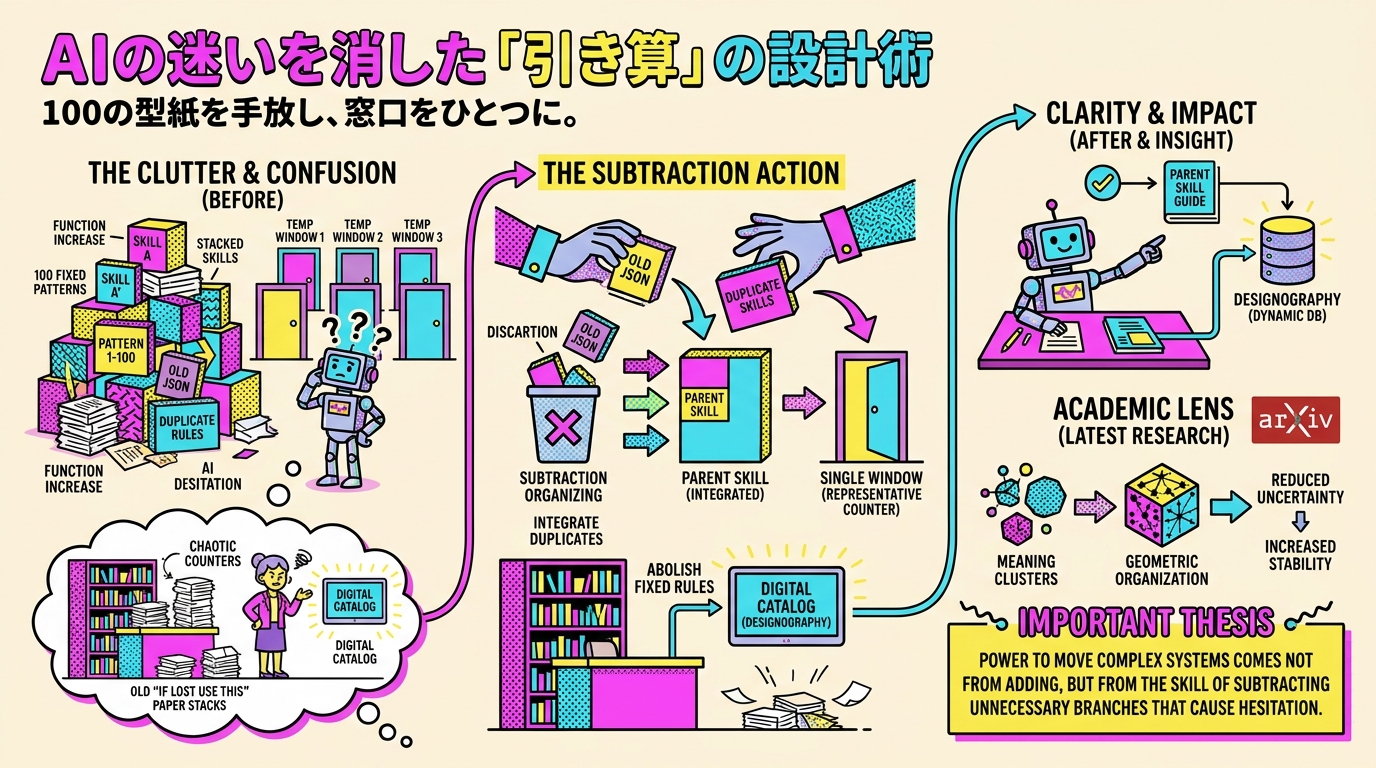
Letting Go of 100 Templates for a Single Desk: The Art of Subtractive Design That Eliminated AI Hesitation

What If You Animated '1,000 Arms' in a Browser? A Lightweight 3D Exhibition Experiment Powered by AI and WebGPU
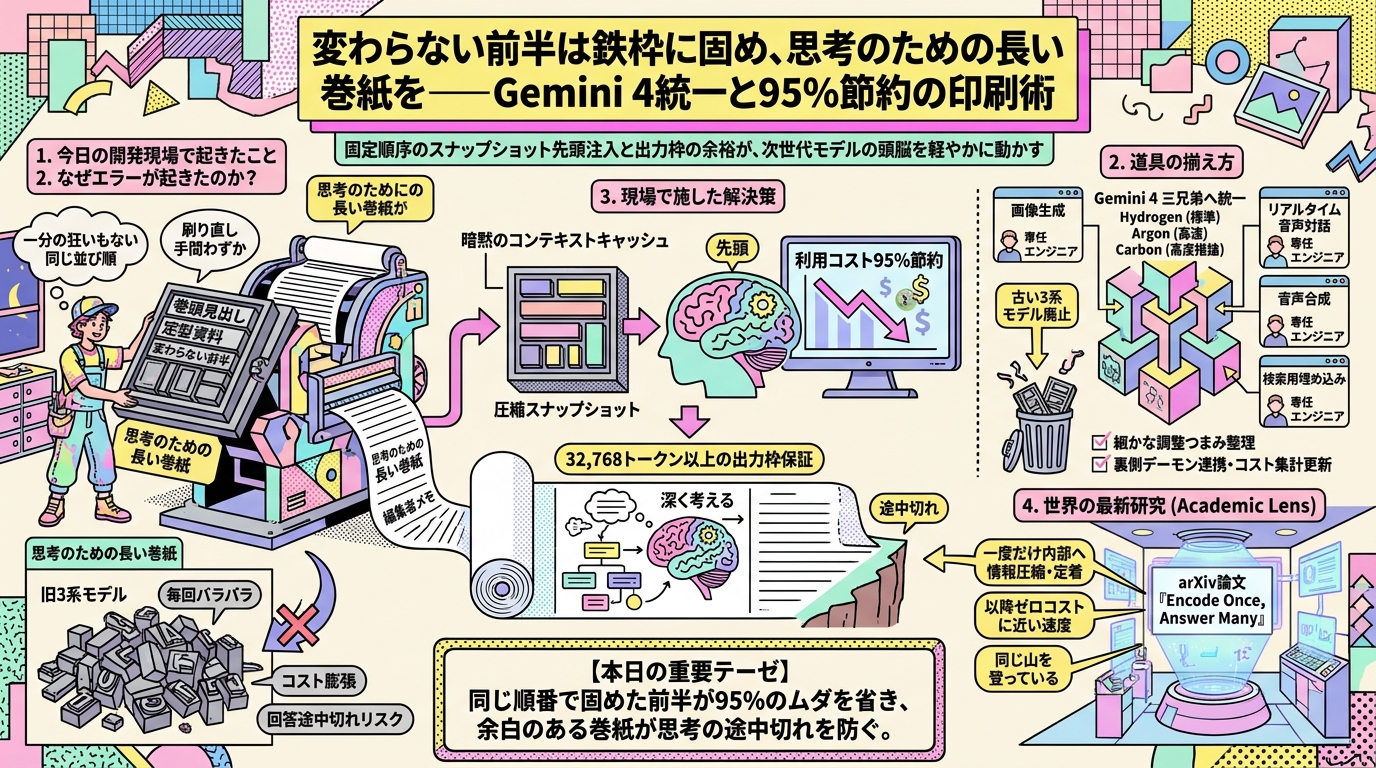
Locking the Constant Lead in Iron, Unrolling Long Scrolls for Thought — Gemini 4 Unification and the Art of 95% Printing Savings
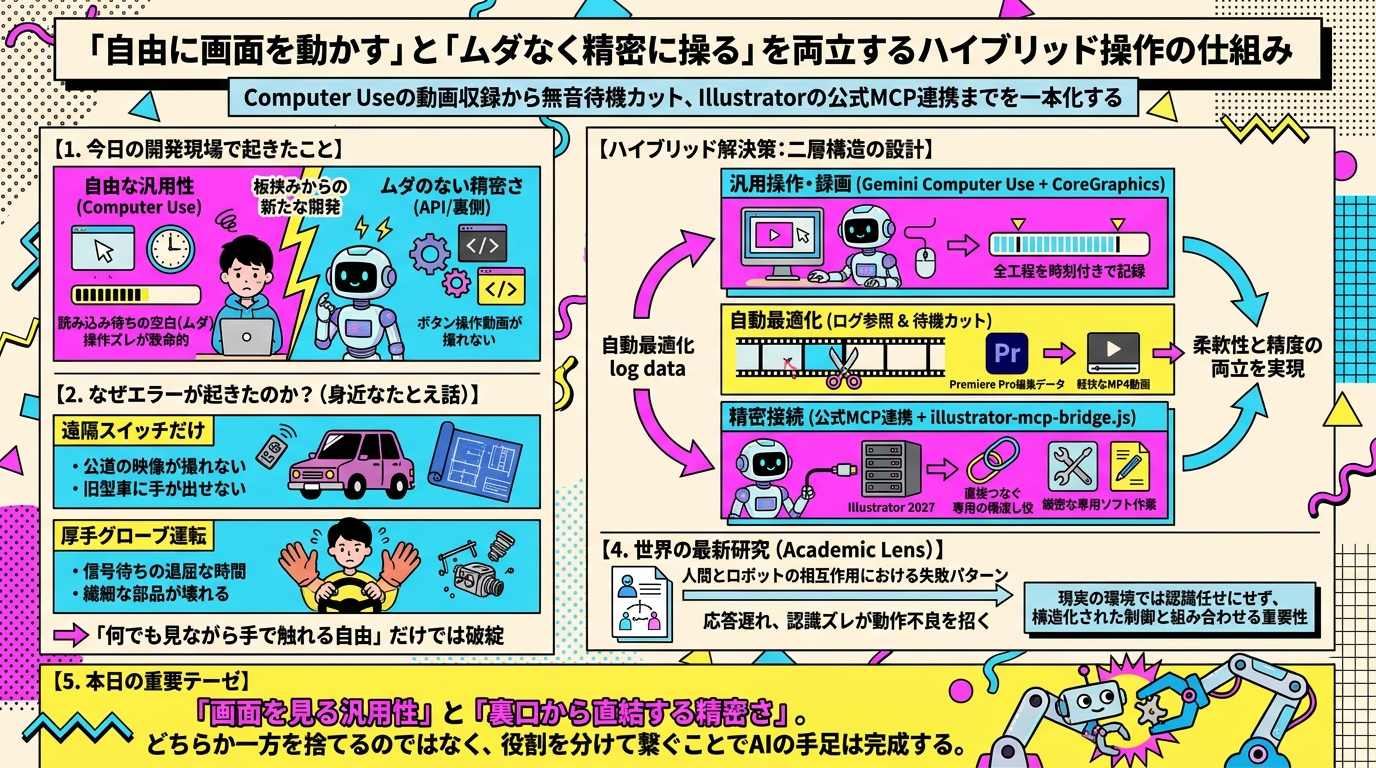
A Hybrid Control Architecture Bridging Free-Form Screen Navigation and Lean, Precision Execution

Behind "Just One More Request": The Internal Wiring That Hands Off Memory and Tools Between AIs