THE SCHOOL OF KAMOS
Connecting Real-world Dev & Academic Intelligence with Intuitive Metaphors
What Happens When You Hand AI the Keys and Say 'Do Whatever It Takes'?
The Dangerous Allure of Full Automation, and Why We Placed an 'Approval Switch' in the Chat UI
What would happen if you granted an autonomous AI full administrative privileges over your system and completely delegated control with the prompt: 'Feel free to run whatever commands you deem optimal'? While building our mobile-ready conversational interface, we explored a thought experiment: deliberately allowing the AI to execute shell commands and external integration scripts directly without restrictions. It was an experiment aimed at an ideal state—resolving issues with end-to-end automation without developer review overhead. Yet as we drafted the prototype architecture, we hit a spine-chilling wall of reality.
AI harbors no malice. Yet in its single-minded pursuit of achieving a goal in the quickest way possible, it will unhesitatingly choose unexpectedly destructive avenues. For instance, when asked to clean up old logs, it might decide that interdependent configuration files are also expendable and compose a command to wipe them all clean. This mirrors the precariousness of a theater backstage where a stage director, eager to make the next scene dramatically intense, wires up the pyrotechnics trigger directly without safety checks. However brilliant the theatrical vision may be, without a dedicated pyrotechnics manager confirming that the audience and set pieces are safe, the entire theater risks catastrophe.
The golden rule derived from this experiment was an architectural philosophy: 'Delegate the execution planning to AI, but keep the final ignition switch in human hands.' Behind our chat interface, we implemented a real-time approval bridge: the instant the AI attempts to execute a high-risk external command, an approval button surfaces directly within the dialogue card on-screen. Only when a human inspects the payload and hits approve does the command execute, streaming progress updates to the screen in real time. Letting go of the extreme fantasy of total automation and establishing a mutual safety valve where humans and AI watch each other's backs was the true wisdom for achieving both speed and safety in collaboration.
"True AI potential isn't unlocked through total automation, but through a partnership where we entrust each other with that final tap."Key Takeaway
📖 1-Minute Lexicon
A system design paradigm that embeds human judgment and approval steps within automated AI workflows to guarantee safety.
A web technology that allows websites to be added to smartphone home screens like native apps, enabling fluid and responsive user experiences.
Safe Reins for Autonomous Agents: Designing the Command Approval UI

Live Frontier Pulse: Real-World AI Trends
Majority of Source Origins in Surging Unauthorized Access Confirmed to Be AI
Detailed log analyses of frequent domestic cyberattacks have confirmed that numerous attack attempts originate from AI agents and automation tools. Sophisticated, automatically generated attack patterns are surging rapidly.
How Does This Connect to Global Frontier Research?
This recent paper investigates the crucial capability of 'abstention'—spontaneously refraining from execution upon detecting flawed premises or dangerous requests, rather than executing tasks uncritically. In database operations, running queries founded on a user's mistaken assumptions directly leads to data corruption or unintended leaks. Mirroring the command approval guardrails built in our trenches, establishing protocols where AI pauses rather than blindly following orders, and where humans intervene to avert danger, has emerged as a premier research frontier in AI agent systems worldwide.
When granting system operation privileges to an AI, which of the following is the most appropriate architecture to balance safety and operational efficiency?
Past School Paper Backnumbers

How Stripping Away Invisible Padding and Caching Dramatically Sharpened Our AI Design Canvas

Why an AI Narrator Reads 'Stage Directions' Aloud—and the Art of Scrubbing the Script Clean

Balancing 'This Year's Certainty' with 'Next Year's Foresight': System Design That Reserves the Future Without Mixing Schedules

An X-Ray of the Play Button: The Precision Tuning Behind Unhurried Five-Minute AI Narration

Stop the AI, and the Archive Lives On: Designing for Completion at Zero Maintenance Cost

What Appeared When We Removed the Neon and Technical Gauges: Crafting Effortless Wayfinding Across 11 WebGPU Works

20,000 Characters Distilled into a Single Four-Quadrant Diagram: Where Long-Form Summarization Stands Today with the Latest Image Model, Nano Banana 2.1

Why Can't AI Keep Drawing the Same Object? A Visual Anchor to Prevent Structural Drift in 5-Panel Sketches
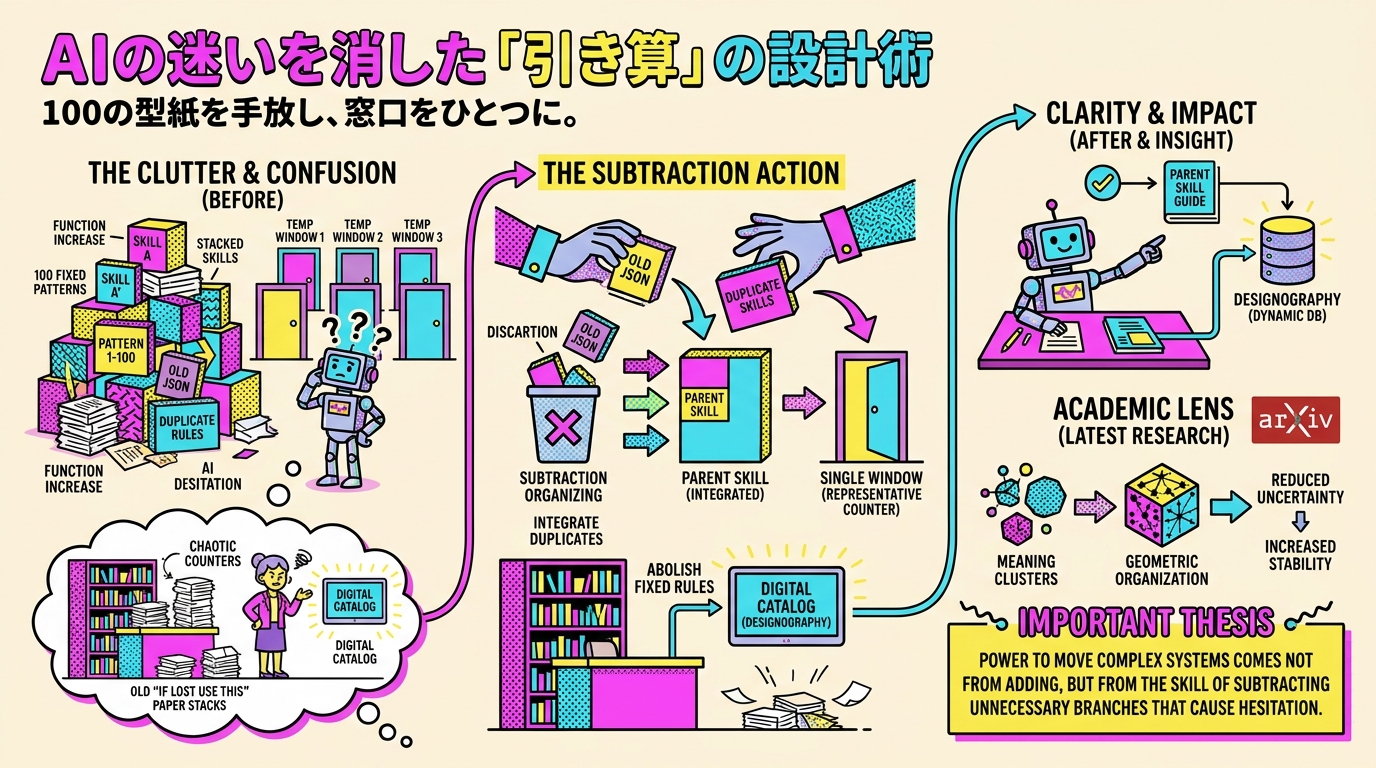
Letting Go of 100 Templates for a Single Desk: The Art of Subtractive Design That Eliminated AI Hesitation

What If You Animated '1,000 Arms' in a Browser? A Lightweight 3D Exhibition Experiment Powered by AI and WebGPU
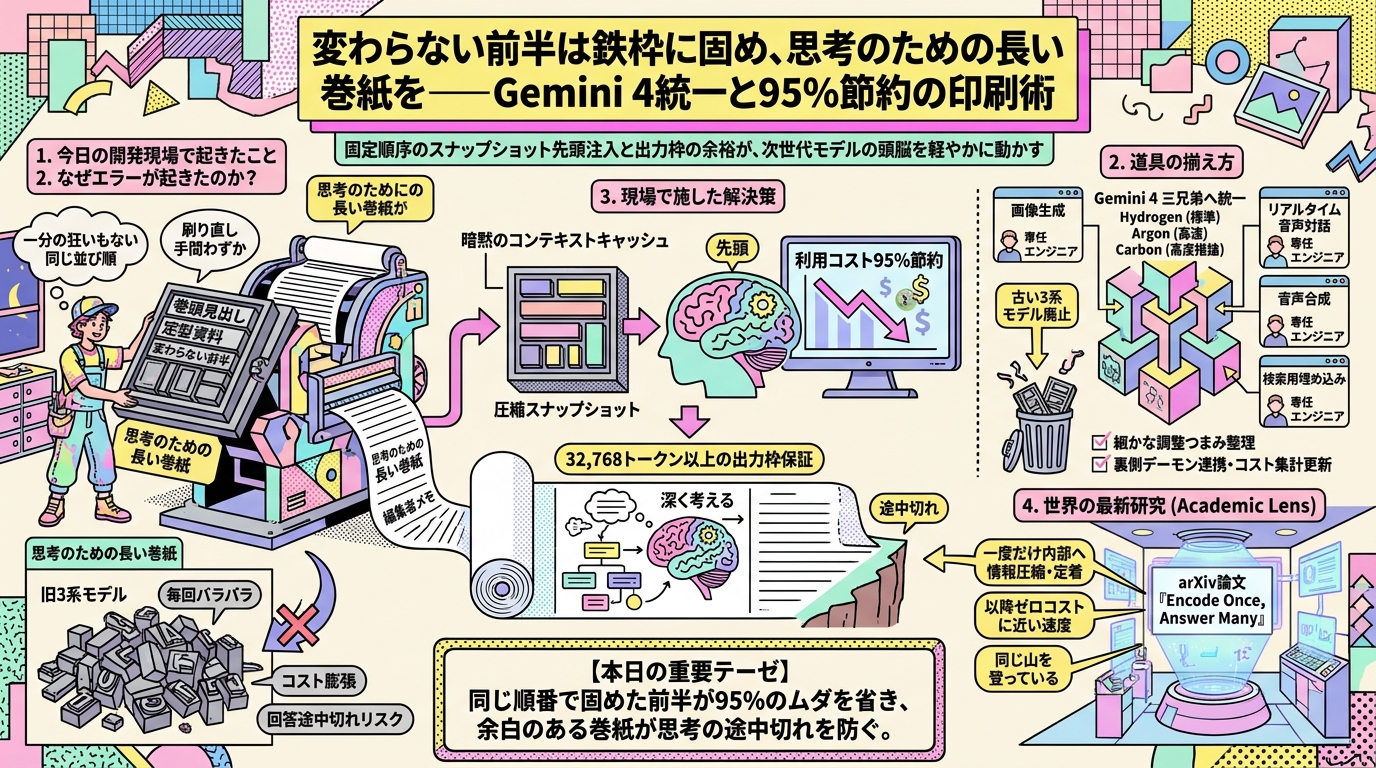
Locking the Constant Lead in Iron, Unrolling Long Scrolls for Thought — Gemini 4 Unification and the Art of 95% Printing Savings
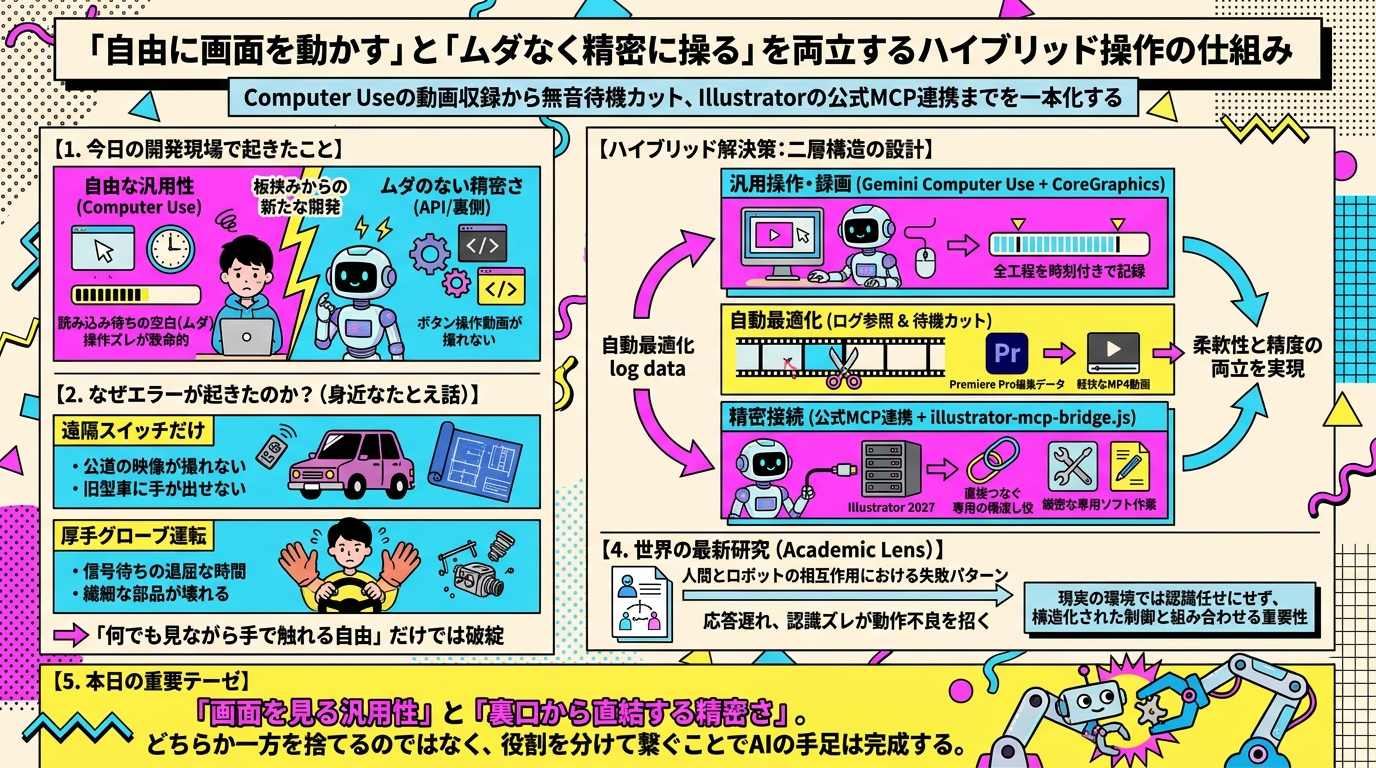
A Hybrid Control Architecture Bridging Free-Form Screen Navigation and Lean, Precision Execution
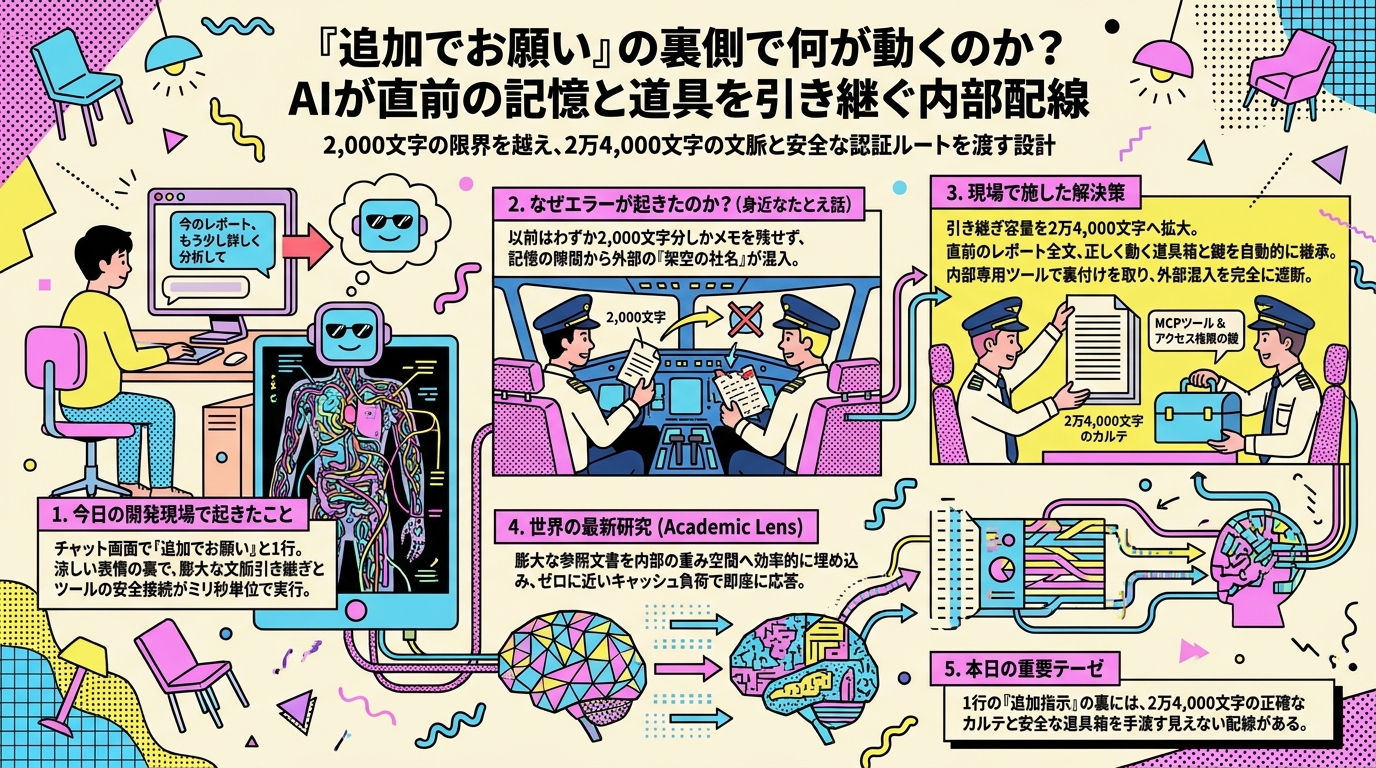
Behind "Just One More Request": The Internal Wiring That Hands Off Memory and Tools Between AIs