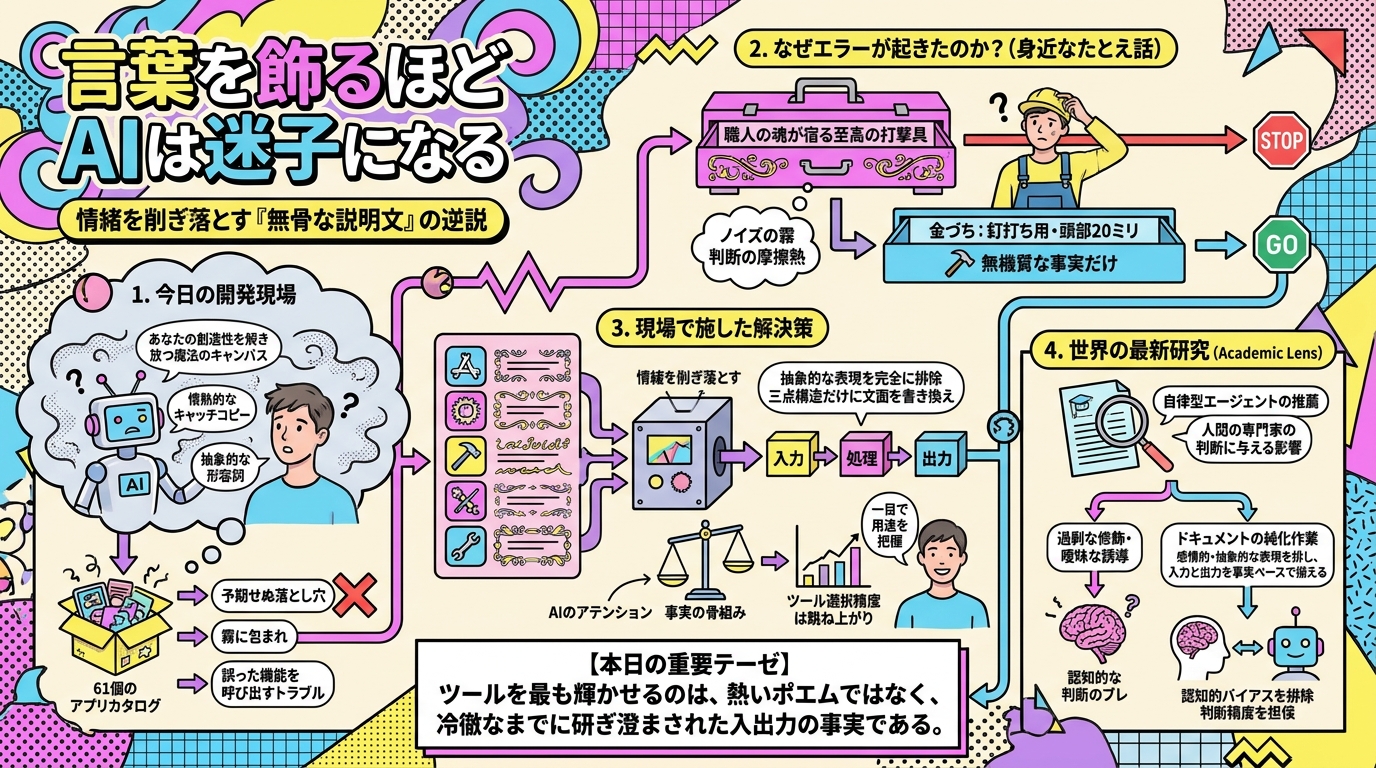
THE SCHOOL OF KAMOS
Connecting Real-world Dev & Academic Intelligence with Intuitive Metaphors
AI Grows Smarter by Subtraction, Not Addition
The Intelligence of Selective Silence: What Our Dev Team Discovered After Halting the Daily Flood of Automated Alerts
It seems intuitive that delivering the latest AI research and insights every morning would maximize a team’s learning efficiency. In practice, however, our team was drowned in a mounting heap of unread notifications, critical system alerts were overlooked, and overlapping background jobs repeatedly triggered authentication errors. Information intended to empower had instead quietly crippled our intelligence.
The paternal urge to teach more and inform more often backfires. It mirrors a museum gallery: if a curator attempts to please visitors by wheeling tens of thousands of artifacts and ceramics from storage into the lobby all at once, the space ceases to be an exhibition and becomes an impassable warehouse. What visitors seek is not sheer volume, but a vividly contoured narrative worth looking at right now. Our excessive broadcasts scattered attention, quietly exhausting both system resources and human cognitive capacity.
The team made a decisive move: permanently deprecate and shut down the automated digest pipeline that had run for years. The moment we embraced this subtraction—which initially felt like a step backward—the authentication race conditions across our batch jobs vanished, and open rates for our single, carefully curated weekly digest skyrocketed. AI models operate by the exact same principle. Rather than impulsively generating off-target answers for every prompt, an AI that senses uncertainty and deliberately holds its tongue dramatically elevates the reliability of the entire system.
"Intelligence lies not in how much you can say, but in how gracefully you choose silence."Key Takeaway
📖 1-Minute Lexicon
A safety behavior in AI systems where the model deliberately withholds an answer rather than guessing when faced with uncertain information or flawed premises.
A state of cognitive overload caused by an excess of automated alerts and newsletters, leading recipients to abandon checking them and causing critical information to be lost in the noise.
The Intelligence of Subtraction: Escaping Information Overload

Live Frontier Pulse: Real-World AI Trends
From Human-Readable Code to AI-Readable Assets: NTT Unveils Paradigm-Shifting Tech for AI-Native Development
NTT announced new technology that enables AI to automatically detect and reconcile discrepancies and testing gaps between human-written specifications and existing codebases, accelerating the transition to AI-native development platforms.
How Does This Connect to Global Frontier Research?
In the domain of generating database queries from natural language instructions, this study introduces a novel benchmark that evaluates an AI's ability to autonomously identify flawed premises in user prompts and deliberately abstain from execution. Rather than forcefully responding to every query and causing catastrophic errors, opting for silence or challenging flawed premises represents an exceptionally high-order intelligence for next-generation AI agents.
Counterintuitively, which of the following approaches is most effective for an AI system to earn user trust?
Past School Paper Backnumbers

How Stripping Away Invisible Padding and Caching Dramatically Sharpened Our AI Design Canvas
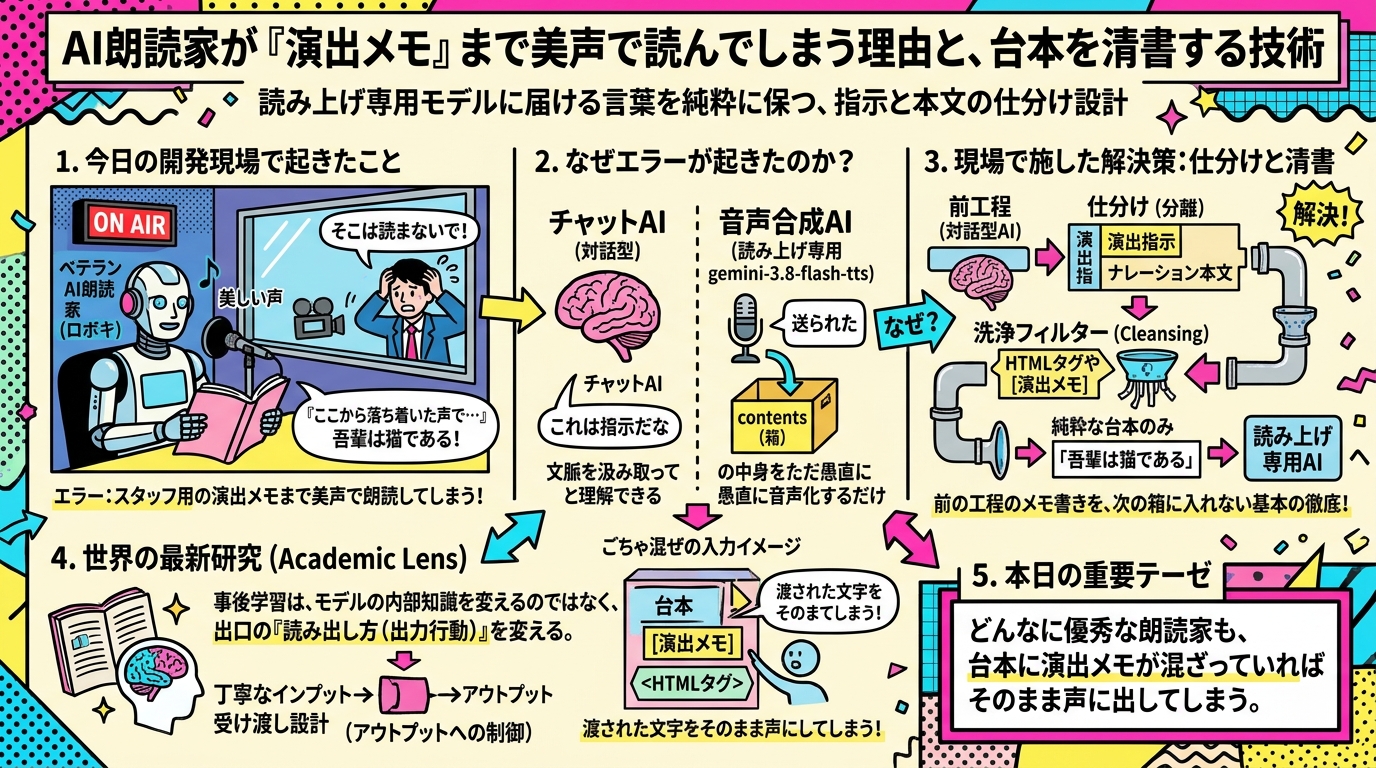
Why an AI Narrator Reads 'Stage Directions' Aloud—and the Art of Scrubbing the Script Clean

Balancing 'This Year's Certainty' with 'Next Year's Foresight': System Design That Reserves the Future Without Mixing Schedules

An X-Ray of the Play Button: The Precision Tuning Behind Unhurried Five-Minute AI Narration

Stop the AI, and the Archive Lives On: Designing for Completion at Zero Maintenance Cost

What Appeared When We Removed the Neon and Technical Gauges: Crafting Effortless Wayfinding Across 11 WebGPU Works

20,000 Characters Distilled into a Single Four-Quadrant Diagram: Where Long-Form Summarization Stands Today with the Latest Image Model, Nano Banana 2.1

Why Can't AI Keep Drawing the Same Object? A Visual Anchor to Prevent Structural Drift in 5-Panel Sketches
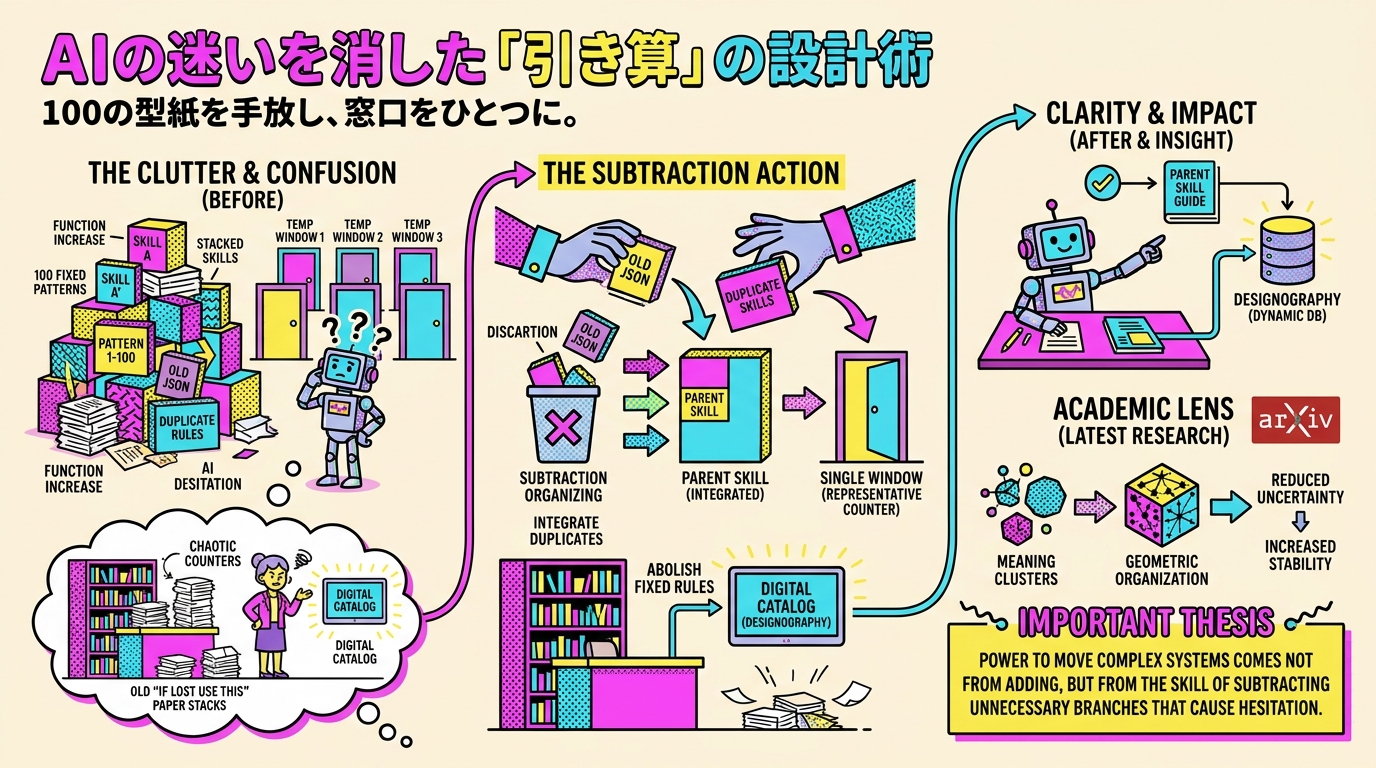
Letting Go of 100 Templates for a Single Desk: The Art of Subtractive Design That Eliminated AI Hesitation

What If You Animated '1,000 Arms' in a Browser? A Lightweight 3D Exhibition Experiment Powered by AI and WebGPU
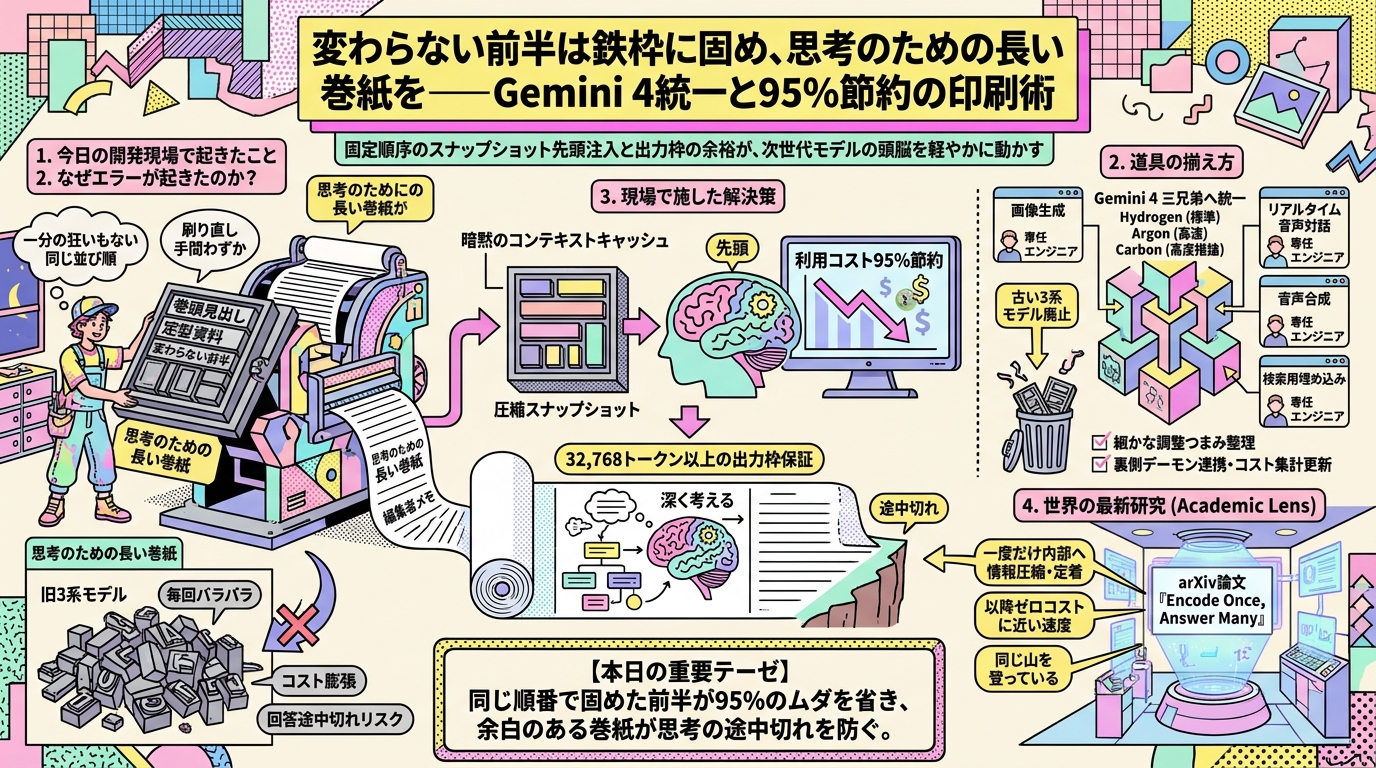
Locking the Constant Lead in Iron, Unrolling Long Scrolls for Thought — Gemini 4 Unification and the Art of 95% Printing Savings
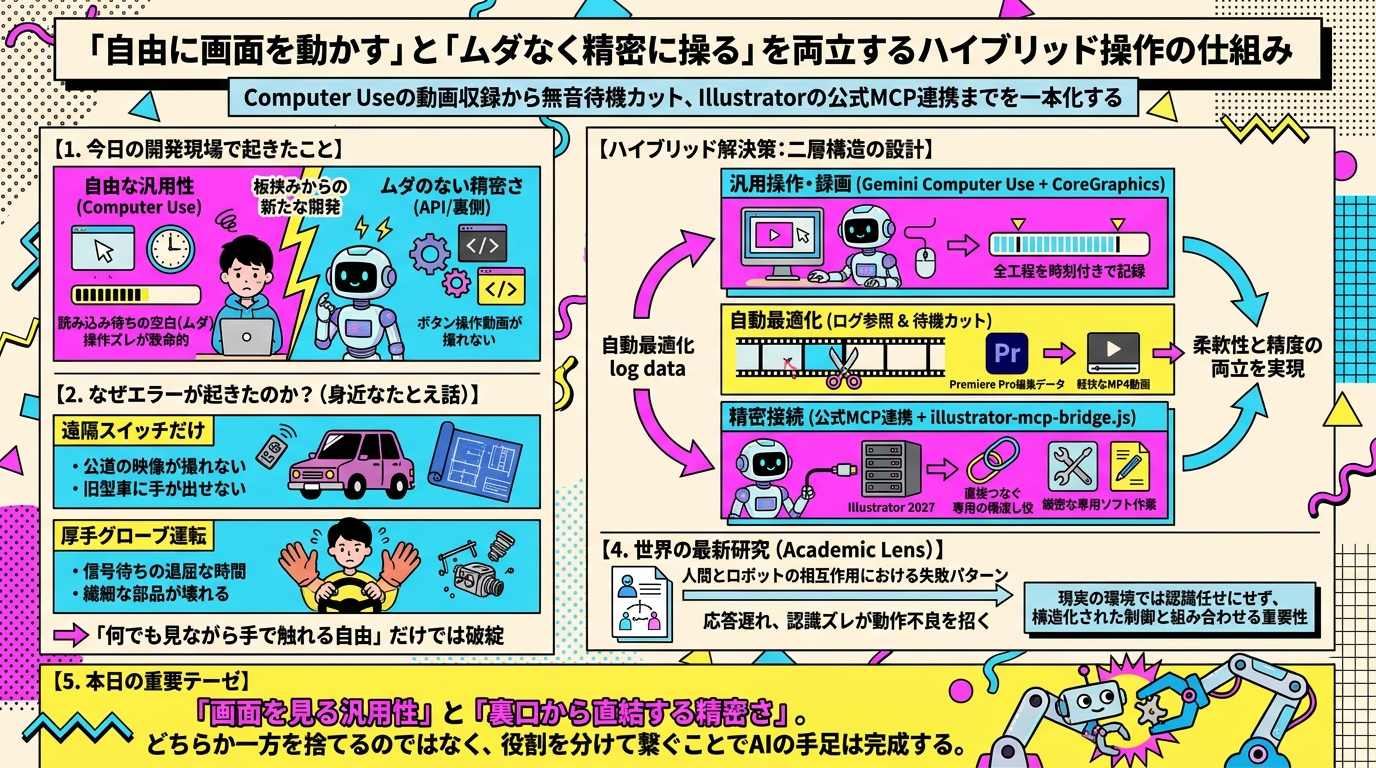
A Hybrid Control Architecture Bridging Free-Form Screen Navigation and Lean, Precision Execution
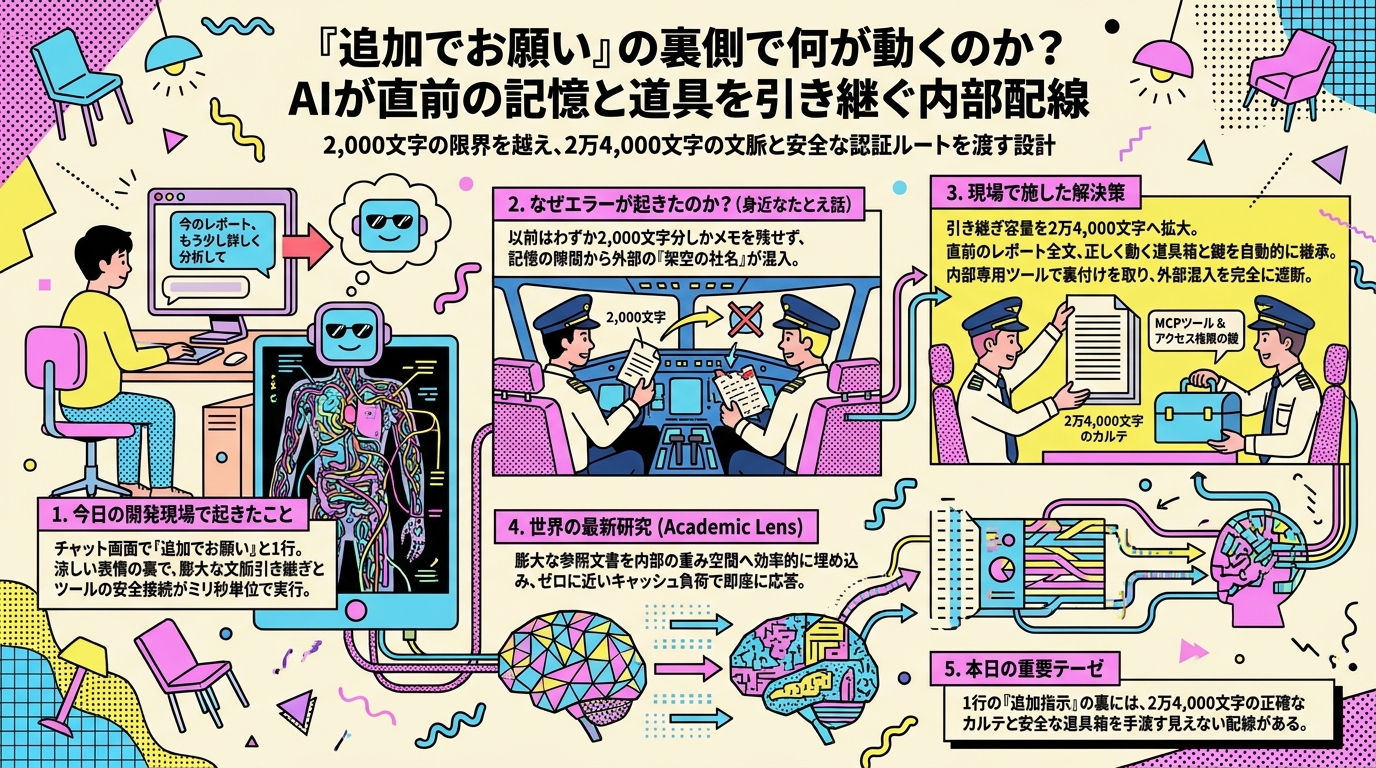
Behind "Just One More Request": The Internal Wiring That Hands Off Memory and Tools Between AIs