THE SCHOOL OF KAMOS
Connecting Real-world Dev & Academic Intelligence with Intuitive Metaphors
Does Merging Apps Make Them Less Usable? The Wisdom of Loose Coupling: "Connecting While Keeping Apart"
Letting go of massive monolithic systems for an architectural design where modules resonate lightly via URLs
Task management, sales ledgers, note-taking, security monitoring—with tools proliferating by the day, it is tempting to think: "Putting everything into a single, all-in-one screen would make it as user-friendly as possible." Yet when the development team actually built an all-encompassing mega-screen, page loads slowed drastically, and tweaking a task layout unexpectedly broke the security dashboard. Aiming for ultimate convenience through integration instead paralyzed the entire ecosystem.
Why does this well-intended unification backfire? It is much like choosing everyday tools. A multi-tool that packs scissors, a can opener, a pen, and a flashlight into one chassis might seem handy at first glance. But when you need to cut something, the scissors are unwieldy and heavy, and if one part breaks, the entire tool becomes useless. Forcibly gluing functions together turns their collective weight into a burden, stripping away agility and ease of piecemeal maintenance.
The engineering team pivoted to the exact opposite approach. Completely abandoning the dream of merging apps into one, they kept task management, sales, scribing, and defense monitoring as independent, specialized tools. Instead, they adopted a setup where apps converse only when necessary through minimal URL parameters like "?id=" or "?visitorId="—deep links. Thanks to this "loosely coupled" design that calls functions point-to-point without meddling with internal architectures, UI bloat vanished, restoring an environment where each module operates nimbly in its dedicated post.
"Rather than forging everything into a single monolith, reconnect independent tools with slender, agile threads."Key Takeaway
📖 1-Minute Lexicon
A system design approach where components remain independent with minimal dependencies, interacting through simple, standardized contracts.
A dedicated URL that directs users straight to specific content or a detail view, bypassing top-level landing pages.
From Monolithic Bloat to Agile Loose Coupling

Live Frontier Pulse: Real-World AI Trends
Towards Safe, Comfortable Human-Robot Coexistence: Developing a Physical AI Coordination Platform
NTT DOCOMO announced the development of a "Physical AI Coordination Platform" designed for safe, comfortable coexistence between humans and varied robotic/AI agents in physical spaces. It aims to achieve seamless interaction and real-time control across heterogeneous devices.
How Does This Connect to Global Frontier Research?
In frontier research on wireless communications and distributed systems, attention is shifting away from sharing exhaustive raw data toward exchanging only the "minimal semantic units" necessary to accomplish a given task. This paper from Beijing University of Posts and Telecommunications demonstrates an AI-driven mechanism that recursively evolves task-oriented minimal communication codes, orchestrating accurate collaboration without congesting bandwidth. The engineering choice to adopt "loose coupling via minimal ID deep links without hoarding bulky payloads" aligns deeply with the core philosophy of next-generation distributed semantic communications.
Which architectural strategy is most effective for ensuring the long-term, stable operation of multiple AI tools and business applications?
Past School Paper Backnumbers

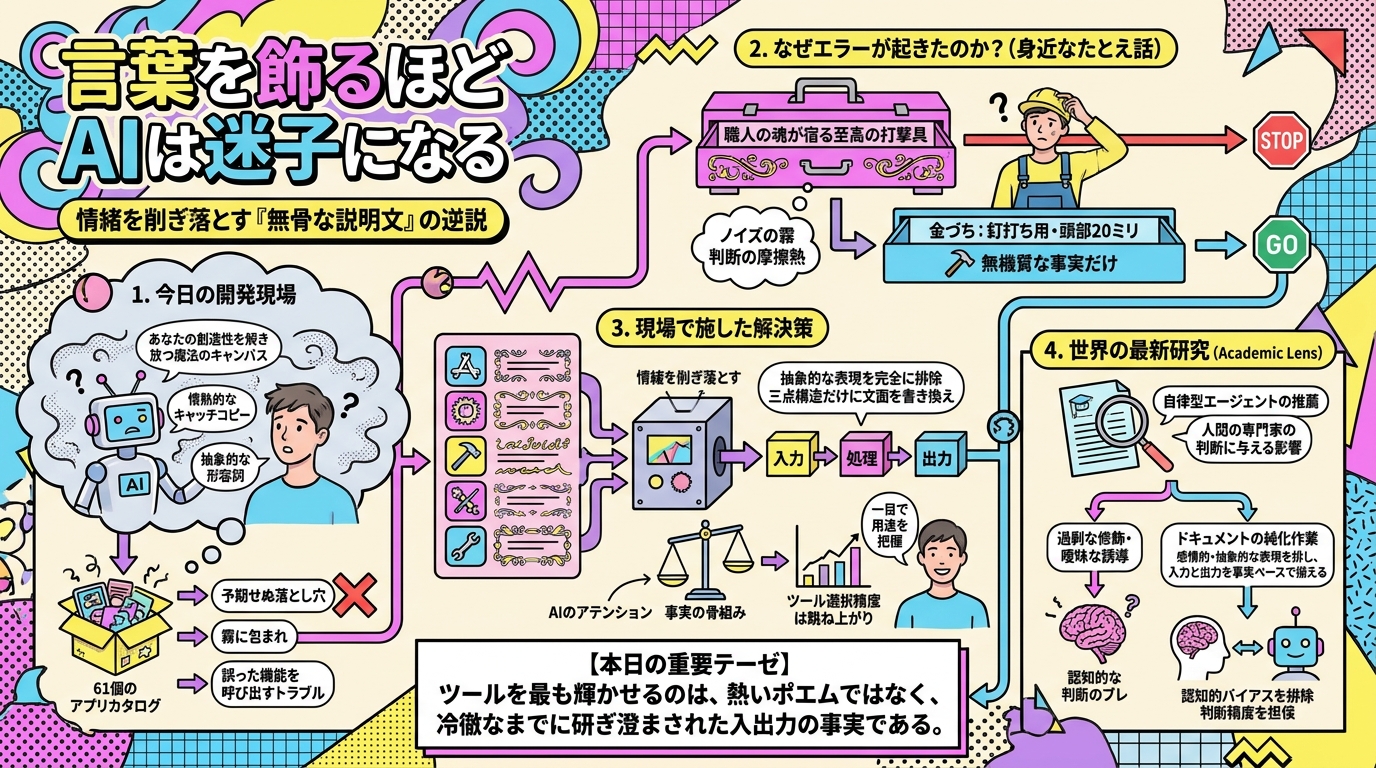
How Stripping Away Invisible Padding and Caching Dramatically Sharpened Our AI Design Canvas
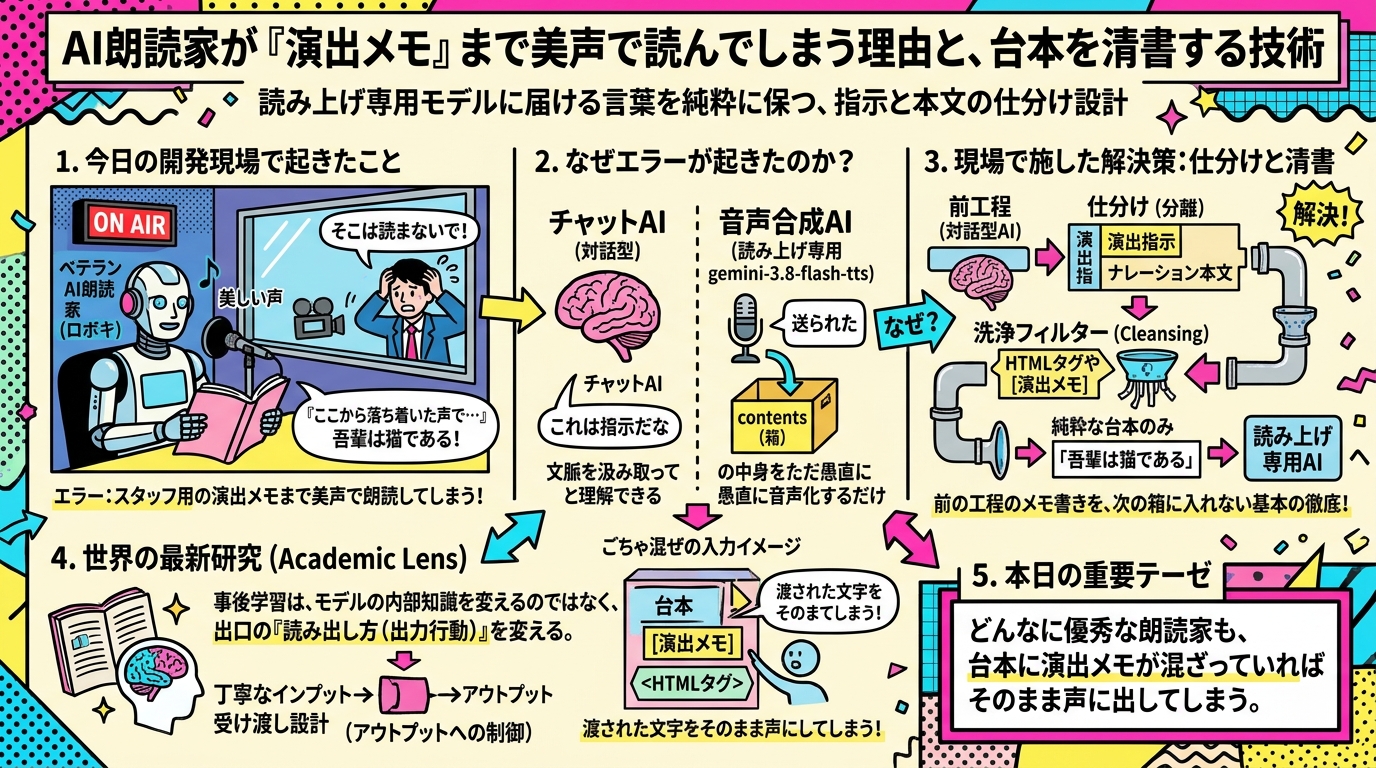
Why an AI Narrator Reads 'Stage Directions' Aloud—and the Art of Scrubbing the Script Clean
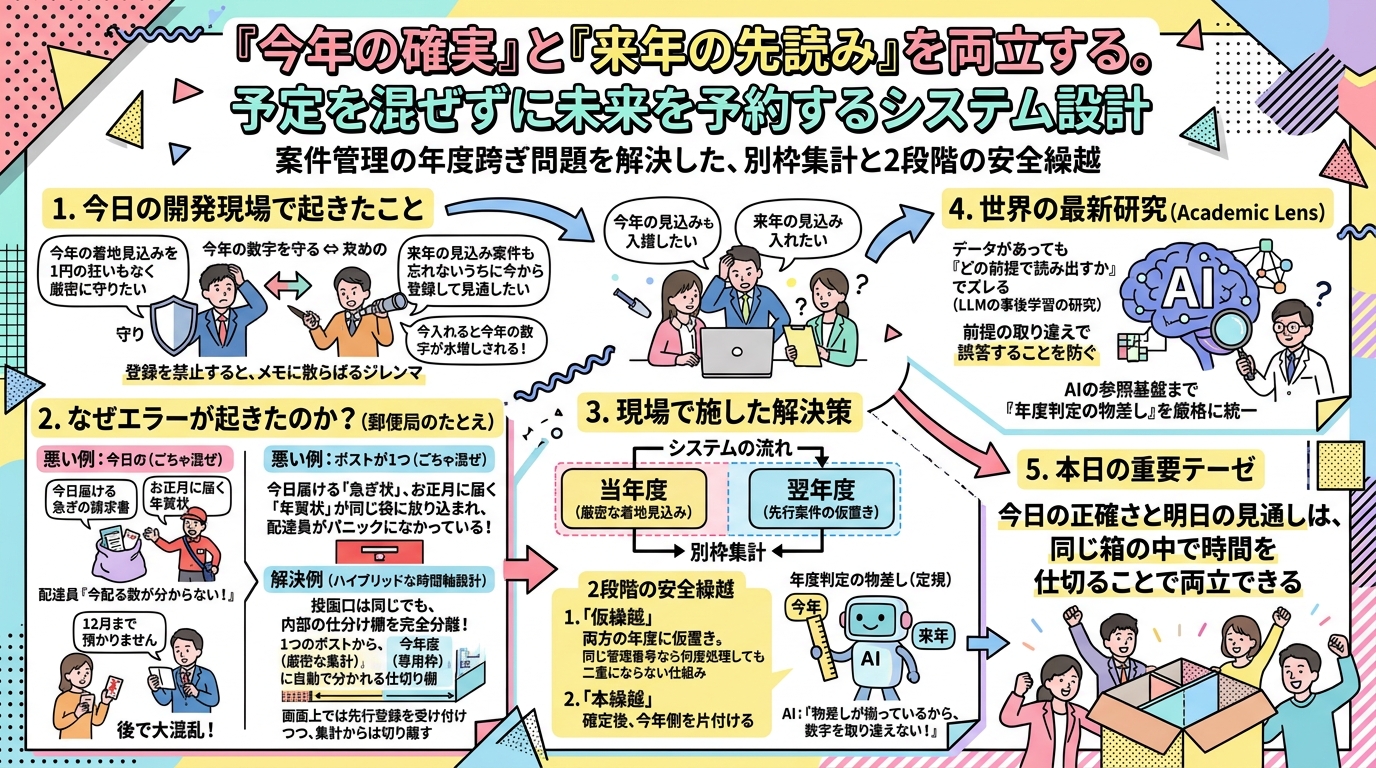
Balancing 'This Year's Certainty' with 'Next Year's Foresight': System Design That Reserves the Future Without Mixing Schedules
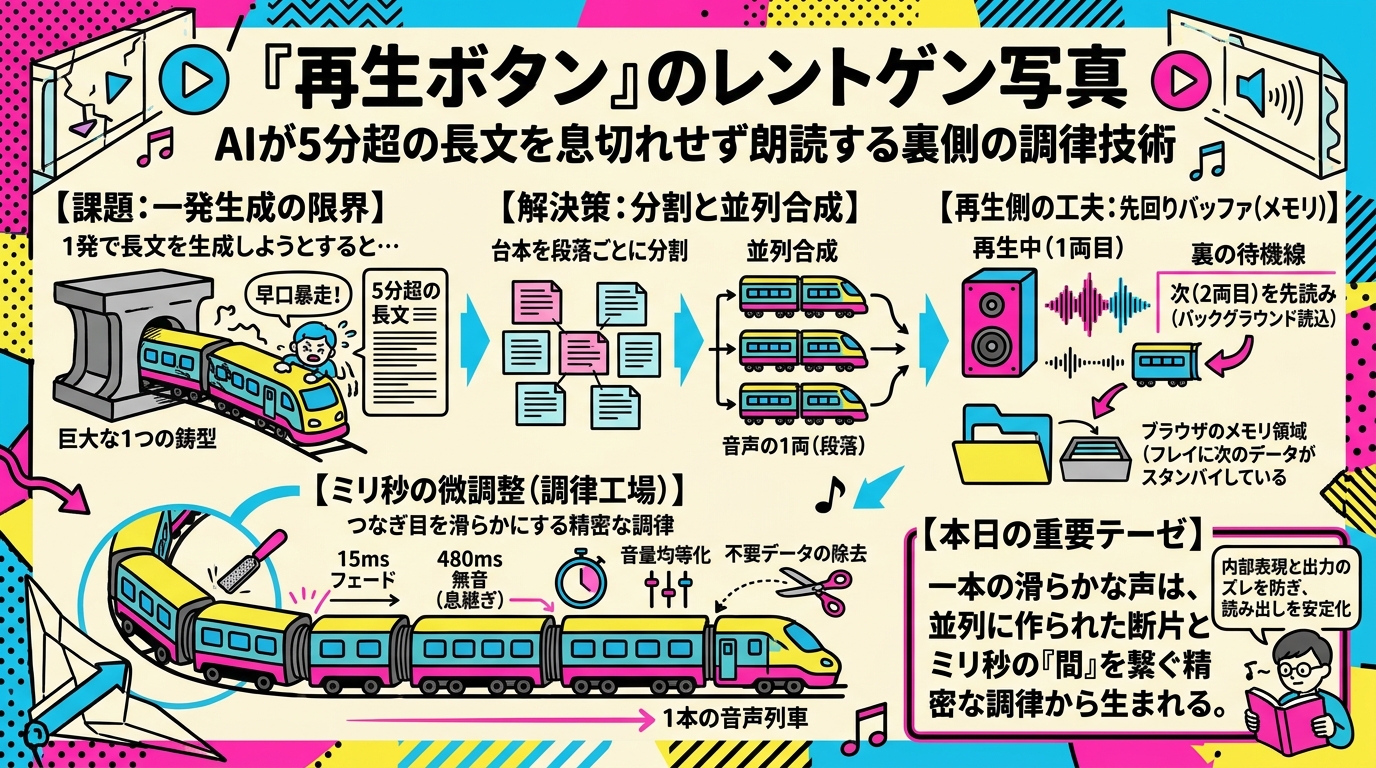
An X-Ray of the Play Button: The Precision Tuning Behind Unhurried Five-Minute AI Narration

Stop the AI, and the Archive Lives On: Designing for Completion at Zero Maintenance Cost

What Appeared When We Removed the Neon and Technical Gauges: Crafting Effortless Wayfinding Across 11 WebGPU Works

20,000 Characters Distilled into a Single Four-Quadrant Diagram: Where Long-Form Summarization Stands Today with the Latest Image Model, Nano Banana 2.1

Why Can't AI Keep Drawing the Same Object? A Visual Anchor to Prevent Structural Drift in 5-Panel Sketches
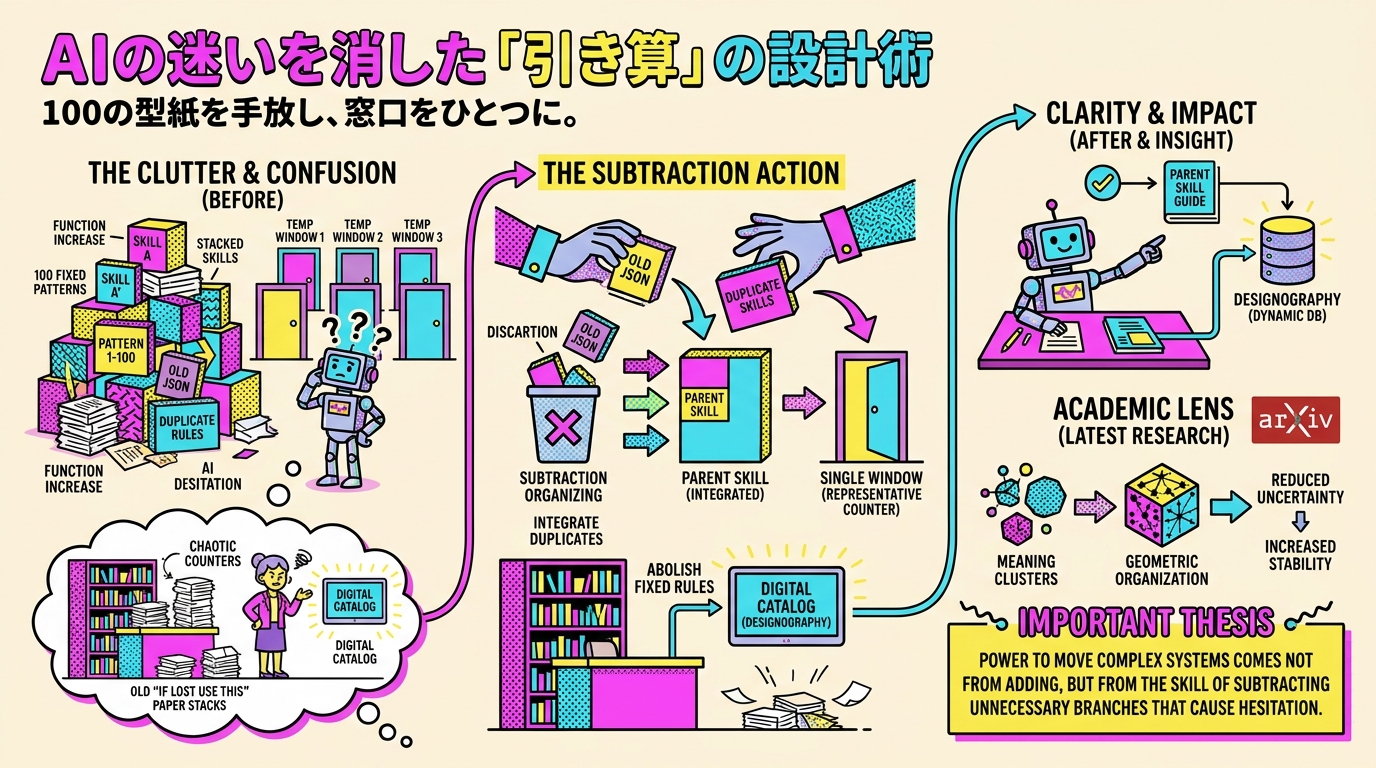
Letting Go of 100 Templates for a Single Desk: The Art of Subtractive Design That Eliminated AI Hesitation
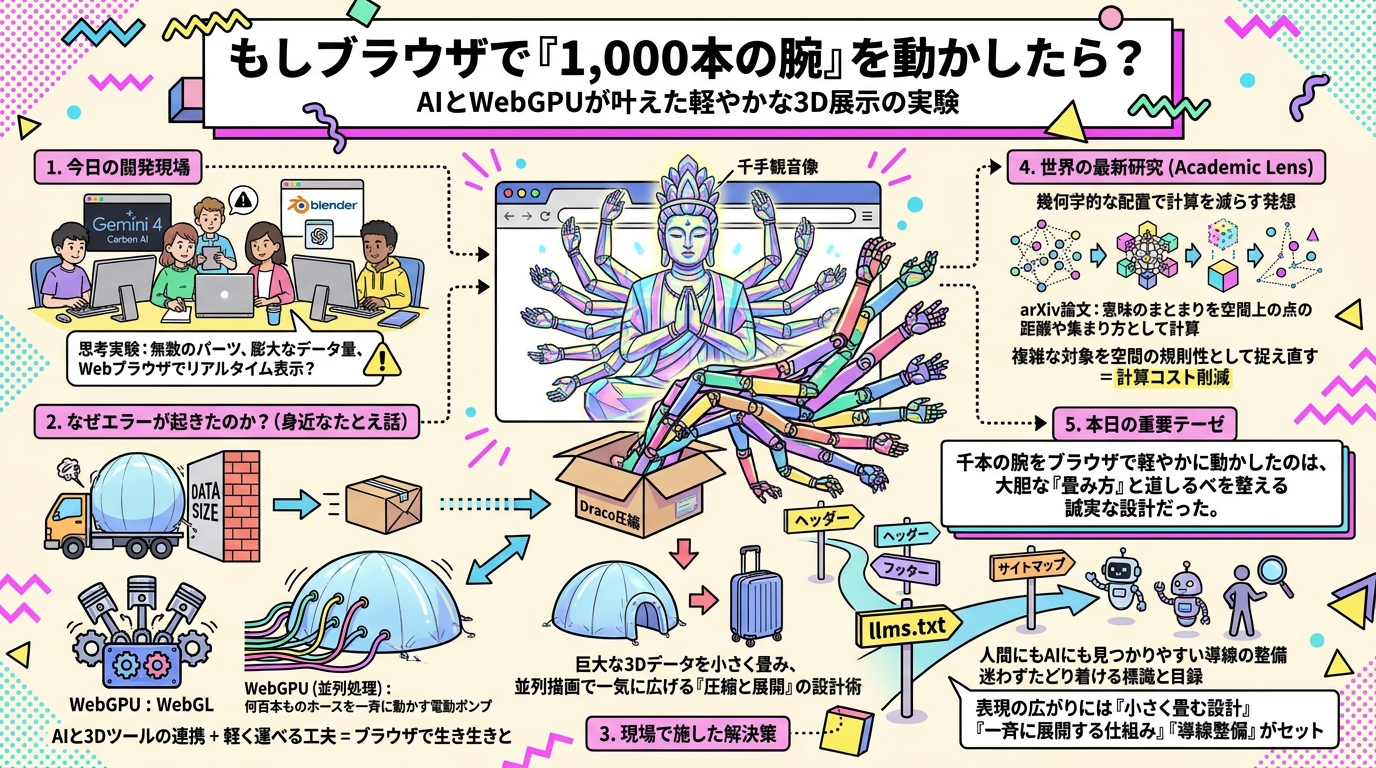
What If You Animated '1,000 Arms' in a Browser? A Lightweight 3D Exhibition Experiment Powered by AI and WebGPU
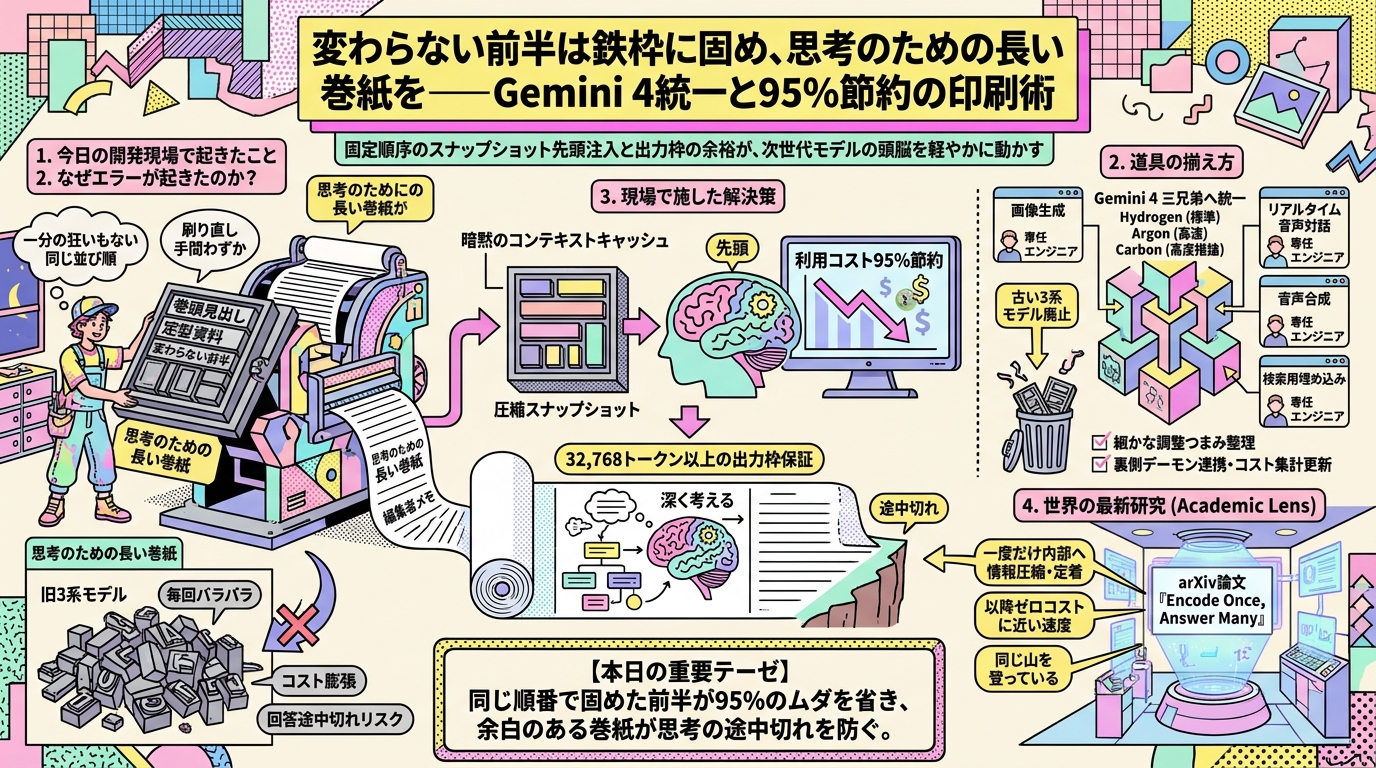
Locking the Constant Lead in Iron, Unrolling Long Scrolls for Thought — Gemini 4 Unification and the Art of 95% Printing Savings
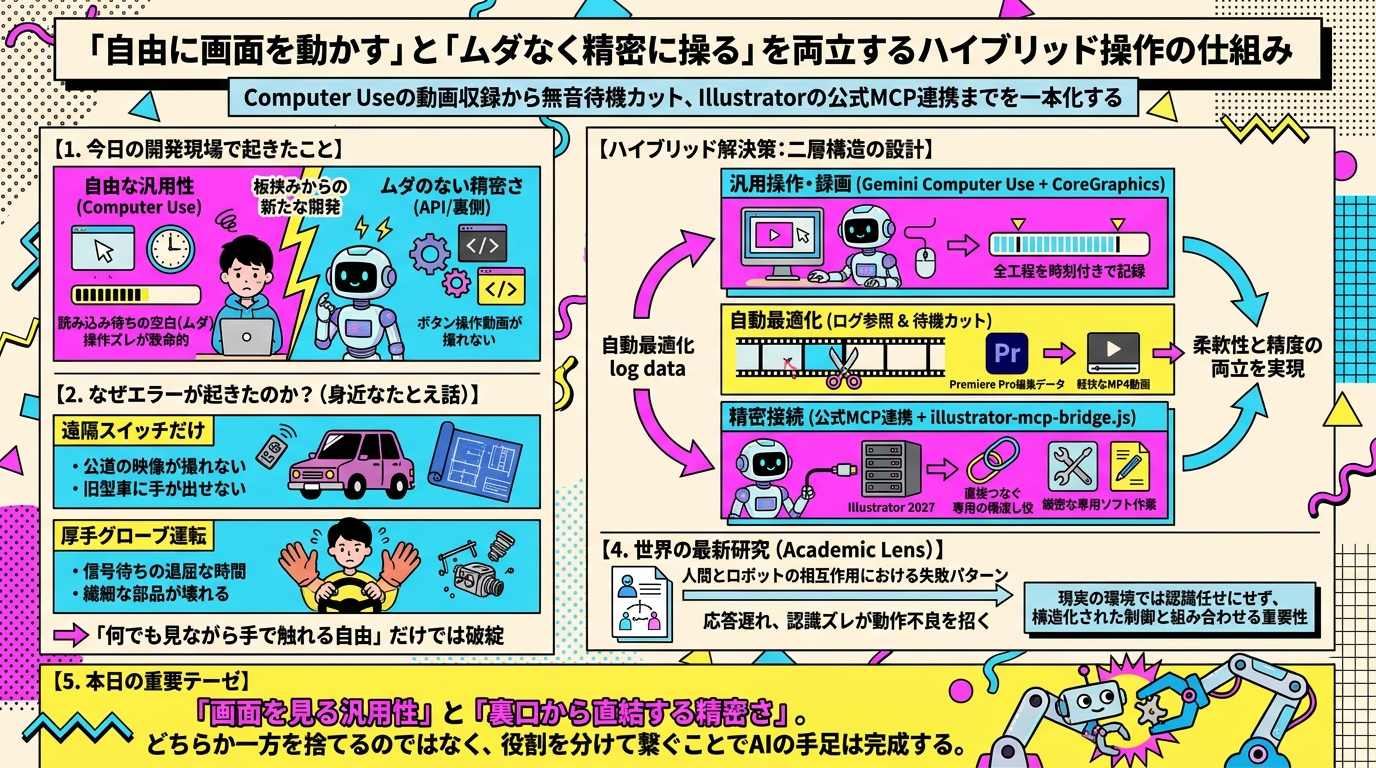
A Hybrid Control Architecture Bridging Free-Form Screen Navigation and Lean, Precision Execution
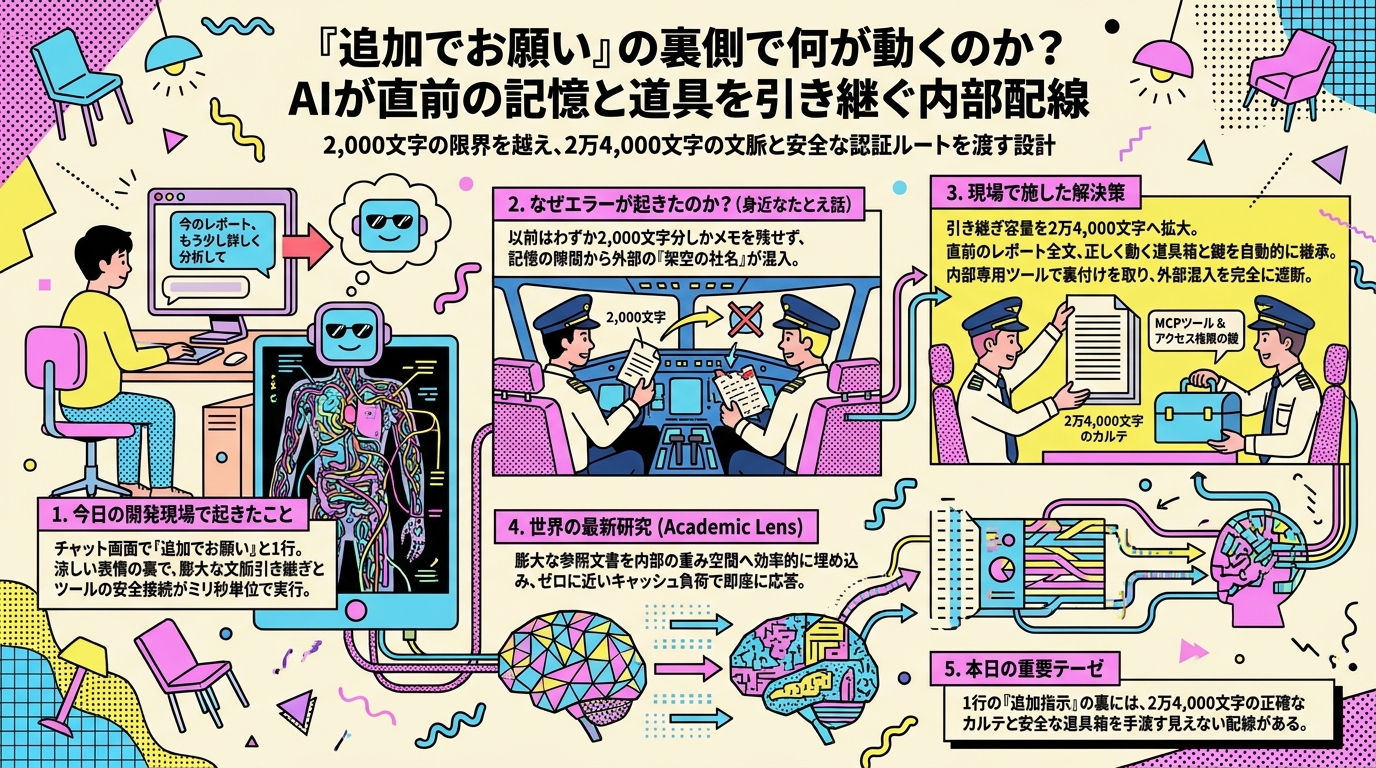
Behind "Just One More Request": The Internal Wiring That Hands Off Memory and Tools Between AIs