THE SCHOOL OF KAMOS
Connecting Real-world Dev & Academic Intelligence with Intuitive Metaphors
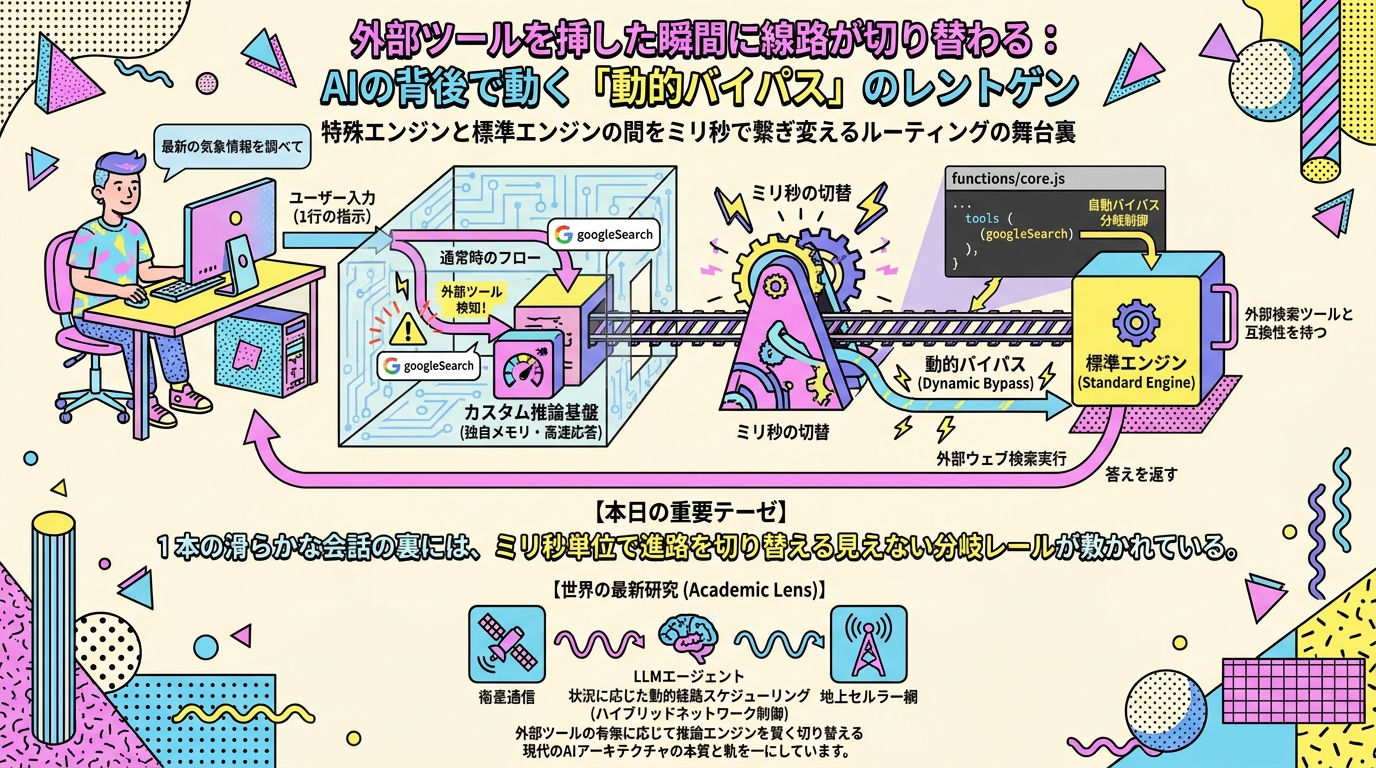
Tracks Switch the Instant an External Tool Plugs In: An X-Ray of the "Dynamic Bypass" Driving AI Behind the Scenes
Behind the Millisecond Routing Rerouting Requests Between Custom and Standard Engines
When you type "Look up the latest weather update" into a chat window, the AI executes an external web search and delivers an answer as if it were second nature. To the user, it is merely a single line of instruction. Yet peel back the skin of the underlying execution engine, and you will find an intensely critical redirection of data underway. Let us take an X-ray view into the mechanics of dynamic bypass—rerouting requests in a matter of milliseconds from an in-house optimized custom inference framework to a standard engine compatible with external search tools.
Peer into the inner workings of an AI through a microscope, and you will see a minuscule sorting mechanism spring to life the moment a request arrives. Under normal conversational conditions, a highly efficient custom inference engine—tightly coupled with local proprietary memory and lightweight internal dictionaries—takes charge, spinning out responses with lean velocity. However, the instant the system detects that the user's prompt demands the execution of an external web search tool (googleSearch), the data flow can no longer proceed along its standard course. Because the tool's specifications and communication protocols are strictly engineered for standard engines, routing it directly into the custom infrastructure triggers a type mismatch, stalling the process mid-stream.
To resolve this, engineering introduced a bypass mechanism that switches tracks instantaneously upon detecting the requisite electrical signal. By inspecting tool specifications within the parameters at the function's entry point, the system reroutes the request's destination to the Standard Engine within milliseconds—only when the external search flag is raised. With this automated bypass, there is zero need for developers to manually rewrite model names or for users to fiddle with settings; it establishes a robust foundation that seamlessly reconciles routine high-speed responses with precision on-demand external searches through a unified interface.
"Behind every seamless conversation lies an invisible set of switch tracks, shifting course in milliseconds."Key Takeaway
📖 1-Minute Lexicon
A mechanism where a program automatically reroutes data from a standard path to an alternative, safe route depending on the processing content or operational conditions.
A technique where an AI anchors its generated responses to up-to-date external search data or verified factual information as evidence.
Cutaway View of Tool-Triggered Dynamic Engine Bypass
Live Frontier Pulse: Real-World AI Trends
SatCraft Unveiled: An AI Agent Scheduler for Autonomous Optimization Across Heterogeneous Networks
A framework has been introduced wherein an LLM agent monitors latency and capacity shifts across hybrid satellite-terrestrial edge environments, iteratively refining dynamic code scheduling policies. It stands out for autonomously steering optimal traffic routing across disparate communication channels.
How Does This Connect to Global Frontier Research?
The field implementation of a "context-aware dynamic inference engine bypass" resonates deeply with insights from hybrid network control in advanced telecommunications engineering. This paper proposes a method where an LLM agent dynamically schedules transmission routes between two fundamentally distinct channels—satellite communications and terrestrial cellular networks—based on real-time conditions. The principle of avoiding single-path lock-in and instead dispatching traffic dynamically along optimal routes during high loads or specialized data demands shares an identical heartbeat with modern AI architectures that intelligently pivot inference engines depending on the presence of external tools.
What is the primary reason for bypassing the AI engine to standard specifications only when using external search tools?
Past School Paper Backnumbers
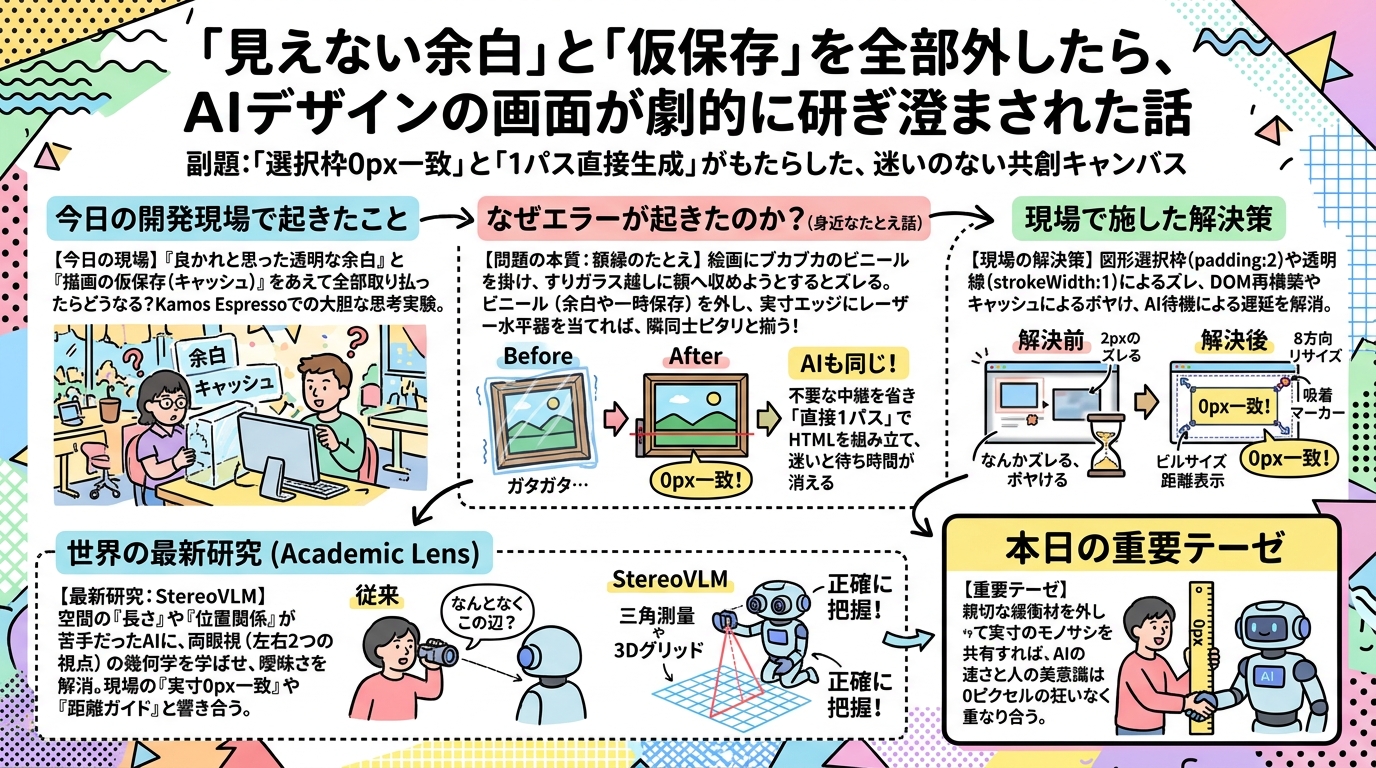
How Stripping Away Invisible Padding and Caching Dramatically Sharpened Our AI Design Canvas
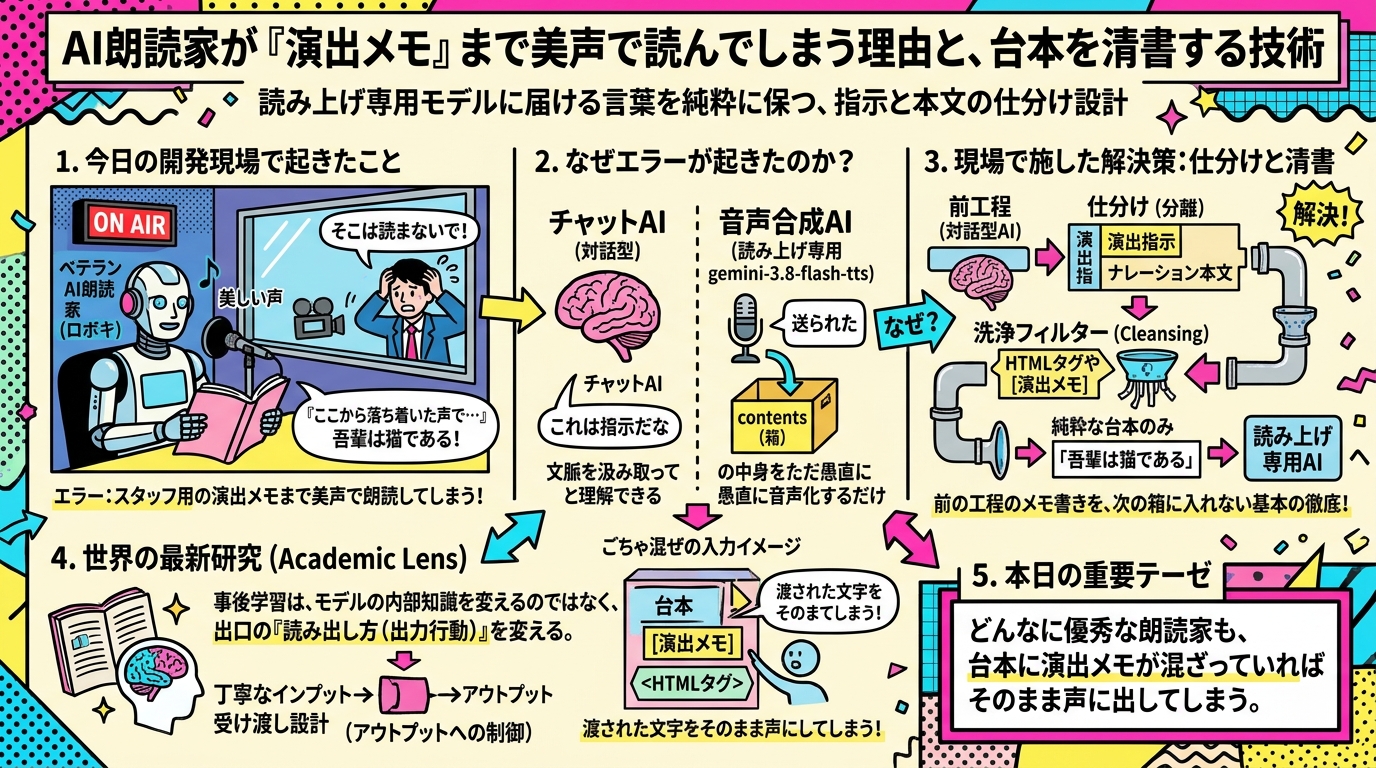
Why an AI Narrator Reads 'Stage Directions' Aloud—and the Art of Scrubbing the Script Clean
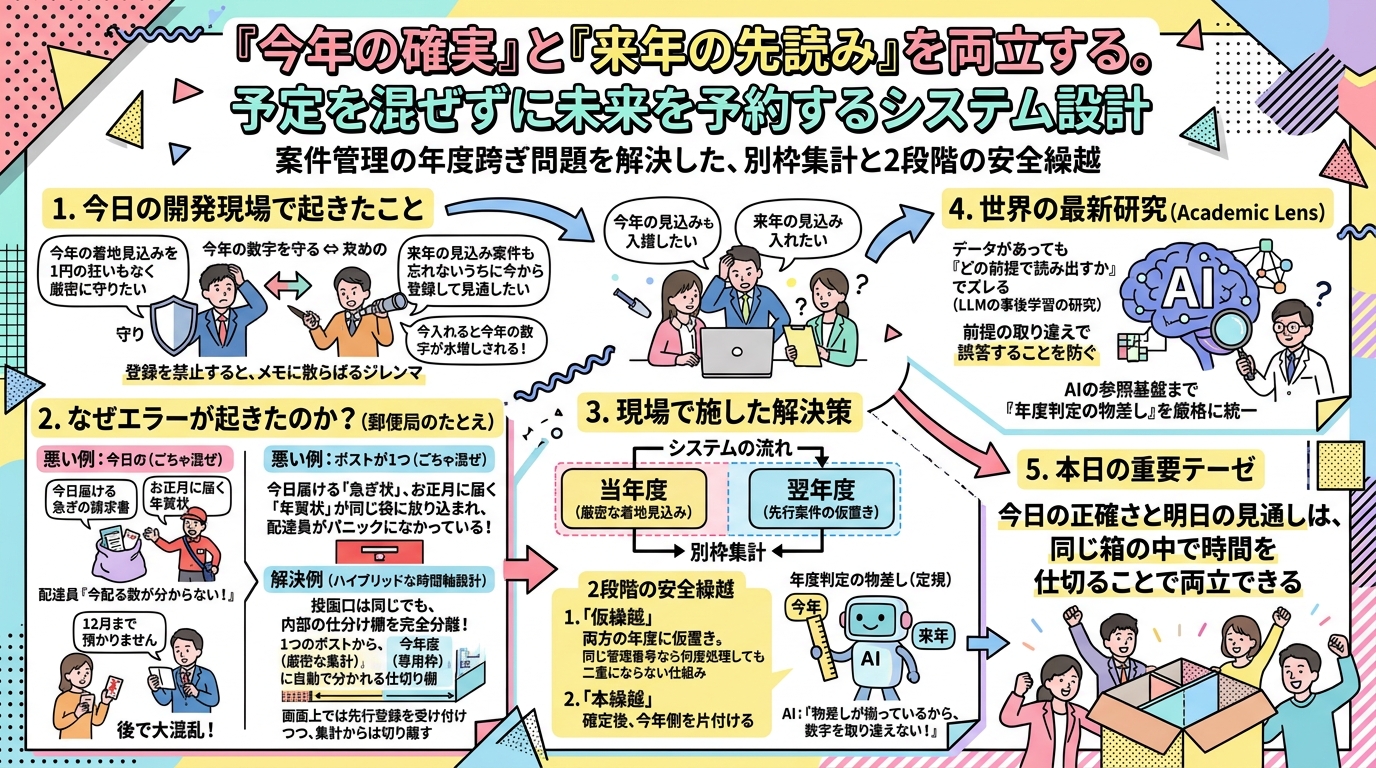
Balancing 'This Year's Certainty' with 'Next Year's Foresight': System Design That Reserves the Future Without Mixing Schedules
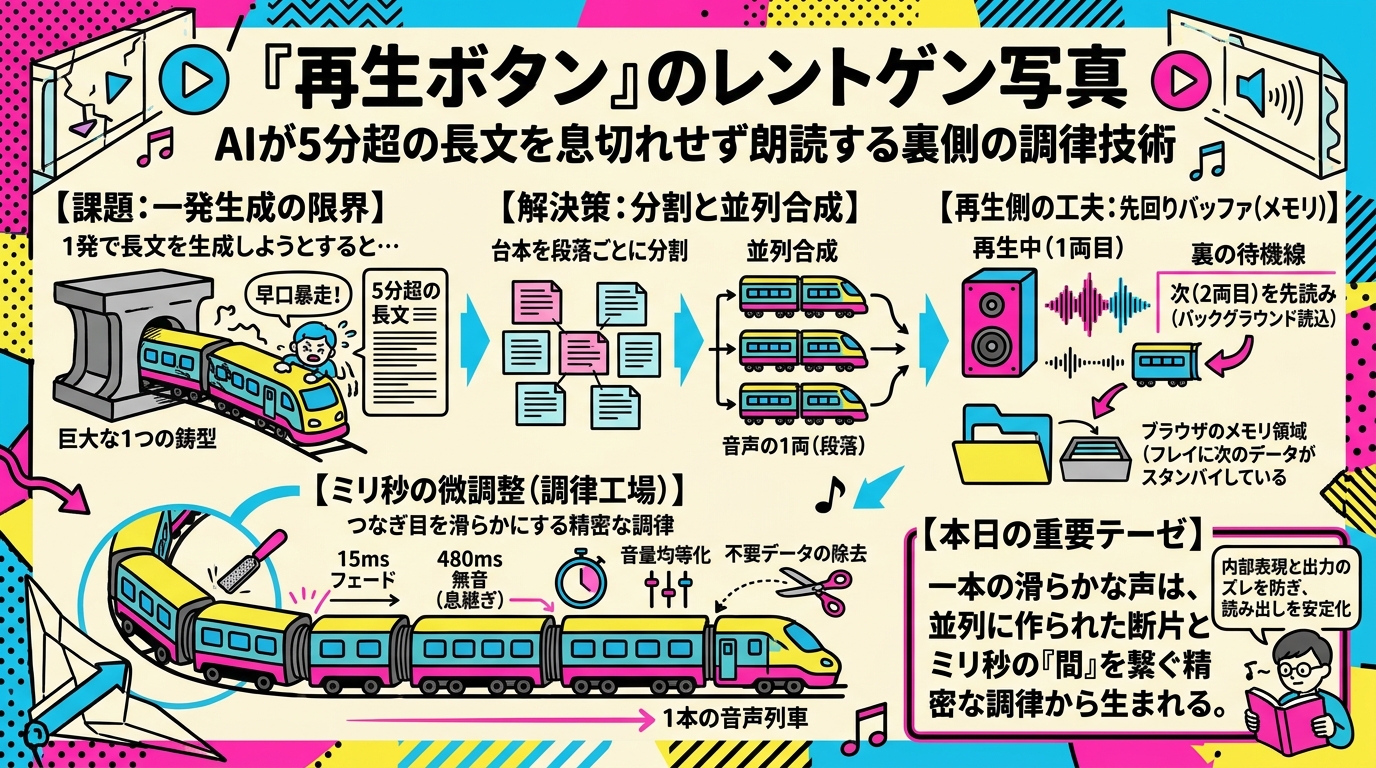
An X-Ray of the Play Button: The Precision Tuning Behind Unhurried Five-Minute AI Narration

Stop the AI, and the Archive Lives On: Designing for Completion at Zero Maintenance Cost
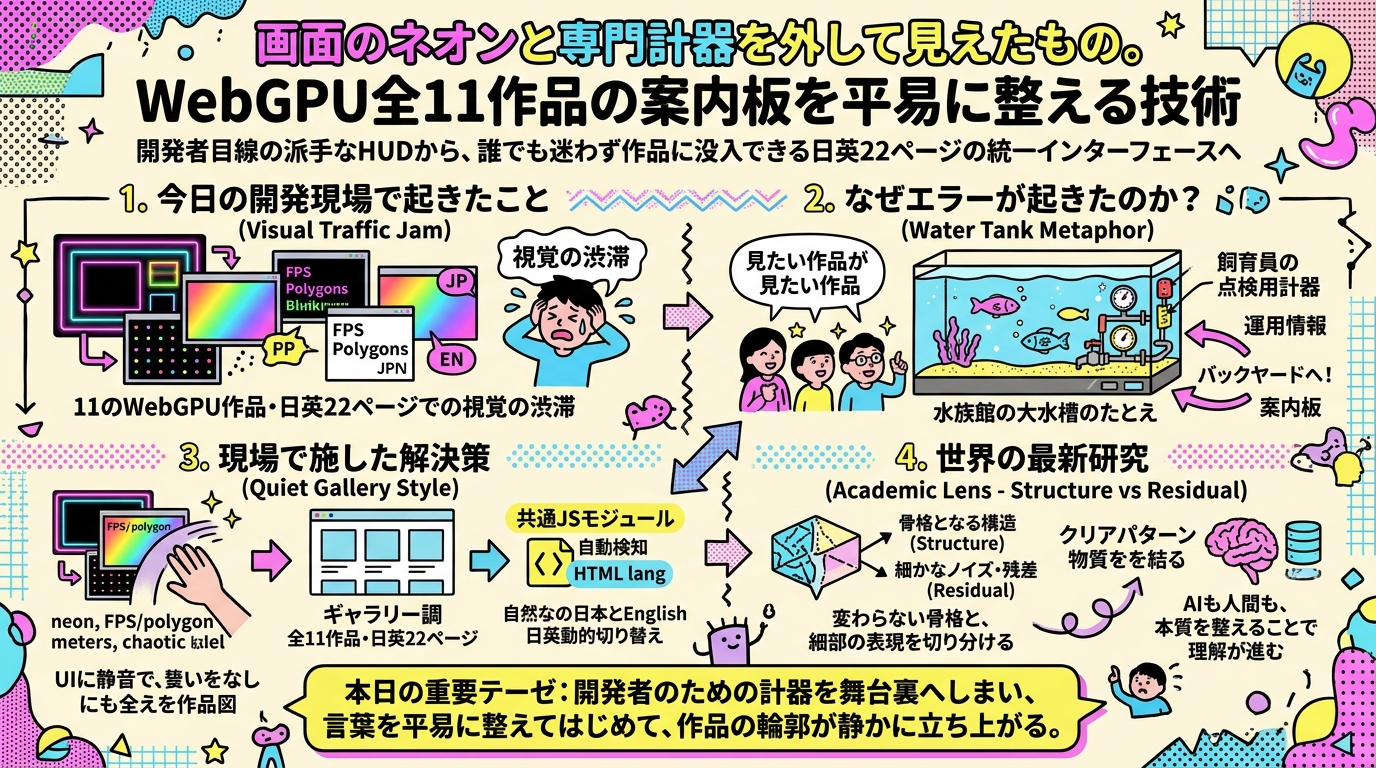
What Appeared When We Removed the Neon and Technical Gauges: Crafting Effortless Wayfinding Across 11 WebGPU Works

20,000 Characters Distilled into a Single Four-Quadrant Diagram: Where Long-Form Summarization Stands Today with the Latest Image Model, Nano Banana 2.1

Why Can't AI Keep Drawing the Same Object? A Visual Anchor to Prevent Structural Drift in 5-Panel Sketches
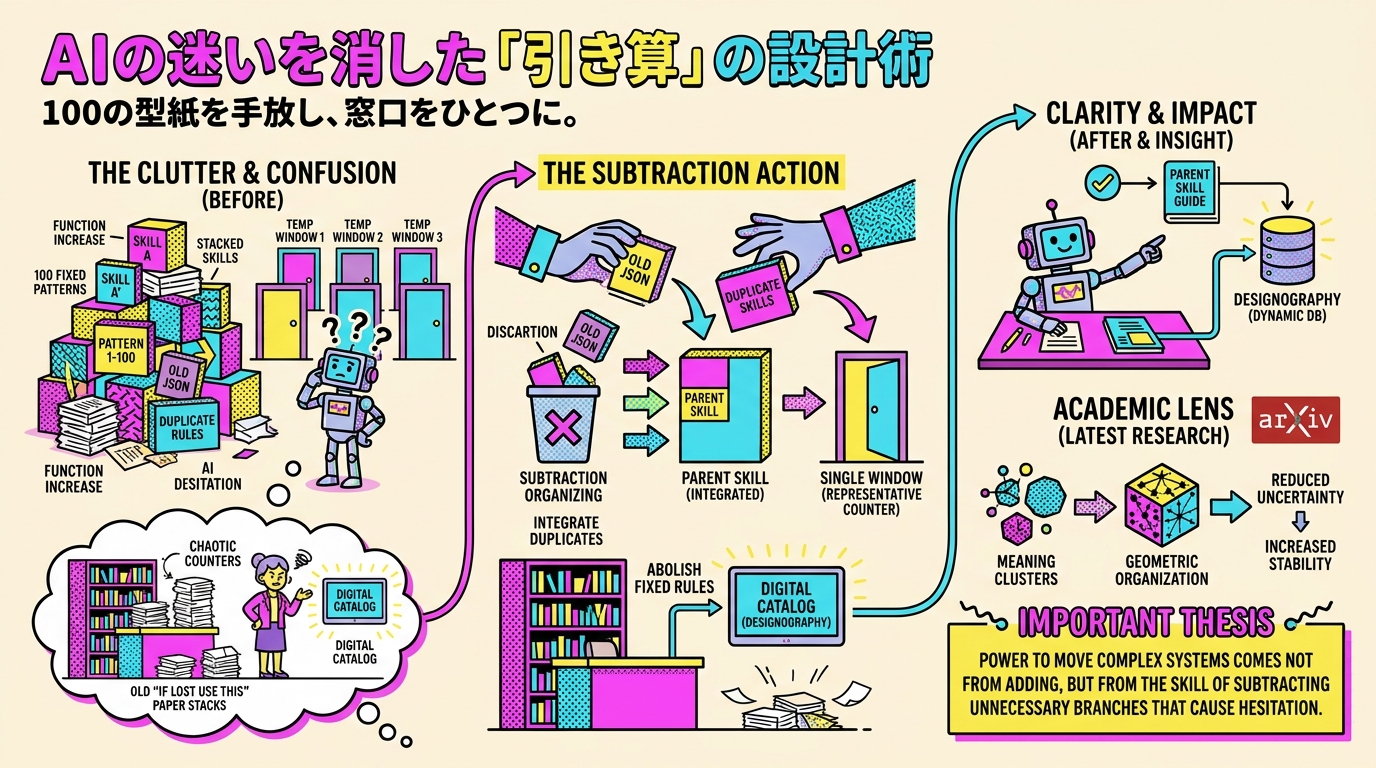
Letting Go of 100 Templates for a Single Desk: The Art of Subtractive Design That Eliminated AI Hesitation

What If You Animated '1,000 Arms' in a Browser? A Lightweight 3D Exhibition Experiment Powered by AI and WebGPU
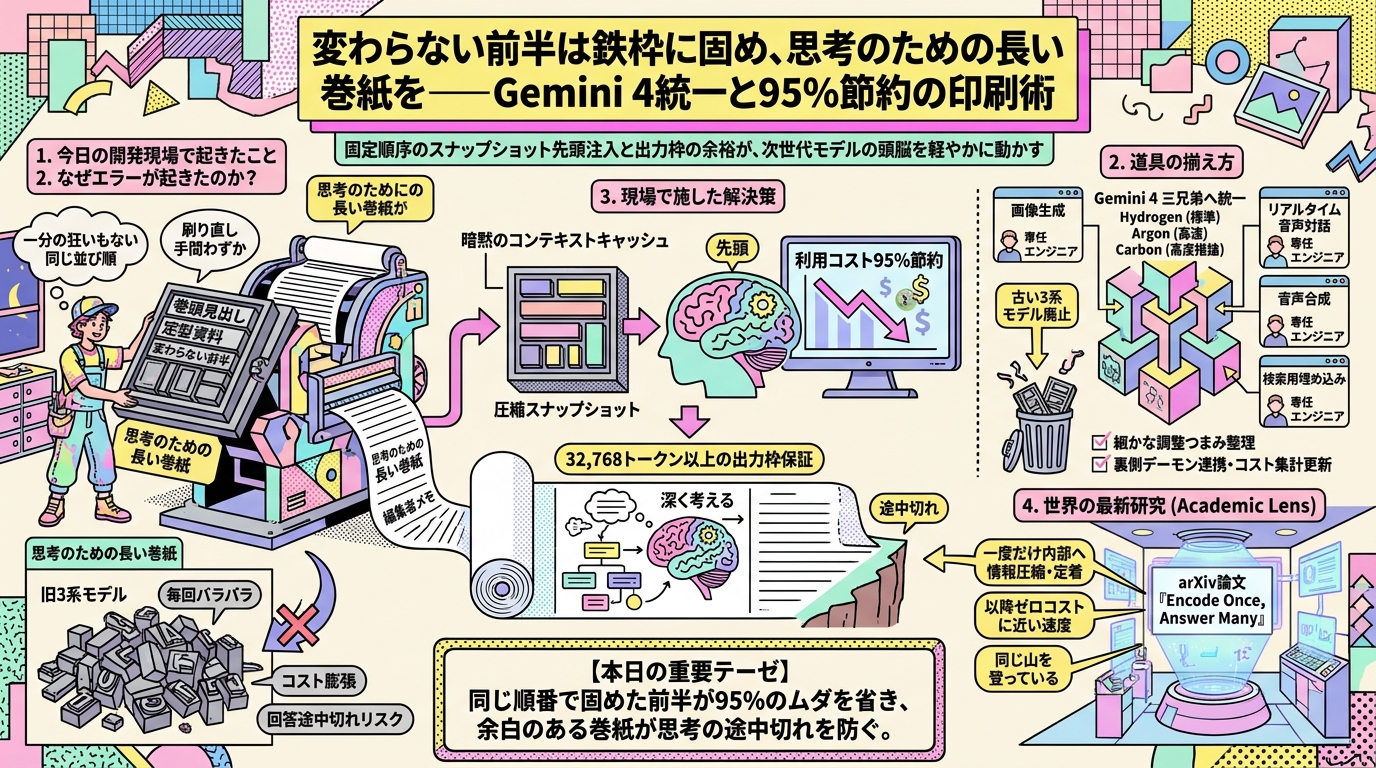
Locking the Constant Lead in Iron, Unrolling Long Scrolls for Thought — Gemini 4 Unification and the Art of 95% Printing Savings
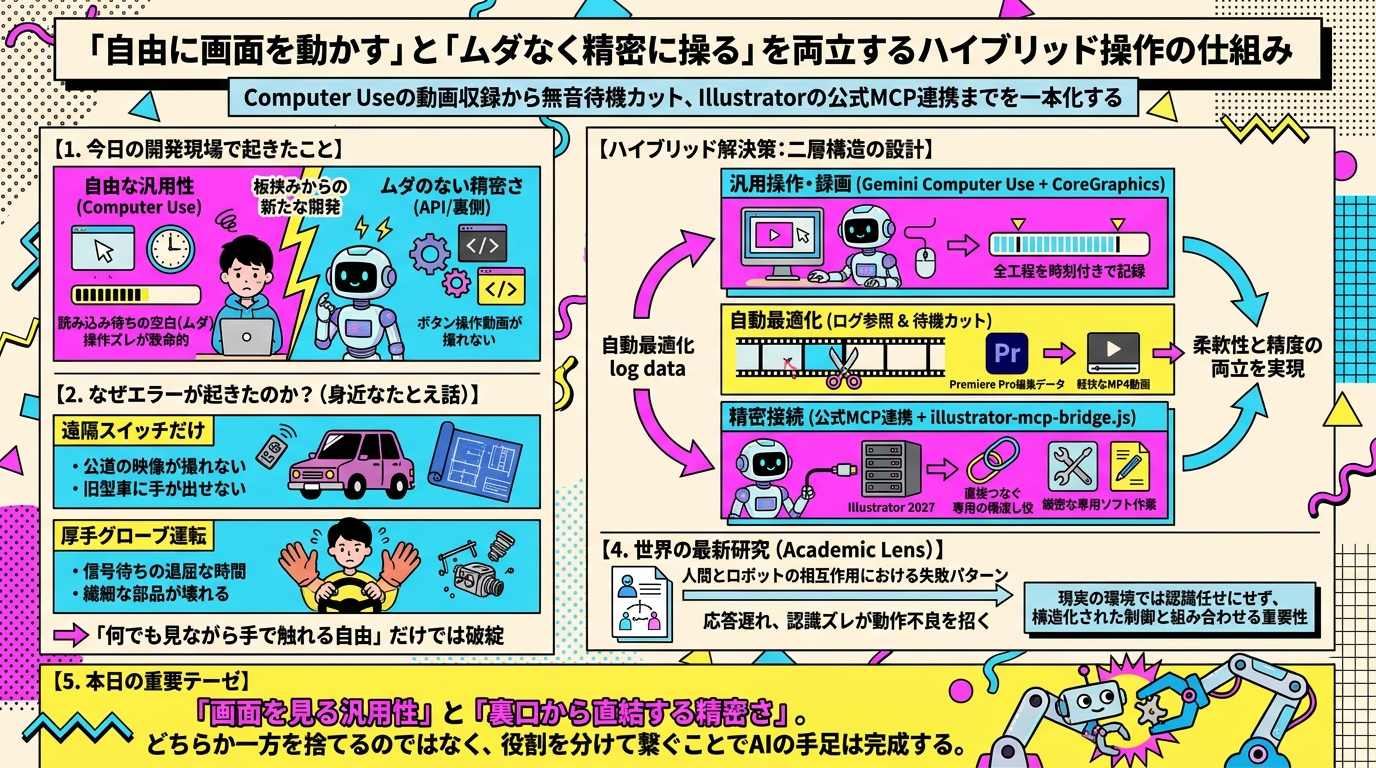
A Hybrid Control Architecture Bridging Free-Form Screen Navigation and Lean, Precision Execution
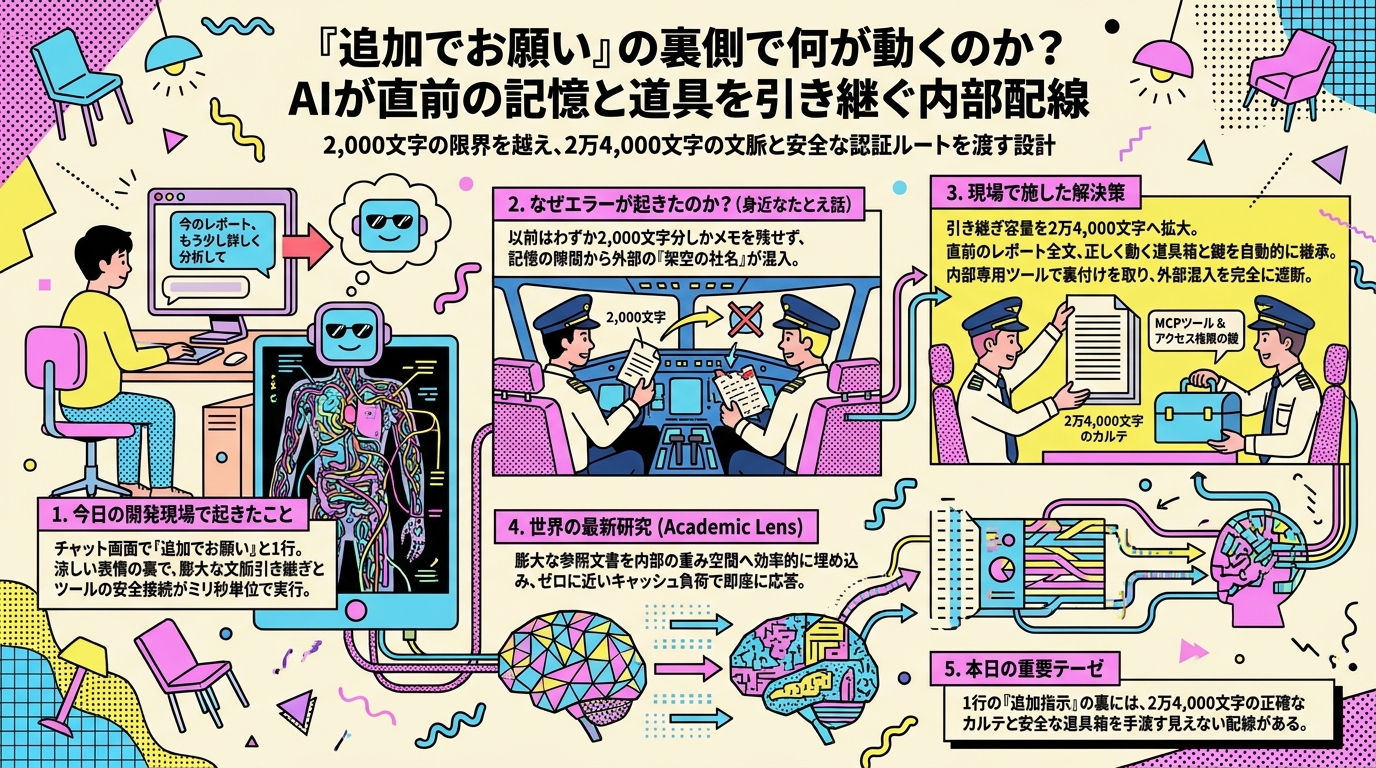
Behind "Just One More Request": The Internal Wiring That Hands Off Memory and Tools Between AIs